
Picking a crypto exchange feels a lot like picking a bank, except the bank sometimes gets indicted. So before you hand either platform your funds, it helps to know exactly what you’re signing up for.
KuCoin and MEXC both chase the same crowd: altcoin hunters who think Coinbase’s coin list is a personal insult. But the two platforms got there through very different paths, and 2026 has not been kind to either one’s paperwork. Let’s break down what actually matters.
Quick Verdict — KuCoin vs MEXC at a Glance
If you want the short version before your coffee gets cold, here it is.
Choose KuCoin if: you want a broader Earn suite, a slightly more polished trading interface, and you don’t mind full identity verification.
Choose MEXC if: you want the lowest headline trading fees in the industry, the largest coin selection available anywhere, and a faster path to trading with lighter verification.
Skip both if: you live in the United States. Neither platform legally serves US residents in 2026, and no VPN trick changes that fact safely.
Neither exchange is a saint. Both have collected regulatory warnings the way some people collect parking tickets. Read on before you deposit a single satoshi.
1. Company Background & Trust Factor
KuCoin launched in 2017 and built its name on an enormous altcoin catalog long before “altcoin season” became a marketing slogan. The exchange is now headquartered in the Seychelles and reports serving roughly 30–40 million users worldwide, according to its own Terms of Use disclosures.

MEXC came a year later, in 2018, also out of the Seychelles. It leaned hard into rapid token listings and near-zero fees, and it now claims over 40 million users across more than 170 countries.
Here’s the catch with “trust factor” in crypto: age alone doesn’t equal safety. KuCoin has the longer track record, but that track record includes a nine-figure US Department of Justice settlement. MEXC is younger and has avoided a comparable US enforcement action, mostly because it never built a meaningful US presence to enforce against.
Neither company publishes audited financial statements the way a public bank does. Both rely on self-reported proof-of-reserves. Treat “trust” here as relative, not absolute.
2. Supported Countries & Regulatory Restrictions
This is where the humor drains out of the room a little.
KuCoin pleaded guilty in January 2025 to operating an unlicensed money-transmitting business in the United States. The company agreed to roughly $297 million in fines and forfeitures, according to the US Department of Justice press release. A March 2026 CFTC consent order made the US exit permanent unless KuCoin registers as a foreign board of trade. KuCoin also restricts mainland China, Hong Kong, Singapore, and Thailand, and it screens against international sanctions lists.
MEXC never built US infrastructure in the first place, and its user agreement names the United States, Canada, the UK, mainland China, Hong Kong, and Singapore among its excluded jurisdictions. The UK’s Financial Conduct Authority has publicly warned consumers against using MEXC, which is a meaningful red flag for anyone in Britain.
Both platforms remain open across most of Europe, Latin America, Southeast Asia, and Africa, though EU access for both depends on how quickly each secures a MiCA license under the bloc’s new crypto framework.
Bottom line: if you’re reading this from the US, UK, or Canada, this comparison is mostly academic. Look at regulated alternatives instead.
3. Account Setup & KYC Process
Signing up for either exchange takes a few minutes and an email address. The real divergence happens once you try to move meaningful money.
KuCoin has required KYC for full functionality since 2023. Unverified legacy accounts can only sell assets and close positions, capped at 30,000 USDT in daily withdrawals. Fully verified users can withdraw up to 999,999 USDT per day.

MEXC still allows basic spot and futures trading without full verification in many regions, though unverified withdrawal limits have tightened to around 1,000 USDT per day. Higher limits require Primary or Advanced KYC, which MEXC may request based on your location or trading activity.
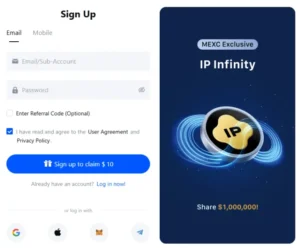
If minimal friction at signup matters more to you than long-term account stability, MEXC currently has the edge. If you’d rather verify once and never worry about a surprise freeze, KuCoin’s mandatory model removes that ambiguity upfront.
4. Trading Fees Breakdown
Here’s where MEXC wins outright, and it isn’t close.
MEXC spot fees: 0% for makers, 0.05% for takers. Holding 500+ MX tokens cuts that further, down to roughly 0.025% effective.
KuCoin spot fees: 0.10% for both makers and takers at the base tier, dropping to 0.08% with the KCS fee-payment discount active.
On futures, MEXC again runs leaner: 0% maker and roughly 0.02% taker, compared to KuCoin’s 0.02% maker and 0.06% taker.
Run the math on a $10,000 taker trade, and MEXC costs you $5. The same trade on KuCoin costs $12 at base rates. That gap compounds fast for anyone trading daily.
KuCoin’s VIP ladder does eventually reach 0% maker fees at VIP 12, but you need serious monthly volume to get there. Casual traders will feel MEXC’s advantage far sooner.
5. Product Range & Trading Tools
KuCoin leans into breadth of features rather than breadth of coins. It offers spot and futures trading, options, a built-in trading bot suite, margin trading, an NFT marketplace, and a debit card in supported regions.
MEXC’s calling card is sheer coin count. The platform lists more than 3,000 cryptocurrencies and 3,500+ trading pairs, which is one of the largest catalogs of any centralized exchange. It also offers futures with leverage up to 200x, copy trading, and a demo trading mode for beginners who want to practice with fake money first.
If you’re hunting for a brand-new token minutes after launch, MEXC’s listing speed is genuinely useful. If you want built-in automation tools like grid bots without leaving the platform, KuCoin’s toolkit is more mature.
6. Security Track Record
KuCoin suffered a major hack in 2020, losing roughly $285 million before recovering a large portion through coordinated industry action. Since then, no comparable platform-wide breach has been publicly confirmed. The bigger blemish is regulatory rather than technical: the DOJ settlement stemmed from anti-money-laundering failures, not a hack.
MEXC has no publicly confirmed large-scale hack as of 2026. Independent security firm Hacken conducted a penetration test across MEXC’s web, mobile, and API systems in 2025 and found no critical vulnerabilities. MEXC also maintains a Guardian Fund reported at $100 million, plus a separate insurance fund, intended to cover losses from breaches.
Both platforms use cold storage for the majority of funds, two-factor authentication, and withdrawal address whitelisting. Neither offers government-backed deposit insurance, because no crypto exchange does. Keep long-term holdings in a hardware wallet regardless of which platform you choose. That advice never expires.
7. User Experience: App & Interface
KuCoin’s interface is widely described as the more polished of the two, with TradingView charting built in and a layout that scales reasonably well from beginner to advanced use. It doesn’t feel cluttered even with dozens of tools available.

MEXC’s interface is functional but denser. New users sometimes describe it as overwhelming at first, mainly because MEXC surfaces so many products, promotions, and token listings on the same screens. Give it a week and the layout stops feeling chaotic.
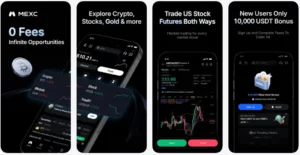
Neither app is going to win a design award. Both get the job done, and both are free to try, so the fastest way to decide is opening each app and clicking around for ten minutes.
8. Withdrawal Fee Comparison Table
Withdrawal fees are flat per-asset charges, not percentages, so they hit small withdrawals disproportionately hard. Always check the live fee before confirming.
| Asset / Network | KuCoin Withdrawal Fee | MEXC Withdrawal Fee |
|---|---|---|
| BTC (Bitcoin network) | ~0.0005 BTC | Comparable flat network fee, varies by congestion |
| USDT (TRC-20) | ~1 USDT | Typically lower than KuCoin on this network |
| USDT (ERC-20) | ~10 USDT | Similarly high due to Ethereum gas costs |
| ETH (ERC-20) | ~0.005 ETH | Comparable flat network fee |
| EUR (fiat) | 1 EUR flat | Fiat withdrawal via third-party provider, fees vary |
Both platforms let you pick the network for stablecoin withdrawals, so choosing TRC-20 over ERC-20 for USDT saves you real money on either exchange. This is one of the easiest wins in crypto that most beginners skip.
9. Mobile App Comparison
Both apps are available on iOS and Android in most supported regions and carry ratings above 4.5 out of 5 on their respective app stores.
MEXC’s app has a notable gap: it’s currently unavailable in India, Japan, South Korea, and the UK on iOS, with an even longer restricted list on Android. Users in those regions have to reach MEXC through the mobile browser instead.
KuCoin’s app faces fewer regional store restrictions, though the underlying account access rules from Section 2 still apply regardless of whether the app downloads.
Functionally, both apps mirror their desktop counterparts closely. Price alerts, one-tap trading, and Earn account management work well on either platform. Neither app should be your only security layer, though. Enable app-level biometric locks on top of standard 2FA.
10. Fiat On-Ramp / Payment Method Comparison
KuCoin supports bank card purchases, P2P trading, and regional options like PayPal or Google Pay in select markets. Its OTC desk also handles larger purchases directly with fiat currencies including CNY, VND, and IDR.
MEXC leans more heavily on third-party payment processors for card and bank purchases, plus a broad P2P marketplace. Fiat on-ramp fees through these processors commonly run 3–5%, which is standard across the industry but worth knowing before you tap “buy.”
If you’re funding your account primarily with crypto you already hold, this section barely matters. If you’re buying crypto with a debit card for the first time, compare the live quoted rate on both platforms before committing, since processor fees shift by region and payment method.
11. Liquidity & Order Execution
KuCoin ranks among the more liquid exchanges globally for major pairs like BTC/USDT and ETH/USDT, with tight spreads during normal market hours.
MEXC’s liquidity is strong on major pairs too, but it thins out noticeably on the thousands of smaller-cap tokens it lists. That’s the tradeoff for having 3,000+ coins: not every pair has deep order books, and slippage on low-volume tokens can be significant.
For high-volume traders in BTC, ETH, or top-20 tokens, either exchange executes cleanly. For anyone trading niche altcoins on MEXC, check the order book depth before placing a market order, or you may get a worse fill than expected.
12. Staking / Earn APY Comparison
Both platforms market eye-catching promotional APYs that apply only for a few days to new deposits. Treat those numbers as marketing, not baseline yield. The standing, non-promotional rates matter more for planning.
| Product | KuCoin Standard Range | MEXC Standard Range |
|---|---|---|
| USDT Flexible Savings | ~3.5%–8.2% APY | ~2%–16% APR (varies by tier) |
| USDC Flexible Savings | ~3.2%–7.8% APY | ~2%–12% APR |
| ETH Staking | ~2.8%–4.5% APY | Available, rate varies by promotion |
| SOL Staking | ~4.1%–6.3% APY | Available, rate varies by promotion |
Both platforms disclose, buried in their risk warnings, that staking returns are not guaranteed and fluctuate with market conditions. Past yield never predicts future returns. Read that line every single time before subscribing.
MEXC’s Auto-Earn feature automatically moves idle spot balances into flexible savings, which is a genuinely convenient touch for anyone who forgets to manually stake leftover funds. KuCoin’s Earn suite is broader in product variety, including Dual Investment and Shark Fin structured products for more experienced users.
13. Last Verified Trust Line
Fee structures, APY ranges, and country-restriction lists change frequently on both platforms. The figures in this article were checked against official exchange documentation and independent fee-tracking sources current as of September 2026. Always confirm live rates directly on KuCoin’s fee schedule or MEXC’s fee page before trading, since exchanges adjust these numbers without much warning.
14. Customer Support Reality Check
Both exchanges advertise 24/7 support through live chat, email, and a help center. In practice, simple questions get resolved quickly on either platform.

The gap shows up on complicated issues. Account freezes tied to “risk control” reviews are a recurring complaint for both exchanges on review platforms like Trustpilot, and resolution can stretch from days to weeks. MEXC’s live chat is frequently described as fast for basic queries but generic once an issue escalates. KuCoin’s support leans more on its extensive help-article library and community forums, which can solve problems faster than waiting in a queue.
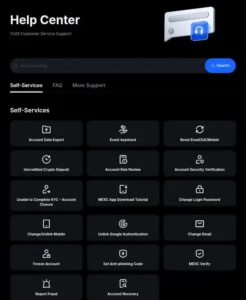
Neither platform is going to match the phone-support experience of a traditional bank. If a fast, human resolution to complex account issues is a dealbreaker for you, budget extra patience regardless of which exchange you pick.
15. Unique Differentiators — What Sets Each Exchange Apart
KuCoin’s standout feature is arguably its trading bot suite, built directly into the platform rather than requiring a third-party tool. It also offers a more mature Earn ecosystem with structured products for users who want more than plain staking.
MEXC’s standout feature is undeniably its listing speed and sheer coin count. If a token launches this week, there’s a real chance MEXC lists it before most competitors even open the application. Its 0% maker fee policy is also unmatched among major exchanges without requiring a minimum volume threshold.
Neither differentiator is objectively “better.” They serve different trading styles entirely.
16. Pros and Cons
KuCoin
Pros: mature trading bot suite, deeper Earn product variety, generally cleaner interface, established track record since 2017.
Cons: higher base trading fees than MEXC, mandatory full KYC for meaningful use, carries the weight of a $297 million US regulatory settlement.
MEXC
Pros: industry-leading low fees, largest coin selection of any major exchange, lighter KYC friction for basic use, useful Auto-Earn convenience feature.
Cons: thinner liquidity on smaller-cap listings, denser and more cluttered interface for newcomers, multiple regulatory warnings across several countries.
17. Verdict by User Type
Beginners: KuCoin’s cleaner interface and structured Earn products make the learning curve gentler.
Active day traders: MEXC’s near-zero fees save real money across hundreds of trades per month.
Altcoin hunters chasing new listings: MEXC wins by a wide margin on coin selection and listing speed.
Passive income seekers: KuCoin’s broader Earn suite gives more structured options beyond simple flexible savings.
Anyone in a restricted country: neither platform works legally for you. Look at a licensed local alternative instead.
18. Which Exchange Is Better? (Final Verdict)
There isn’t a single winner here, and any article claiming otherwise is probably chasing a referral link rather than an honest answer.
MEXC is the stronger pick for cost-conscious, high-frequency traders who prioritize fee savings and want access to the widest possible coin list. KuCoin is the stronger pick for users who want a more complete built-in toolset and don’t mind paying a bit more in exchange for a longer operating history and a more polished interface.
Both exchanges carry real regulatory baggage. Neither should hold your entire portfolio long-term. Use either as a trading venue, then move meaningful holdings to cold storage once you’re done. For deeper, independently verified breakdowns of both platforms and dozens of other exchanges, our full exchange review library covers licensing status, fee schedules, and security history in more detail than any single comparison article can.
19. Frequently Asked Questions
Is KuCoin or MEXC cheaper for trading fees? MEXC is cheaper at the base tier, charging 0% maker and 0.05% taker versus KuCoin’s 0.10%/0.10% base spot rate.
Can US residents use KuCoin or MEXC? No. Both exchanges exclude US residents under their current terms of use, and KuCoin’s exclusion is backed by a federal consent order.
Which exchange lists more coins? MEXC, with more than 3,000 cryptocurrencies listed versus KuCoin’s smaller but still substantial catalog.
Is KuCoin safe after its DOJ settlement? The settlement addressed anti-money-laundering compliance failures, not a hack or loss of user funds. KuCoin remains operational outside the US with standard exchange security measures in place.
Does MEXC require KYC? Basic trading is available without full verification in many regions, but withdrawal limits are low until you complete identity verification.
Which exchange has better staking rates? Rates fluctuate constantly on both platforms. Compare live APY figures directly on each exchange before depositing, since promotional rates rarely reflect long-term averages.
Is a VPN a safe way to access a restricted exchange? No. Both KuCoin and MEXC prohibit this in their terms of use, and doing so risks account suspension or frozen funds with no recourse.
