

Day trading crypto is a different game from holding Bitcoin and checking the price once a week. You need tight spreads, fast execution, real liquidity, and a fee schedule that doesn’t quietly eat your profits before lunch. Pick the wrong exchange, and you’ll find that out the hard way, usually during a fast-moving candle when your order fills three seconds too late.
This guide compares the exchanges that actually hold up under active trading conditions: order execution speed, maker/taker fees, charting tools, and security track record. Every fee number here comes from each exchange’s own published schedule or a documented third-party review, not a guess.
A lot of “best exchange” lists are really just affiliate link dumps dressed up as reviews. We tried not to do that here. Instead, we compared published fee schedules line by line, checked each platform’s proof-of-reserves methodology, and looked at how each exchange has actually handled regulation over the past year rather than just what its marketing page promises. If a number looks too good, it’s worth double-checking directly on the exchange before you trust it with real capital.
Quick Answer: Best Crypto Exchanges for Day Trading
Short on time? Here’s the fast version.
- Binance – Best overall for day trading, thanks to deep liquidity across hundreds of pairs and a spot fee of 0.10% maker/taker that drops further with BNB discounts.
- Bybit – Best for derivatives-heavy day traders, with a 0.02% maker / 0.055% taker futures fee and a fast, uncluttered order execution engine.
- OKX – Best for technical analysis, with a 0.08% maker spot fee (cheaper than Binance and Bybit at the base tier) and strong charting tools.
- Kraken – Best for security-conscious traders who still want competitive futures fees (0.02% maker / 0.05% taker).
- Coinbase Advanced – Best for US-based traders who prioritize regulatory clarity over the lowest possible fee.
We’ll break down exactly why each one earned its spot below, plus a full fee comparison and security review.
Comparison Table: Top Exchanges for Day Trading
| Exchange | Spot Fee (Maker/Taker) | Futures Fee (Maker/Taker) | Charting | Regulation Highlight |
| Binance | 0.10% / 0.10% | 0.02% / 0.05% | Native + TradingView-style tools | DOJ-monitored, French PSAN registered |
| Bybit | 0.10% / 0.10% | 0.02% / 0.055% | Native charts, clean UI | MiCA transition to Bybit EU underway |
| OKX | 0.08% / 0.10% | 0.02% / 0.05% | TradingView integration | zk-STARK proof of reserves |
| Kraken | 0.25% / 0.40% (base tier) | 0.02% / 0.05% | Kraken Pro advanced charts | Merkle-tree proof of reserves, twice-yearly audits |
| Coinbase | Up to 0.40% / 0.60% (base tier) | ~0.04% / 0.02% | TradingView-powered charts | Publicly traded, US-regulated |
Fees shown are base-tier rates before VIP discounts or token-based reductions. Actual rates change with your 30-day volume, so always confirm the live number on the exchange’s own fee page before you trade.
Binance Review
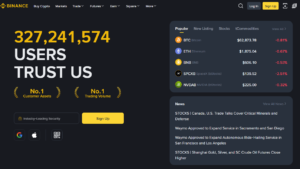
Binance is still the default answer to “best crypto exchange for day trading” for one simple reason: liquidity. When you’re scalping or running high-frequency strategies, thin order books are the enemy. Binance’s order books are rarely thin, even on smaller altcoin pairs, which means less slippage on market orders.
On fees, Binance charges a standard 0.10% maker and 0.10% taker rate for spot trading, with futures starting at 0.02% maker and 0.05% taker. Paying fees in BNB knocks off 25% on spot trades and 10% on futures, and the discount stacks with VIP volume tiers that push rates down further as your trading activity increases.
Security-wise, Binance runs a zk-SNARK-backed proof-of-reserves system alongside a traditional Merkle tree, letting users verify their balance is included in the audited pool. The exchange has not suffered a customer-loss hack since 2019, and it settled a landmark case with the US Department of Justice that now keeps it under a five-year compliance monitoring period.
Best for: high-volume day traders and scalpers who need deep liquidity across hundreds of pairs.
Read more :
Bybit Review
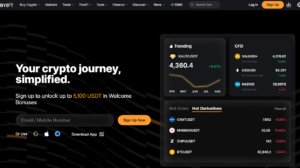
Bybit built its reputation on derivatives, and that shows in how the platform feels to use. Order execution is fast, the interface doesn’t bury important controls under menus, and the futures fee schedule (0.02% maker, 0.055% taker) is only marginally higher than Binance’s on the taker side.
Spot trading fees sit at the same 0.10%/0.10% flat rate as Binance, and Bybit’s VIP tiers can push maker fees down toward 0% or even into rebate territory for genuinely large traders. Holding Bybit’s native token unlocks up to a 25% fee discount as well, similar in structure to Binance’s BNB program.
On the compliance side, Bybit is in the process of migrating EU users to Bybit EU under the bloc’s Markets in Crypto-Assets (MiCA) framework, and it publishes proof-of-reserves data alongside the other major exchanges. It’s not the cheapest venue for casual spot trading, but for anyone whose day involves opening and closing leveraged positions repeatedly, the execution speed and derivatives depth matter more than a few basis points.
Best for: active futures and perpetual contract traders who value fast execution over the absolute lowest spot fee.
Read More:
- Bybit Review 2026: Best Crypto Exchange for Beginners?
- Is Bybit Safe or a Scam? (2026)
- Bybit Fees Review: Spot, Futures, Hidden Costs & How to Pay Less
OKX Review
OKX quietly undercuts both Binance and Bybit on one specific line item: the spot maker fee. At 0.08%, it’s cheaper than the 0.10% flat rate charged by its two biggest competitors, though the taker fee lands at the same 0.10%. On futures, OKX matches Binance almost exactly, with a 0.02% maker and 0.05% taker rate on major contracts.
Where OKX pulls ahead for day traders specifically is charting. The platform integrates TradingView directly, which matters if your strategy depends on custom indicators, drawing tools, or multi-timeframe analysis. Combined with a tiered VIP system that recalculates daily based on your rolling volume, OKX rewards traders who are genuinely active rather than punishing anyone who isn’t.
Security transparency is a real strength here. OKX uses a zero-knowledge proof system called zk-STARK to verify that its on-chain reserves cover customer balances, without exposing individual account details. It’s one of the more technically rigorous proof-of-reserves implementations in the industry, alongside Binance’s zk-SNARK approach.
Best for: traders who lean on technical analysis and want TradingView-style charting without leaving the exchange.
Read more: OKX Review 2026: Honest Pros, Cons & Guide for Beginners
Kraken Review

Kraken isn’t the cheapest option on this list for spot trading — its base tier starts at 0.25% maker and 0.40% taker on Kraken Pro, well above Binance or Bybit’s flat 0.10%. But two things keep it in serious contention for day traders: fee tiers drop quickly with volume, and futures fees are genuinely competitive at 0.02% maker and 0.05% taker, matching Binance and OKX.
Kraken also runs a subscription option called Kraken+, which offers zero-fee trading up to a set monthly volume for a flat monthly cost. For traders whose volume sits in that sweet spot, it can beat the percentage-based fee schedules entirely.
What sets Kraken apart is its security posture. It publishes proof-of-reserves reports roughly twice a year, verified through an independent auditor building a Merkle tree of client balances, and the exchange has built a long-standing reputation for regulatory caution rather than aggressive expansion. If your day trading strategy needs the fastest possible execution above everything else, Kraken may feel a step behind Bybit or OKX. If you want a well-audited platform with solid futures pricing, it earns its place.
Best for: traders who weigh security and audit transparency as heavily as raw execution speed.
Coinbase Advanced Review
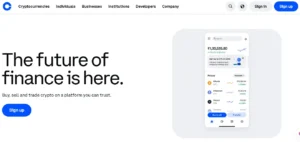
Coinbase Advanced Trade is not going to win on price. Its base-tier spot fees run as high as 0.40% maker and 0.60% taker for traders under $10,000 in monthly volume — several times more than Binance or Bybit’s flat rate. That’s the trade-off for operating as a publicly traded, heavily regulated US company instead of a global offshore exchange.
For US-based day traders, though, that regulatory clarity is worth something real. Coinbase reports through standard public-company financial disclosures rather than a crypto-native proof-of-reserves system, which some traders find more familiar, even if it’s structurally different from the cryptographic verification OKX or Binance provide. Advanced Trade also drops the spread that Coinbase’s basic retail app charges, so once you’re using the order-book interface, your all-in cost is genuinely lower than it looks on the surface.
Charting runs on a TradingView-powered interface, and futures fees on Coinbase’s regulated derivatives product start in a similar range to competitors. The honest verdict: choose Coinbase Advanced if compliance and brand trust outweigh fee optimization for you.
Best for: US traders who prioritize regulatory standing over minimizing every basis point.
Read more:
- Coinbase Review for Beginners 2026: Read before trading
- Coinbase Fees 2026: Hidden Costs & How to Save
- Is Coinbase Safe or a Scam? (2026 Honest Review)
How We Ranked the Best Exchanges for Day Trading
We didn’t rank these exchanges by which one has the flashiest homepage. Five factors drove the list:
- Execution speed and liquidity. A cheap fee means nothing if your order slips 0.5% before it fills. We weighted order book depth and reported latency heavily.
- Fee structure at realistic volume. We looked at base-tier rates, not the best-case VIP 9 numbers that apply to almost nobody.
- Charting and analysis tools. TradingView integration, native indicators, and API access all factor in, since day trading without decent charts is just gambling with extra steps.
- Security and transparency. Proof-of-reserves methodology, audit frequency, and regulatory status all count. An exchange that won’t show its reserves doesn’t belong on a “best of” list, full stop.
- Regulatory standing. We checked licensing status, past enforcement actions, and how each platform has handled regulations like the EU’s MiCA framework.
We also deliberately left out exchanges that don’t publish clear fee schedules or that changed their terms without notice in the past year. Day trading already involves enough variables outside your control — the exchange you use shouldn’t be one of them.
Fees Comparison for Day Trading
Fees compound fast when you’re placing dozens of trades a day, so small percentage differences matter more here than for a buy-and-hold investor. Here’s the base-tier comparison again, focused purely on cost:
| Exchange | Spot Taker Fee | Futures Taker Fee | Fee Discount Available |
| Binance | 0.10% | 0.05% | Up to 25% off with BNB |
| Bybit | 0.10% | 0.055% | Up to 25% off with native token |
| OKX | 0.10% | 0.05% | Volume-based VIP tiers |
| Kraken | 0.40% (base tier) | 0.05% | Kraken+ flat-fee subscription |
| Coinbase Advanced | Up to 0.60% (base tier) | ~0.02% | Volume tiers, Coinbase One |
A day trader running $50,000 in monthly volume on Coinbase’s base tier pays meaningfully more in taker fees than the same trader on Binance or OKX. That gap narrows as volume climbs, but for most retail day traders, spot fees at Binance, Bybit, and OKX simply cost less out of the gate. On futures, the gap between the top four exchanges is small enough that execution quality and platform stability probably matter more than the 0.005% fee difference between Bybit and its competitors.
If you’re running an algorithmic or bot-based strategy rather than trading manually, fees matter even more, since automated systems can execute far more orders per day than a human ever would. Binance, Bybit, and OKX all offer public APIs with reasonable rate limits, which makes them the more practical choice for algo traders compared to Coinbase’s higher base fees eating into a strategy’s edge on every single fill.
Security & Regulation
Fees are only half the equation. An exchange that saves you 0.05% per trade but mishandles reserves isn’t a bargain; it’s a risk. The crypto industry got a blunt reminder of this in April 2026, when on-chain forensics firm Recoveris found that Polish exchange Zondacrypto’s Bitcoin hot wallet had dropped by roughly 99.7%, even as the platform continued to claim it was solvent, in what became one of Europe’s largest exchange failures since FTX.
That’s exactly why proof-of-reserves auditing matters, and why we weighted it in our rankings:
- Binance uses a zk-SNARK-based Merkle tree system, first implemented in early 2023, that lets individual users verify their balance was counted without exposing anyone else’s data.
- OKX publishes a zk-STARK proof of reserves, a method that requires no trusted setup and ships with an open-source verifier so users can independently check the math.
- Bybit publishes its own proof-of-reserves data and is migrating EU customers to a MiCA-licensed entity as regulation tightens across the bloc.
- Kraken works with independent auditors to build its reserve Merkle tree and has historically released reports on a roughly biannual schedule.
- Coinbase skips the crypto-native proof-of-reserves format entirely and instead relies on standard public-company financial audits, since it’s a listed company subject to US securities disclosure rules.
None of this guarantees against every possible failure; a proof-of-reserves report is a snapshot in time, not a live guarantee, and it typically shows assets without showing liabilities. But an exchange that publishes verifiable, third-party-checked reserve data is a meaningfully safer bet than one that asks you to just take its word for it.
Frequently Asked Questions
What is the cheapest crypto exchange for day trading? On base-tier spot fees, Binance, Bybit, and OKX all sit close together around 0.08–0.10% maker/taker, with OKX’s 0.08% maker rate technically the lowest of the three before any discounts are applied.
Which exchange has the fastest order execution for day trading? Bybit and Binance are generally regarded as the fastest for high-frequency order matching, largely because of their derivatives infrastructure and deep liquidity pools.
Is Coinbase good for day trading? Coinbase Advanced Trade works for day trading, but its base-tier fees are higher than offshore competitors. It’s a stronger fit for US traders who value regulatory clarity over minimizing fees.
Do I need a futures account to day trade crypto? No. Spot day trading works fine on any of these platforms. Futures and perpetual contracts simply add leverage, which increases both potential profit and potential loss.
Are these exchanges safe to hold funds on overnight? All five publish some form of reserve transparency, but day traders should still avoid keeping more capital on any exchange than they’re actively trading with, regardless of the platform’s audit history.
Does exchange choice really affect day trading profitability? Yes. Between fee differences, execution speed, and slippage on thin order books, exchange choice can shift a day trader’s monthly costs by a meaningful percentage, especially at high trade frequency.
Final Verdict: Best Exchange for Day Trading
If you want one answer: Binance remains the strongest all-around pick for day trading in 2026, combining deep liquidity, low base fees, and a well-documented proof-of-reserves system. If your trading leans heavily into futures and perpetuals, Bybit is worth putting head-to-head against it. If technical analysis and charting tools drive your strategy, OKX‘s TradingView integration and slightly cheaper maker fees give it an edge. Kraken remains the security-first choice, and Coinbase Advanced is the right call if you’re US-based and regulatory standing matters more to you than shaving off a few basis points.
Whichever platform you choose, verify current fee tiers and proof-of-reserves data directly on the exchange before committing significant capital — schedules change, and the numbers above reflect published rates at the time of writing.
Fee data referenced from official exchange fee schedules (Binance, Bybit, OKX, Kraken, Coinbase) and independent reviews via TradersUnion, BitDegree, and FinanceFeeds. Security and regulatory details sourced from CoinMarketCap’s exchange monitoring reports and Coin Bureau’s exchange safety analysis. This article is for informational purposes only and is not financial advice. Cryptocurrency trading carries substantial risk of loss.
