
Picking between Binance and OKX feels a bit like choosing between two gym trainers who both claim they can get you shredded. One has more equipment, more members, and a slightly messy locker room history. The other runs a tighter ship but doesn’t have quite the same crowd. Both will get results. The question is whose approach fits you.
This guide breaks down Binance and OKX across fees, security, regulation, and everyday usability, using verified data instead of marketing copy. If you want the short version first, the verdict below covers it. If you want the receipts, keep scrolling.
Quick Verdict — Binance vs OKX at a Glance
| Category | Binance | OKX |
|---|---|---|
| Founded | 2017, Changpeng Zhao | 2017, Star Xu |
| Spot fees (base) | 0.10% maker / 0.10% taker | 0.08% maker / 0.10% taker |
| Futures fees (base) | 0.02% maker / 0.05% taker | 0.02% maker / 0.05% taker |
| Coins listed | 600+ | 350+ |
| US access | Blocked (Binance.US operates separately) | OKX US relaunched in San Jose, California |
| Regulatory settlement | $4.3B, US DOJ, 2023 | $504M, US DOJ, 2024 |
| Standout feature | Liquidity depth, Launchpad, BNB discounts | Unified trading account, Web3 wallet |
Binance wins on raw scale. OKX wins on fee efficiency at the base tier and a cleaner all-in-one account structure. Neither one is a clean sweep, and that’s exactly why this comparison needs more than a table.
1. Company Background & Trust Factor
Binance launched in 2017 under founder Changpeng Zhao, commonly known as CZ, and grew into the largest crypto exchange in the world by trading volume within its first year. Zhao stepped down as CEO in November 2023 as part of a legal settlement with US regulators, and Richard Teng, a former regulator at the Abu Dhabi Global Market and the Singapore Exchange, now runs the company. Binance Holdings Ltd. operates out of the Cayman Islands, with regional licenses across Dubai, France, Italy, Spain, and Poland, among others, according to CoinDesk’s coverage of the leadership change.
OKX, originally launched as OKEx, was founded in 2017 by Star Xu. The company rebranded to OKX in 2022 and now positions itself as a combined exchange, Web3 wallet, and derivatives platform. OKX carries a MiCA authorization in Europe through Malta and re-established its US presence in 2025 after settling with American regulators.
Both companies survived the brutal 2022 crypto winter, both operate at genuine global scale, and both have faced serious regulatory heat. Neither is a scrappy startup anymore. They’re closer to two multinational banks that happen to run on blockchain rails.
2. Supported Countries & Regulatory Restrictions
Here’s where things get genuinely important, not just a footnote you skip past.
Binance’s global platform blocks US persons entirely. Binance.US, a separate legal entity registered with FinCEN, serves American users instead, though it excludes residents of several states, including New York, Texas, and Florida. In the European Union, Binance’s compliance with the MiCA (Markets in Crypto-Assets) framework has come under increased scrutiny during 2026, so EU users should check current service availability before assuming full access.
OKX historically blocked US users too, but internal enforcement was weak. A Department of Justice filing found that OKX allowed roughly $1 trillion in transactions from US-based customers between 2018 and early 2024, despite its own stated policy. That led to a settlement, and OKX has since relaunched a fully compliant US platform headquartered in San Jose, California. Canada, however, remains blocked at the IP level for OKX.
The takeaway: check your country’s status on each platform directly before funding an account. Regulatory access changes fast, and assuming last year’s rules still apply is a rookie mistake.
3. Account Setup & KYC Process
Signing up on either exchange takes minutes for the account itself, but full verification takes longer.
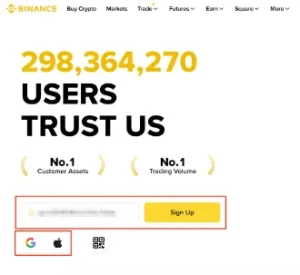
Binance uses a tiered verification system. Basic verification unlocks limited withdrawals with just an email and phone number. Full KYC, which requires a government ID and a selfie, unlocks higher withdrawal limits and fiat on-ramps. Processing usually completes within minutes to a few hours.
OKX runs a similar tiered structure, moving users from an unverified Lv0 account to fully verified status through document upload and facial verification. Both platforms support passport, driver’s license, and national ID uploads, and both meet standard Know Your Customer (KYC) and Anti-Money Laundering (AML) obligations.
Neither exchange lets you skip identity verification anymore. Those days ended with regulators watching every major platform closely.
4. Trading Fees Breakdown
Fees are where traders actually feel the difference, so let’s get specific.
Spot trading:
- Binance charges a standard 0.10% maker and 0.10% taker fee. Paying with BNB tokens cuts that by up to 25%.
- OKX charges 0.08% maker and 0.10% taker at its base “Regular” tier, giving it a slight edge on the maker side before any discount applies.
Futures trading:
- Both exchanges start at 0.02% maker and 0.05% taker on USDT-margined perpetual contracts. This category is essentially a tie at the base tier.
VIP tiers: Both platforms drop fees sharply for high-volume traders. Binance’s top VIP tier can bring spot fees down near 0.02%, while OKX’s highest tiers push maker fees into negative territory, meaning the exchange pays you a small rebate for adding liquidity.
Withdrawal fees: Both charge network-based withdrawal fees that shift with blockchain congestion rather than a flat exchange markup.
For a casual trader moving a few hundred dollars a month, the fee gap between these two is close to meaningless. For someone pushing six-figure monthly volume, OKX’s lower base maker fee and Binance’s BNB discount both deserve a proper spreadsheet comparison before you commit.
5. Product Range & Trading Tools
Binance’s biggest strength here is sheer breadth. It lists over 600 cryptocurrencies, runs Binance Launchpad for new token launches, offers Binance Alpha for early-stage projects, and maintains a large peer-to-peer (P2P) marketplace alongside staking, savings, and copy trading products.
OKX takes a different angle. Instead of stacking on more products, it focuses on unifying them. Its built-in Web3 wallet supports over 130 blockchains, letting users move between centralized trading and self-custody without leaving the app. OKX also runs Nitro Spreads for spread trading, a Liquid Marketplace for block trades, and a growing suite of trading bots for automated strategies.
Think of Binance as the exchange with more shelves in the store. OKX is the one that organized its shelves better and added a self-checkout for people who want to hold their own keys.
6. Security Track Record
This is the section that separates a good exchange from a lucky one.
Binance maintains a $1 billion Secure Asset Fund for Users (SAFU), an insurance-style reserve built to cover user losses in the event of a security breach. On the legal side, Binance agreed to a $4.3 billion settlement with the US Department of Justice, Treasury, and CFTC in November 2023 over anti-money laundering and sanctions violations. Importantly, regulators stated there were no allegations of customer fund misuse or market manipulation tied to that case. It was a compliance failure, not a theft.
OKX settled its own case with US regulators in 2024, paying over $504 million after the DOJ found the exchange had knowingly served US customers without registering as a money services business. As with Binance, this was a regulatory and compliance failure rather than evidence of a hack or missing customer funds. OKX now publishes monthly proof-of-reserves reports verified by the cybersecurity firm Hacken.
Neither exchange has a spotless legal history, and pretending otherwise would defeat the entire point of this article. Both have paid real, serious money for real compliance failures. Both have since rebuilt their leadership and reporting around that reality. Judge them on where they stand today, not just where they came from.
7. User Experience: App & Interface
Binance’s interface leans professional. The default trading view can overwhelm a first-time user with charts, order books, and menus stacked on top of each other. Binance Lite mode softens that for beginners, but the platform’s real strength shows once you know what you’re doing.
OKX’s interface feels cleaner out of the box, particularly for traders who live in the derivatives and unified-account world. Switching between spot, margin, and futures balances happens inside one account rather than juggling separate wallets, which cuts down on the “wait, where did my funds go” panic that trips up newer traders on multi-wallet platforms.
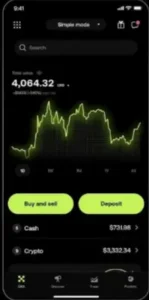
Mobile apps for both exchanges cover the essentials well: price alerts, quick order execution, and portfolio tracking. If you’re brand new to trading, spend twenty minutes in each app’s demo or small-balance mode before deciding. Screenshots never tell the full story.
8. Liquidity & Order Execution
Liquidity is the boring-sounding metric that actually determines whether your trade fills at the price you expect or somewhere embarrassingly different.
Binance holds the deepest order books in the industry on major pairs like BTC/USDT and ETH/USDT. Large orders tend to fill with minimal slippage, which matters enormously if you’re moving five or six figures at once. OKX isn’t far behind, and in the derivatives space specifically, its order book depth and futures volume are genuinely competitive with Binance’s.
For casual traders buying a few hundred dollars of Bitcoin, this entire section is close to irrelevant. For anyone trading larger size, or scalping tight spreads, Binance’s extra liquidity cushion gives it a real, measurable edge.
9. Customer Support Reality Check
Neither exchange is famous for lightning-fast human support, and it would be dishonest to pretend otherwise.
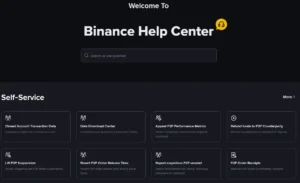
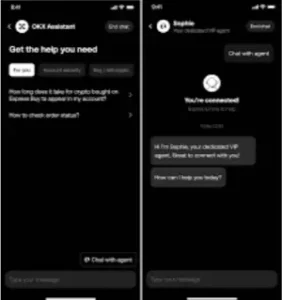
Binance offers 24/7 live chat and a large self-service help center, with response times that vary heavily depending on ticket complexity. Simple account questions get resolved quickly. Anything involving a frozen withdrawal or compliance review can take considerably longer.
OKX runs a similar structure: live chat, a support ticket system, and an extensive FAQ library. Users report faster initial responses for basic issues, though complex account reviews follow the same slower path as on Binance.
The practical advice here is simple. Enable two-factor authentication, keep your KYC documents current, and avoid triggering unnecessary compliance flags. The best customer support experience is the one you never need.
10. Unique Differentiators — What Sets Each Exchange Apart
Binance’s biggest differentiator is the BNB ecosystem itself. Holding BNB unlocks fee discounts, Launchpad allocations, and access to Binance Alpha listings before they hit the main exchange. No competing token program comes close to matching its reach.
OKX’s biggest differentiator is the unified trading account combined with its native Web3 wallet. Instead of treating self-custody as a separate product, OKX built it directly into the exchange experience, which appeals to users who want one-stop access to both centralized trading and on-chain DeFi.
If Binance is the exchange betting on breadth and its own token economy, OKX is the exchange betting on convergence between centralized and decentralized finance.
11. Pros and Cons
Binance
Pros:
- Deepest liquidity and largest coin selection in the industry
- BNB fee discounts and a large Launchpad ecosystem
- $1 billion SAFU insurance fund
Cons:
- Not available to most US residents on the global platform
- Interface can overwhelm first-time traders
- Past $4.3 billion regulatory settlement still shapes public perception
OKX
Pros:
- Lower base maker fee on spot trading
- Unified account structure with a strong built-in Web3 wallet
- Monthly, third-party-verified proof-of-reserves reports
Cons:
- Smaller coin selection than Binance
- Blocked in Canada and was previously restricted in the US
- Past $504 million settlement over unregistered US operations
12. Verdict by User Type
Beginners: Binance’s Lite mode and educational resources make the first few trades easier, though OKX’s cleaner unified account is arguably less confusing once you get past day one.
Active day traders: Binance’s superior liquidity on major pairs reduces slippage on larger orders, giving it the edge for anyone trading serious size.
Derivatives and futures traders: This one’s close. OKX’s futures order book depth and tools like Nitro Spreads make it a strong pick, while Binance matches it on base futures fees and overall volume.
Web3 and DeFi users: OKX’s built-in wallet and DEX aggregator give it a clear lead for anyone who wants to move between centralized and on-chain activity without switching apps.
Cost-conscious traders: OKX’s base spot maker fee is lower out of the gate. Binance can undercut it once you factor in BNB discounts, so the winner depends on how much BNB you’re willing to hold.
13. Which Exchange Is Better? (Final Verdict)
Neither exchange is objectively better in every category, and any comparison claiming otherwise is selling you something. Binance wins on scale: more coins, deeper liquidity, and a bigger ecosystem built around BNB. OKX wins on structure: a lower base fee, a genuinely unified account, and one of the more forward-looking Web3 wallet integrations in the industry.
If you trade often, move large amounts, or want the widest possible selection of coins, Binance is the stronger overall platform. If you value a cleaner account structure, slightly better base-tier fees, and built-in access to self-custody and DeFi, OKX deserves serious consideration.
Before funding either account, check current availability in your country and read the full breakdown of OKX’s fees, security, and features alongside our Binance vs Bybit comparison if you’re weighing a third option. New traders should also start with our guide to the best crypto exchanges for beginners before committing real money anywhere.
14. Frequently Asked Questions
Is Binance or OKX safer in 2026? Both exchanges have paid large regulatory settlements, but neither settlement involved confirmed theft of customer funds. Binance backs user accounts with its SAFU insurance fund, while OKX publishes monthly proof-of-reserves reports verified by Hacken. Judge safety by current practices, not headlines from a few years ago.
Which exchange has lower fees? OKX has a lower base spot maker fee at 0.08% versus Binance’s 0.10%. Binance can close that gap and go lower with a BNB fee discount. Futures fees are essentially identical between the two at the base tier.
Can US residents use Binance or OKX? US residents cannot use Binance’s global platform but can use the separate Binance.US entity, with some state restrictions. OKX relaunched a compliant US platform in 2025, operated out of San Jose, California.
Which exchange has more cryptocurrencies? Binance lists significantly more coins, with 600+ compared to OKX’s 350+, giving it the edge for traders chasing newer or smaller-cap tokens.
Is OKX better for derivatives trading? OKX’s derivatives order book depth and tools like Nitro Spreads make it highly competitive with Binance in futures trading, and some active traders prefer its unified margin structure specifically for this reason.
Do I need to complete KYC on both platforms? Yes. Both Binance and OKX require identity verification for full account access, including higher withdrawal limits and fiat deposit options, in line with standard AML regulations.
This article reflects publicly available regulatory filings, official company statements, and independent reporting current as of publication. Trading fees, product availability, and regional access change frequently — always verify current terms directly with each exchange before trading.
