
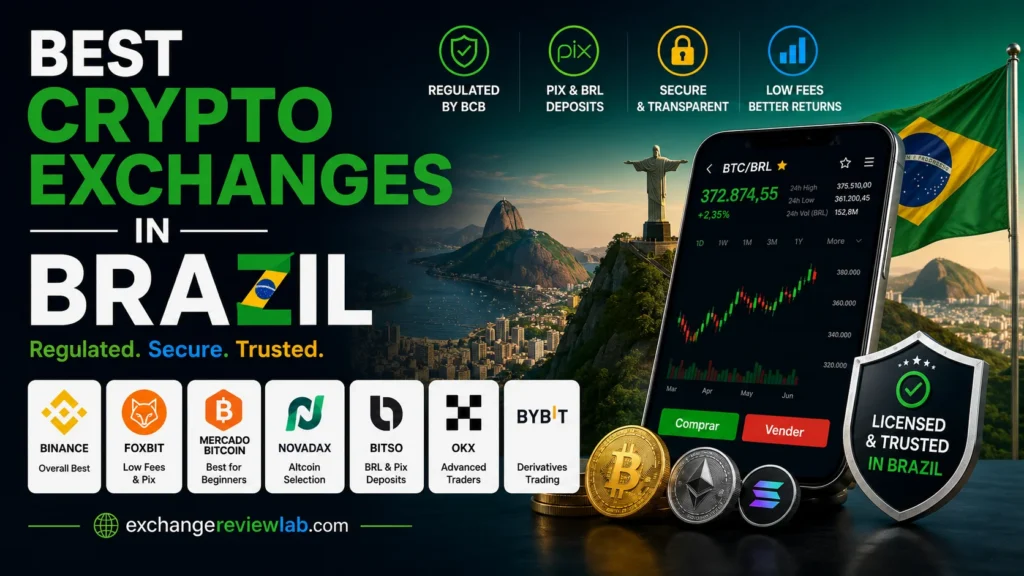
Brazil doesn’t do things halfway. It’s Latin America’s biggest crypto market, Pix moves money faster than most banks abroad, and the Central Bank just finished building one of the strictest oversight systems in the region. Picking an exchange here isn’t about chasing the flashiest app anymore — it’s about matching a platform to how you actually fund, trade, and withdraw.
This guide breaks down the seven exchanges worth your CPF and your Reais in 2026, how Brazil’s new rules affect you, and what to check before you deposit a single centavo.
How We Ranked the Best Crypto Exchanges for Brazil
We didn’t just skim homepages and call it research. Each exchange was evaluated against the same criteria a careful Brazilian investor would actually use:
- Regulatory status — is the platform authorized under the Central Bank’s VASP framework, transitioning toward it, or operating without a domestic license
- BRL and Pix support — how cheaply and reliably reais move in and out
- Fee structure — trading, deposit, and withdrawal costs, including hidden spreads
- Coin selection and liquidity — depth for majors, breadth for altcoins
- Security track record — custody practices, insurance funds, and incident history
- Customer support — Portuguese-language help and response times
- Beginner-friendliness — how painless it is to go from “sign up” to “first trade”
No exchange wins every category. That’s the point of a comparison, not a popularity contest.
Quick Comparison: Best Crypto Exchanges for Brazil
| Exchange | Best For | BCB / VASP Status | Trading Fee | BRL Deposit Fee | Withdrawal Fee | Min. Deposit | Coins Supported | Cold Storage | Support |
|---|---|---|---|---|---|---|---|---|---|
| Binance | Overall | Licensed broker-dealer (via SimPaul acquisition) | ~0.1% standard, lower on higher tiers | Free via Pix | Network-fee based, varies by coin | No fixed minimum | 350+ | Yes (SAFU insurance fund) | 24/7 live chat, Portuguese |
| Foxbit | Low fees & Pix | Domestic exchange, transitioning to BCB authorization | Competitive tiered fees | Free | Low, coin-dependent | Low, Pix-friendly | 100+ | Yes | Portuguese phone & chat support |
| Mercado Bitcoin | Beginners | Central Bank payment institution license | 0.25%–0.7% | Free bank transfer; cash deposit option | 0.1%–0.5% | Low, cash deposits accepted | 300+ | Yes | Portuguese, extensive help center |
| NovaDAX | Altcoin selection | Domestic exchange, BRL-native | Tiered, competitive | Free via Pix | Coin-dependent | Low | 500+ | Yes | Portuguese support |
| Bitso | BRL & Pix deposits | Central Bank payment institution license | Tiered, competitive | Free via Pix | Coin-dependent | Low | 100+ | Yes | Spanish/Portuguese, regional LatAm focus |
| OKX | Advanced traders | Operates without domestic BCB authorization | Low maker/taker, tiered | Varies by rail | Coin-dependent | Low | 300+ | Yes, Proof of Reserves | 24/7 chat |
| Bybit | Security | Operates without domestic BCB authorization | Low maker/taker, tiered | Varies by rail | Coin-dependent | Low | 400+ | Yes, Proof of Reserves | 24/7 chat |
Fees change often, so treat this table as a starting point and double-check current numbers on each platform before funding an account.
The 7 Best Crypto Exchanges for Brazil
1. Binance — Best Overall Crypto Exchange in Brazil
Binance carries the deepest liquidity of any platform serving Brazilian traders, and it backed that up with real local regulatory work. Through its acquisition of the São Paulo brokerage Simpaul, Binance became the first crypto exchange to hold a broker-dealer license issued by the Central Bank of Brazil, letting it distribute securities and issue electronic money locally rather than routing everything through third-party intermediaries.
Pros
- Massive liquidity and the widest coin selection on this list
- Pix deposits, so funding is fast and typically free
- Backed by a broker-dealer license from Brazil’s Central Bank
- SAFU insurance fund cushions certain security incidents
Cons
- Interface can overwhelm first-timers
- Regulatory history includes a past CVM settlement over unauthorized services
- Customer support can be slower during high-volume periods
2. Foxbit — Best for Low Trading Fees & Pix

Foxbit built its reputation as one of Brazil’s original Bitcoin onramps, and it still handles a large share of domestic BTC trades. Its selling point is friction-free BRL movement: free Pix deposits and a fee structure built around Brazilian traders instead of adapted for them.
Pros
- Zero deposit fees through Pix
- Strong local reputation and Portuguese-first support
- Straightforward, no-nonsense trading interface
Cons
- Smaller coin selection than global exchanges
- Less useful if you trade internationally or need obscure altcoins
- Advanced order types are limited compared to Binance or OKX
3. Mercado Bitcoin — Best for Beginners
Mercado Bitcoin is the exchange your uncle in São Paulo probably already uses. It’s the largest domestic platform by user count, and it holds a Central Bank payment institution license, which matters if something ever goes wrong and you need a local body to escalate a complaint to.
Pros
- Cash deposits accepted at pharmacies and bank branches — genuinely rare globally
- Free bank transfers for verified users
- 300+ supported coins with a beginner-friendly app
- Central Bank payment institution license
Cons
- Trading fees (0.25%–0.7%) run higher than Binance or Foxbit
- Advanced traders may find charting tools basic
- Withdrawal fees vary noticeably by coin
4. NovaDAX — Best for Altcoin Selection
If Mercado Bitcoin is the safe local bank branch, NovaDAX is the exchange for people who actually want to hunt down the coin nobody else lists. It supports over 500 cryptocurrencies, which puts it ahead of most Brazil-focused competitors on raw breadth.
Pros
- One of the widest altcoin selections among BRL-native exchanges
- Free Pix deposits
- Competitive tiered trading fees
Cons
- Less brand recognition than Binance or Mercado Bitcoin
- Liquidity on smaller altcoins can be thin
- Fewer educational resources for newcomers
5. Bitso — Best for BRL & Pix Deposits
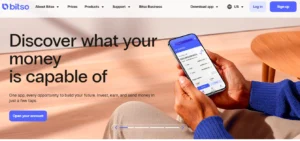
Bitso started in Mexico but built a serious presence across Latin America, including a Central Bank payment institution license in Brazil. It’s a natural fit if you move between BRL and stablecoins regularly, or if you also transact across other LatAm markets.
Pros
- Central Bank payment institution license
- Reliable Pix rails and regional LatAm liquidity
- Strong stablecoin support for USDT and USDC
Cons
- Coin selection is narrower than Binance or NovaDAX
- Some features feel more optimized for Mexico than Brazil
- Support response times can lag during volatility spikes
6. OKX — Best for Advanced & Pro Traders
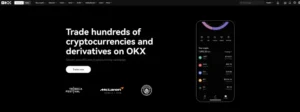
OKX is where Brazilian traders go once spot buying stops being interesting. Between derivatives, a broad Web3 wallet ecosystem, and published Proof of Reserves, it’s built for people who already know what a funding rate is.
Pros
- Deep derivatives and futures product suite
- Proof of Reserves for transparency
- Competitive maker/taker fee tiers for high-volume traders
Cons
- No domestic BCB authorization, so local dispute resolution is harder
- Overkill for casual investors
- Product depth can feel like a maze if you’re new
7. Bybit — Best for Security
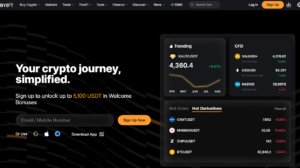
Bybit leans hard into transparency as its core pitch, with regular Proof of Reserves publication and a broad product range that rivals Binance. It’s a solid pick for traders who prioritize verifiable custody practices over local licensing.
Pros
- Proof of Reserves published regularly
- Wide product range: spot, derivatives, copy trading
- Competitive fees at scale
Cons
- No domestic BCB authorization
- Less brand familiarity among everyday Brazilian retail investors
- Support is global, not Brazil-specific
Read more:
- Bybit Review 2026: Best Crypto Exchange for Beginners?
- Is Bybit Safe or a Scam? (2026) – Read before star trading
Deposit and Withdrawal Speed Comparison
Pix changed everything for Brazilian crypto users, and every exchange on this list knows it. Domestic platforms — Foxbit, Mercado Bitcoin, NovaDAX, and Bitso — generally process Pix deposits within minutes since they settle directly through Brazilian banking rails. Binance also supports Pix and typically clears deposits quickly thanks to its local licensing infrastructure.
International-first exchanges like OKX and Bybit still accept Pix in many cases, but funds sometimes route through intermediary partners, which can add friction. Withdrawal speed for crypto itself depends more on blockchain network congestion than on the exchange, though platforms with higher liquidity generally process withdrawal requests faster on their end.
Cash deposits, offered by Mercado Bitcoin, are the outlier: convenient for the unbanked, but slower to clear than Pix.
Is Crypto Trading Legal in Brazil?
Yes, cryptocurrency is fully legal in Brazil. Buying, holding, and selling digital assets is recognized under the Brazilian Virtual Assets Law, and crypto is treated as a digital asset rather than legal tender.
What changed in 2026 is oversight, not legality. The Central Bank of Brazil (BCB) published three resolutions — 519, 520, and 521 — that took effect on February 2, 2026, requiring every company offering crypto services to Brazilians to obtain formal authorization, similar to how a bank gets licensed. Companies had until late October 2026 to secure that authorization or exit the market. The Securities and Exchange Commission (CVM) separately oversees any token that behaves like a security, while the BCB handles operational integrity, custody standards, and anti-money-laundering compliance for everyone else.
In plain terms: trading crypto in Brazil isn’t a gray area. Which exchange you trade on, and whether it actually bothered to get licensed, is the part worth paying attention to.
Factors to Consider When Choosing a Crypto Exchange in Brazil
Regulatory status. A BCB-authorized or transitioning platform gives you somewhere to file a complaint locally if something goes wrong. Offshore exchanges without that status aren’t illegal to use, but you’re relying entirely on their home-country protections.
Pix and BRL support. If depositing reais takes more than a couple of clicks, that’s friction you don’t need. Confirm the exchange settles Pix directly rather than through a third-party workaround.
Fee transparency. Trading fees are easy to compare; spreads on instant buy features are not. Always check both before assuming an exchange is “cheap.”
Coin liquidity, not just coin count. An exchange listing 500 coins means little if the ones you want to trade have thin order books and wide spreads.
Security practices. Look for cold storage custody, published Proof of Reserves, and a documented incident history — including how the exchange handled past problems, not just whether it claims to be “unhackable.”
Tax and reporting tools. Since Receita Federal expects detailed reporting, an exchange that exports clean transaction history saves you real headaches every April.
Centralized vs. Decentralized Exchanges: Which Is Right for You?
Centralized exchanges (CEXs) like the ones reviewed above hold custody of your funds, handle KYC, and connect directly to Pix and Brazilian banking rails. For most people, that convenience is the whole point: fast fiat on-ramps, customer support in Portuguese, and a straightforward path to filing accurate tax reports.
Decentralized exchanges (DEXs) let you trade directly from a self-custody wallet without an intermediary holding your funds. That appeals to traders who prioritize control and don’t want a company standing between them and their coins. The trade-off is real: no BRL on-ramp, no customer support line, and full personal responsibility for wallet security and seed phrase storage.
A practical middle ground many Brazilians use: buy crypto on a CEX with Pix, then move it to self-custody or a DEX for specific trades. You get easy fiat access and the option of independence when you want it.
How to Start Trading Crypto in Brazil (Step-by-Step Guide)
- Pick a licensed or transitioning exchange. Prioritize platforms with BCB authorization or a clear path toward it.
- Complete KYC verification. You’ll need your CPF, a government ID, and typically a selfie or proof-of-address document.
- Fund your account via Pix. Most domestic exchanges process Pix deposits within minutes.
- Place your first trade. Start with a major asset like Bitcoin or Ethereum before exploring altcoins.
- Decide on custody. Keep funds on the exchange for active trading, or withdraw to a self-custody wallet for long-term holding.
- Track every transaction. Save records of trades, swaps, and transfers — you’ll need them for monthly and annual tax reporting.
- Report gains through GCAP and DARF. File capital gains through the Receita Federal’s systems on schedule to avoid penalties.
Crypto Tax Rules in Brazil
Brazil taxes crypto gains, and the Receita Federal tracks it closely, including cross-referencing blockchain data against CPF numbers. Here’s the core structure investors should know:
- Monthly exemption threshold: Total crypto disposals (sales and swaps) up to R$35,000 in a calendar month are exempt from capital gains tax.
- Progressive rates above the threshold: Once monthly disposals exceed R$35,000, gains are taxed on a progressive scale — 15% on gains up to R$5 million, rising to 17.5%, 20%, and 22.5% at higher brackets.
- Crypto-to-crypto swaps count. Trading one coin for another is a taxable event, not just cashing out to BRL.
- Crypto received as income — salary, staking rewards, or mining payouts — is taxed under progressive personal income tax rates (0%–27.5%) at the time it’s received.
- Monthly payment via DARF. If tax is owed, it’s due by the last business day of the following month, not just once a year.
- Annual declaration. Any crypto holdings worth R$5,000 or more per asset type must appear in your annual IRPF filing.
- Offshore exchange reporting. Transactions on non-Brazilian platforms carry additional monthly reporting obligations once volumes cross set thresholds.
A flat-rate simplification has been floated in policy discussions, but as of this writing the progressive structure with the R$35,000 exemption remains the operating rule. Tax law changes fast in Brazil, so confirm current rates with a qualified accountant before filing — this section is educational, not tax advice.
Frequently Asked Questions (FAQs)
Is crypto legal in Brazil? Yes. Buying, holding, and trading digital assets is fully legal under Brazil’s Virtual Assets Law, with oversight split between the Central Bank and the CVM.
Which crypto exchange is safest for Brazilians? Exchanges with domestic BCB authorization or payment institution licenses — Mercado Bitcoin, Bitso, and Binance’s broker-dealer entity — offer the clearest path to local dispute resolution. Bybit and OKX offset the lack of domestic licensing with published Proof of Reserves.
Do I have to pay tax on small crypto trades? If your total monthly disposals stay under R$35,000, current rules exempt those gains from capital gains tax. Track your totals carefully, since the exemption applies to total disposal value, not just profit.
Can I deposit cash to buy crypto in Brazil? Yes. Mercado Bitcoin allows cash deposits at pharmacies and bank branches, which is unusual even by global standards.
Is Pix the best way to fund a crypto exchange? For most Brazilian users, yes. Pix deposits are typically free and settle within minutes on domestic and Pix-enabled international exchanges.
Do decentralized exchanges work well in Brazil? DEXs work fine technically, but none offer direct Pix or BRL on-ramps. Most Brazilian traders fund a CEX first, then move funds to a DEX or self-custody wallet if needed.
Final Verdict: Which Crypto Exchange Should You Choose?
There’s no single “best” exchange — there’s a best exchange for what you’re actually doing. If you want deep liquidity and the widest coin selection, Binance is the safe default, backed by real local licensing. If Pix speed and low fees matter more than anything else, Foxbit earns its spot. New to crypto entirely? Mercado Bitcoin’s cash deposits and Portuguese-first support flatten the learning curve better than anything else on this list.
Chasing altcoins means NovaDAX. Living in stablecoins and moving across Latin America points to Bitso. Serious derivatives traders belong on OKX. And if verifiable custody and Proof of Reserves matter more than brand recognition, Bybit deserves a look.
Whichever you pick, confirm current licensing status and fees before funding an account — regulations and pricing in Brazil are moving quickly in 2026, and “correct six months ago” isn’t the same as “correct today.” For deeper dives into individual platforms, browse the full exchange review library for side-by-side breakdowns.
