
Picking a crypto exchange feels a bit like picking a bank that also lets you gamble on dog-themed tokens at 3 a.m. You want low fees, you want your funds to still exist tomorrow, and you’d like customer support to answer before your grandchildren are born.
Bybit and MEXC both show up on almost every “best crypto exchange” list, but they play very different games. Bybit leans into regulation, polish, and deep liquidity on major coins. MEXC leans into sheer selection, rock-bottom fees, and getting you into a brand-new altcoin before anyone else has heard of it.
This guide breaks down both platforms point by point, using verified data from official fee pages, regulatory filings, and reputable financial news sources — no guesswork, no filler.
Quick Verdict — Bybit vs MEXC at a Glance
If you want the short version before the deep dive:
- Choose Bybit if you value regulatory oversight, a cleaner interface, and deep liquidity on major pairs like BTC and ETH.
- Choose MEXC if you want access to thousands of smaller altcoins, near-zero maker fees, and don’t mind a lighter regulatory footprint.
- Both exchanges block United States residents, so this comparison is aimed at traders outside the US.
- Bybit has survived the largest crypto hack in history and rebuilt trust through transparency; MEXC has avoided a major breach but carries a thinner regulatory record.
Neither platform is objectively “safer” in every sense. They simply optimize for different traders, which is exactly what the rest of this article unpacks.
Bybit vs MEXC: Side-by-Side Comparison
| Category | Bybit | MEXC |
|---|---|---|
| Founded | 2018 (Ben Zhou) | 2018 |
| Headquarters | Dubai, UAE (BVI-registered entity) | Victoria, Seychelles |
| Regulation | MiCA license (Austria, EU), full UAE VAPO license, VARA provisional, India FIU-IND | Seychelles registration; Estonian MTR license revoked in 2023 |
| US Availability | Not available | Not available |
| Spot Fees (maker/taker) | 0.10% / 0.10% | 0% / 0.05% |
| Futures Fees (maker/taker) | 0.02% / 0.055% | 0% / 0.02% |
| Coins / Trading Pairs | Hundreds of coins, curated selection | 2,700+ coins, 3,000+ pairs |
| Max Leverage | Up to 100x | Up to several hundred times on select contracts |
| Security Track Record | $1.5B hack in Feb 2025, fully reimbursed, no user losses | No confirmed major exchange-level hack to date |
| Proof of Reserves | Monthly, Hacken-audited | Bi-monthly/monthly, Hacken-audited |
| Interface | Clean, beginner-friendly | Feature-dense, steeper learning curve |
| Customer Support | 24/7 live chat, VIP account managers | 24/7 live chat, more mixed user feedback |
| Best For | Regulation-conscious traders, major-pair liquidity, EU users | Altcoin hunters, fee-sensitive high-frequency traders |
Company Background & Trust Factor
Both exchanges launched in the same year, 2018, but they grew up in very different neighborhoods.
Ben Zhou founded Bybit in Singapore in 2018 after working as a regional manager at forex broker XM. The company later moved its global headquarters to Dubai in 2022, while its legal entity, Bybit Fintech Limited, remains registered in the British Virgin Islands. Today, Bybit ranks as the world’s second-largest crypto exchange by trading volume, according to CoinDesk, and serves tens of millions of users globally.

MEXC, registered as MEXC Global Ltd, is headquartered in Victoria, Seychelles. It built its reputation by listing new tokens faster than almost anyone else, which made it the go-to exchange for altcoin hunters chasing early entries. MEXC now serves more than 40 million users across over 170 countries.
The trust gap between the two comes down to transparency and paper trail. Bybit publishes monthly, Hacken-audited proof-of-reserves reports and has pursued licenses in multiple major jurisdictions. MEXC also publishes proof-of-reserves data, but its regulatory history includes a revoked Estonian license and warnings from regulators in a handful of countries.
Read more:
Supported Countries & Regulatory Restrictions
Neither exchange serves the United States, and both restrict North Korea, Iran, Cuba, and Syria for sanctions reasons. Past that overlap, their regulatory paths split sharply.
Bybit’s regulatory footprint:
- Holds a full MiCA crypto-asset service provider license in Austria, granted in May 2025, which allows Bybit EU to legally serve most of the European Economic Area.
- Became the first exchange to receive a full Virtual Asset Platform Operator License from the UAE’s Securities and Commodities Authority in October 2025.
- Holds a provisional VARA approval in Dubai and is registered with India’s Financial Intelligence Unit after resolving a past compliance dispute there.
- Still restricts the UK, mainland China, Singapore retail users, and Canada.
MEXC’s regulatory footprint:
- Registered in Seychelles under a light-touch financial services framework rather than a tier-one regulator.
- Previously held an Estonian MTR license, which was revoked by Estonia’s Financial Intelligence Unit over anti-money-laundering shortcomings; the appeal remains unresolved.
- Restricts the US, UK, Canada, mainland China, Hong Kong, and Singapore, according to MEXC’s own restricted countries disclosure.
- Regulators in Germany (BaFin) have publicly flagged MEXC for operating without local licensing.
The takeaway is simple: Bybit is actively building a licensed, regulated footprint in major markets, while MEXC largely operates offshore with fewer formal approvals. That doesn’t automatically make MEXC unsafe, but it does shift more responsibility onto the trader.
Account Setup & KYC Process
Signing up for either exchange takes just a few minutes with an email or phone number. The real difference shows up once you try to move real money.
Bybit follows a fairly standard tiered KYC model. Basic verification unlocks limited withdrawals, while full identity verification (ID document plus facial recognition) unlocks higher limits, fiat on-ramps, and card services.

MEXC has traditionally been more flexible at the entry level, allowing some spot trading and capped withdrawals before full KYC. However, MEXC has increasingly tightened this over time, and full features — fiat purchases, higher withdrawal ceilings, and the MEXC Card — now require complete verification.

For anyone in a country with strict data-privacy concerns, this distinction matters less than it used to. Both exchanges now push most active traders toward full verification within their first few sessions.
Trading Fees Breakdown
This is where MEXC pulls ahead on paper, and it’s worth being precise instead of hand-wavy about it.
| Fee Type | Bybit | MEXC |
|---|---|---|
| Spot maker | 0.10% | 0% |
| Spot taker | 0.10% | 0.05% |
| Futures maker | 0.02% | 0% |
| Futures taker | 0.055% | 0.02% |
| Withdrawal (USDT, TRC-20) | ~1 USDT | ~1 USDT |
Figures reflect standard, non-VIP rates published on Bybit’s official fee schedule and MEXC’s official fee page.
MEXC’s zero-maker-fee spot model is genuinely one of the more aggressive pricing structures among major exchanges, and it applies without requiring users to hold a platform token. Bybit’s flat 0.10% spot fee is closer to the industry standard, though both platforms offer volume-based VIP tiers and native-token discounts (BIT on Bybit, MX on MEXC) that push effective rates lower for high-volume traders.
For a frequent scalper running thousands of trades a month, MEXC’s fee structure can save real money. For someone making a handful of trades a week, the difference is closer to a rounding error than a deciding factor.
Read more:
Product Range & Trading Tools
Bybit and MEXC both offer spot trading, derivatives, copy trading, and earn-style products, but they emphasize different strengths.
Bybit’s lineup includes spot trading, USDT/USDC and inverse perpetual futures, options, leveraged tokens, copy trading, an OTC desk, a launchpad for new projects, and an NFT marketplace. Its derivatives suite is considered one of the most complete in the industry, with leverage available up to 100x on many contracts.
MEXC’s lineup is defined by breadth. The exchange lists over 2,700 cryptocurrencies and more than 3,000 trading pairs, dwarfing most competitors, according to CoinGecko’s exchange data. It also offers futures trading, grid trading bots, copy trading, staking, and DEX+, a feature that bridges centralized trading with on-chain liquidity. Futures leverage can climb into triple digits on select contracts, which is a double-edged sword worth respecting.
If you trade mostly Bitcoin, Ethereum, and other established assets, Bybit’s tighter, curated product set will likely feel more useful. If you hunt for early-stage altcoins before they list elsewhere, MEXC’s catalog is hard to match.
Security Track Record
Here’s where things get genuinely interesting, and where both exchanges have very different stories to tell.
On February 21, 2025, Bybit suffered the largest cryptocurrency theft in history. Attackers linked to North Korea’s Lazarus Group compromised a developer machine tied to the Safe{Wallet} multisig platform, injected malicious code, and tricked Bybit’s cold-wallet signers into approving a transaction that redirected roughly $1.5 billion in ETH and staked ETH to attacker-controlled wallets. The FBI publicly confirmed North Korea’s involvement, as reported by Bleeping Computer.
What happened next matters just as much as the breach itself. CEO Ben Zhou responded within roughly 30 minutes, Bybit secured bridge financing to cover the shortfall, and the exchange processed over 350,000 withdrawal requests within 12 hours without halting operations. Bybit has since filed a civil lawsuit against North Korea and the Lazarus Group in a US federal court and continues publishing monthly, third-party-audited proof-of-reserves reports.
MEXC, by contrast, has not disclosed a confirmed major exchange-level hack as of 2026. It publishes its own Hacken-audited proof-of-reserves reports and maintains a Guardian Fund, which the exchange has stated it plans to expand from $100 million toward $500 million over time, alongside a separate insurance fund for futures liquidations.
So who’s “more secure”? It’s genuinely a mixed picture. Bybit survived a catastrophic, headline-grabbing attack and handled the aftermath with unusual transparency. MEXC has a cleaner incident history but sits on a lighter regulatory foundation, which is its own kind of long-term risk. Neither track record should be read in isolation.
User Experience: App & Interface
Bybit’s interface consistently gets praised for being clean and approachable, even for traders who aren’t derivatives specialists. The unified trading account, integrated TradingView charts, and relatively uncluttered mobile app make it easy to find spot, futures, and earn products without digging through menus.
MEXC’s interface carries the weight of its enormous asset catalog. With thousands of listed tokens, the platform can feel more crowded, and new users sometimes describe the learning curve as steeper than Bybit’s. Power users who want maximum optionality tend to tolerate this trade-off happily; casual traders sometimes don’t.

Neither app is objectively “bad.” It’s closer to comparing a well-organized supermarket to a sprawling flea market that happens to stock everything.
Liquidity & Order Execution
Liquidity is where trading theory meets trading reality, and it’s not something marketing copy can fake for long.
Bybit’s status as the world’s second-largest exchange by volume translates into deep order books on major pairs. BTC, ETH, and top-50 altcoins generally see tight spreads and fast fills, which matters enormously for anyone trading with leverage.
MEXC’s liquidity is genuinely strong on its top pairs too, but it thins out quickly once you move into its long tail of thousands of smaller-cap listings. That’s the natural cost of listing so many assets — depth gets spread thin across a huge menu.
If your strategy revolves around BTC, ETH, or major perpetuals, execution quality should feel similar on both platforms. If you’re chasing a freshly listed micro-cap token, expect wider spreads and more slippage, regardless of which exchange you use.
Customer Support Reality Check
Support quality is the part most comparison articles gloss over, so let’s not.
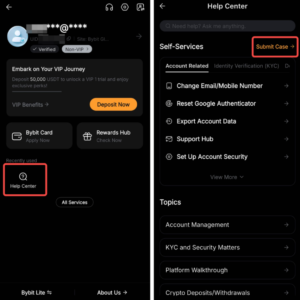
Bybit runs 24/7 multilingual live chat, and higher-tier VIP traders get access to dedicated account managers. Ben Zhou has publicly framed responsive support as a founding priority for the exchange, and Bybit’s real-time communication during the 2025 hack — livestreams, frequent updates, fast decision-making — backed that reputation up under genuine pressure.
MEXC also offers 24/7 live chat and a large multilingual support team, but user feedback on platforms like Trustpilot more frequently mentions slow resolution times and, in some cases, account or fund freezes tied to risk-management checks. This doesn’t mean support is unusable, but it does mean setting realistic expectations, especially during high-volume market events when queues get longer everywhere.
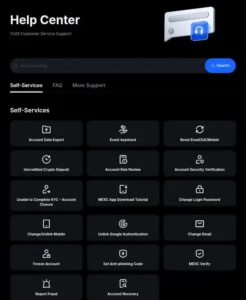
If responsive human support during a crisis is a priority for you, Bybit’s track record currently has the edge.
Unique Differentiators — What Sets Each Exchange Apart
Bybit’s edge: a genuine push toward global regulatory legitimacy. Being the first exchange to secure a full UAE Virtual Asset Platform Operator License and holding an EU MiCA license puts Bybit ahead of most competitors on compliance. Add in its post-hack transparency and India registration, and Bybit reads like an exchange actively trying to become “the regulated one.”
MEXC’s edge: unmatched breadth and pricing aggression. Zero-fee spot maker orders, thousands of tradable assets, and consistently early listings for new tokens make MEXC the default stop for traders who want to be first, not necessarily the safest.
Neither differentiator is universally “better” — they simply serve opposite trading philosophies.
Pros and Cons
Bybit
Pros:
- Full MiCA license in the EU and full VAPO license in the UAE
- Deep liquidity on major pairs
- Clean, beginner-friendly interface
- Transparent, fast crisis communication (proven during the 2025 hack)
- Strong 24/7 support with VIP account managers
Cons:
- Higher spot fees than MEXC
- Suffered the largest crypto hack in history, even though funds were fully covered
- Not available in the UK, mainland China, Singapore retail, or Canada
MEXC
Pros:
- Near-zero spot maker fees and low taker fees
- Enormous selection: 2,700+ coins and 3,000+ trading pairs
- Fast listings for new and trending tokens
- No confirmed major exchange-level hack to date
Cons:
- Thinner regulatory footprint; Estonian license revoked
- Interface can feel cluttered for beginners
- More user complaints about support responsiveness and account freezes
- Very high leverage on some contracts increases risk for inexperienced traders
Verdict by User Type
- Complete beginners: Bybit’s simpler interface and stronger compliance record make it the more forgiving starting point.
- Altcoin hunters: MEXC’s catalog of thousands of pairs is unmatched for early access to smaller tokens.
- Leverage and derivatives traders: Both platforms compete well, but Bybit’s deeper liquidity on major perpetuals tends to produce cleaner fills at scale.
- Fee-sensitive, high-frequency traders: MEXC’s 0% maker fee structure is difficult to beat.
- EU-based traders: Bybit’s MiCA-licensed EU entity gives it a clear regulatory advantage over MEXC in Europe.
- Security-conscious, buy-and-hold users: Bybit’s transparency after its 2025 breach and its expanding license portfolio may offer more peace of mind than MEXC’s lighter-touch regulatory profile.
Which Exchange Is Better? (Final Verdict)
There isn’t a single correct answer here, and anyone who tells you otherwise is probably trying to sell you something.
Bybit is the more regulated, more transparent, and more liquidity-rich choice for traders who prioritize compliance and major-pair execution. Its handling of the 2025 hack — full user reimbursement, rapid communication, ongoing legal action against the attackers — is a case study in crisis management, not a reason for automatic distrust.
MEXC is the better fit for traders chasing altcoin breadth and rock-bottom fees, provided they accept a thinner regulatory safety net and stay disciplined with position sizing on high-leverage contracts.
If your capital and trading habits lean toward established assets and long-term security, Bybit edges ahead. If you live for early-stage token discovery and fee optimization, MEXC earns its keep. For a side-by-side look at how Bybit stacks up against another major player, see our Binance vs Bybit comparison
Frequently Asked Questions
Is Bybit or MEXC safer? Bybit suffered the largest crypto hack in history in February 2025 but fully reimbursed users and now holds licenses in the EU and UAE. MEXC has no confirmed major hack but operates with a lighter regulatory footprint after losing its Estonian license. Both publish independently audited proof-of-reserves reports.
Which exchange has lower fees, Bybit or MEXC? MEXC generally has lower fees, with 0% spot maker fees and 0.05% taker fees, compared to Bybit’s flat 0.10% spot fee. Futures fees follow a similar pattern, with MEXC’s base rates undercutting Bybit’s.
Can I use Bybit or MEXC in the United States? No. Both exchanges restrict US residents under their terms of service, and neither holds the licenses required to legally serve the American market.
Which exchange has more coins available, Bybit or MEXC? MEXC lists significantly more assets, with over 2,700 cryptocurrencies and 3,000+ trading pairs, compared to Bybit’s more curated but still extensive offering.
Is MEXC regulated? MEXC is registered in the Seychelles under a lighter regulatory framework. It previously held an Estonian MTR license, which was revoked in 2023, and its appeal remains unresolved. It does not currently hold a tier-one license comparable to Bybit’s EU MiCA authorization.
Does Bybit still work after the 2025 hack? Yes. Bybit remained solvent throughout the incident, restored full withdrawal access within 12 hours, secured bridge funding to cover the loss, and continues operating as the world’s second-largest exchange by trading volume.
