
Disclosure: Some links on this page are affiliate links. If you sign up through them, we may earn a commission at no extra cost to you. This never influences our ratings or recommendations — all reviews are based on independent testing and honest editorial judgment.
For a crypto exchange review, use categories like this:
| Category | Weight | Bybit Score | Weighted Score |
|---|---|---|---|
| Security & Safety | 25% | 8.5 | 2.13 |
| Fees & Value | 20% | 9.5 | 1.90 |
| User Experience | 20% | 9.0 | 1.80 |
| Features & Products | 15% | 9.8 | 1.47 |
| Customer Support | 10% | 9.0 | 0.90 |
| Liquidity & Volume | 10% | 9.3 | 0.93 |
| Total | 100% | — | 9.13 ≈ 9.1 |
So, you’ve decided to dip your toes into crypto. Welcome to the club – a club where people check their phones at 3 AM and casually drop terms like “DYOR” and “liquidity pool” at dinner tables.
Now you need a reliable exchange, and Bybit keeps popping up everywhere. Fair question: Should a complete beginner actually use it?
This Bybit review for beginners cuts through the noise. We cover real features, real fees, honest pros and cons – and nothing made up. Let’s go.
1. What Is Bybit?
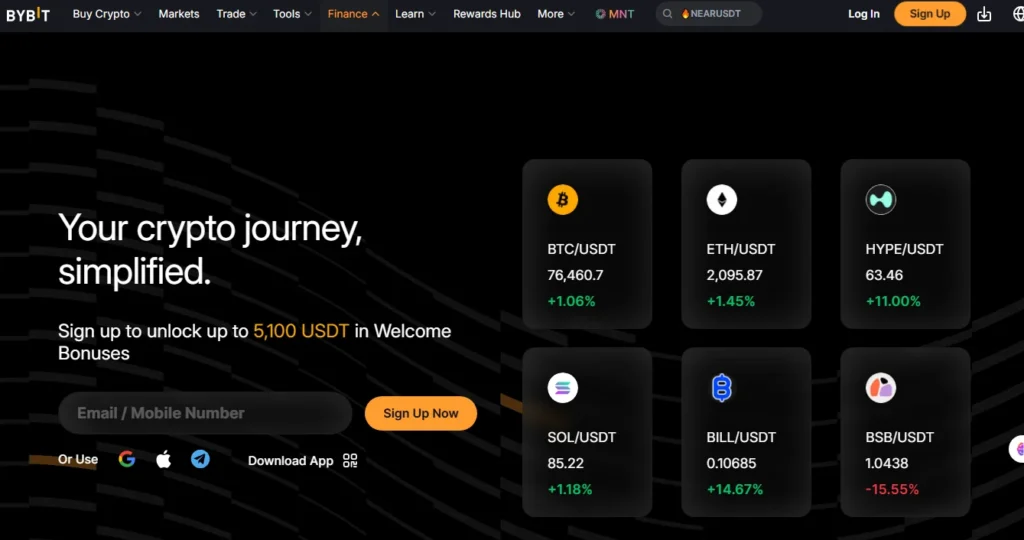
Bybit is a cryptocurrency exchange founded in 2018 by Ben Zhou, a former forex trader. It launched with a strong focus on derivatives, specifically perpetual futures contracts but has since grown into a full-service trading platform.
Today, Bybit serves over 80 million registered users across more than 160 countries. Its headquarters sit in Dubai, UAE, after the company relocated from Singapore.
It ranks consistently among the top three crypto exchanges globally by derivatives trading volume, according to CoinGecko. That’s not a small achievement in a market with hundreds of competitors.
What makes Bybit stand out from the crowd? It combines institutional-grade tools with a clean enough interface that doesn’t make new traders feel like they accidentally opened a NASA control panel. That balance is harder to pull off than it sounds.
Quick Snapshot:
| Feature | Detail |
| Founded | 2018 |
| Founder | Ben Zhou |
| Headquarters | Dubai, UAE |
| Users | 80+ million |
| Countries Served | 160+ |
| Available Assets | 500+ cryptocurrencies |
| Trading Types | Spot, Futures, Options, Copy Trading |
Bybit is not available to users in the United States and a handful of other restricted jurisdictions. Always check Bybit’s official terms of service to confirm your country’s eligibility before signing up.
It’s worth noting that Bybit operates under a model that prioritizes institutional-grade infrastructure. The platform processes billions of dollars in daily trading volume, which means its engine rarely slows down even during volatile market events. For a beginner, that reliability matters more than it might seem the last thing you want is your exchange going offline exactly when markets are moving fast.
2. Is Bybit Good for Beginners? (vs. KuCoin)
Here’s an honest take Bybit was originally built for experienced derivatives traders. But it has made serious improvements for beginners over the years.
Bybit for beginners today offers:
- A simplified “Spot” trading interface
- Copy Trading (follow expert traders automatically)
- Bybit Earn (passive income on idle assets)
- Demo trading with virtual funds to practice risk-free
KuCoin, on the other hand, is also popular among newer traders. It offers a wide range of altcoins, a similar fee structure, and beginner features like a “Trading Bot” section.
So how do they compare?
| Feature | Bybit | KuCoin |
| Interface for Beginners | Clean, improving | Slightly cluttered |
| Number of Coins | 500+ | 700+ |
| Copy Trading | Yes | Limited |
| Demo/Paper Trading | Yes | No |
| Futures Leverage | Up to 100x | Up to 100x |
| Maker Fee (Spot) | 0.1% | 0.1% |
| US Users | Not supported | Not supported |
Verdict on this comparison: For beginners who want a structured learning curve and built-in safety nets like demo trading, Bybit edges ahead of KuCoin. KuCoin wins on sheer number of altcoins if you’re hunting for obscure tokens.
Neither exchange is perfect for a total beginner who has never touched crypto. But between the two, Bybit’s cleaner interface and copy trading feature make the learning curve far less painful.
3. How to Create a Bybit Account
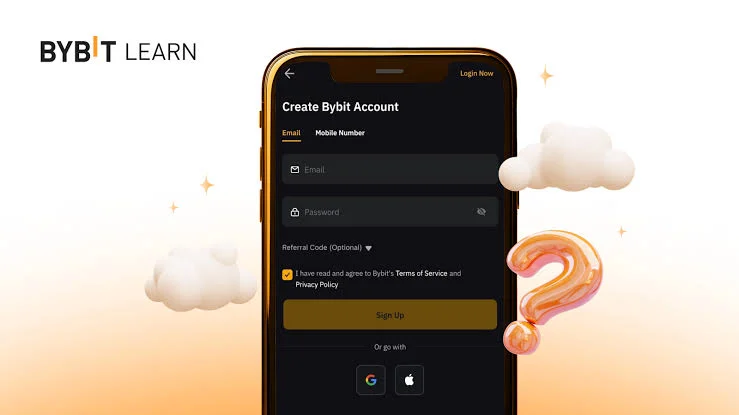
Setting up a Bybit account takes less than five minutes. Here’s exactly how it works:
Step 1: Visit the official Bybit website Go to bybit.com and click “Sign Up.” Never use third-party links from random sources always go directly to the official site.
Step 2: Enter your email address or phone number Bybit lets you register with either. You’ll receive a verification code immediately.
Step 3: Create a strong password Use a combination of uppercase letters, numbers, and symbols. Yes, “password123” does not qualify.
Step 4: Complete Email/Phone Verification Enter the code sent to your contact method. Your basic account activates immediately after this step.
Step 5: Enable Two-Factor Authentication (2FA) This step is optional but absolutely non-negotiable if you care about your funds. Bybit supports Google Authenticator and SMS-based 2FA. Use an authenticator app it’s more secure.
Step 6: Complete KYC Verification Bybit requires Know Your Customer (KYC) identity verification to unlock higher withdrawal limits and full platform features. You’ll need:
- A government-issued ID (passport or driving license)
- A selfie photo
- Proof of address (for Level 2 verification)
KYC Level 1 typically processes within minutes through automated verification. Level 2 may take longer.
Once verified, your account is fully operational. That’s genuinely it no weeks-long waiting period, no physical paperwork.
4. Bybit Trading Features Explained
Bybit isn’t a one-trick pony. Here’s what the platform actually offers:
Spot Trading
This is the simplest form of crypto trading. You buy and sell actual cryptocurrencies at current market prices. Bybit’s spot market supports 500+ trading pairs and has a clean order book interface. Suitable for beginners starting out.
Futures & Derivatives Trading
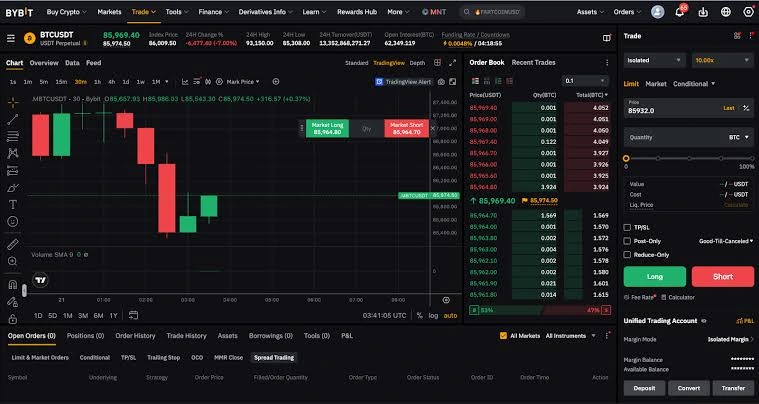
This is where Bybit originally made its name. Futures allow you to speculate on price movement without owning the underlying asset. You can trade with leverage but high leverage multiplies both gains and losses. Beginners should treat this section with extreme caution.
Copy Trading
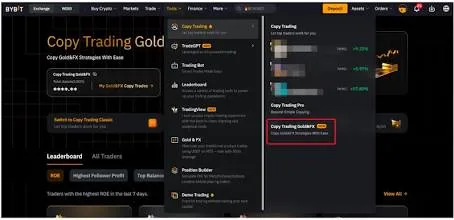
This feature deserves special attention for beginners. Copy Trading lets you automatically mirror the trades of experienced, verified traders on the platform.
You select a strategy provider, allocate funds, and let their moves replicate in your account proportionally. It’s not a guaranteed profit machine the traders you copy can lose money too but it’s a smart way to learn while staying in the market.
Bybit shows each strategy provider’s historical performance, win rate, maximum drawdown, and total profit percentage. Take time to review those statistics before copying anyone. A trader with 300% profit but 80% drawdown is a rollercoaster nobody needs on their first ride.
Bybit Earn
If you’re not ready to actively trade, Bybit Earn lets you generate yield on your crypto holdings. Products include:
- Flexible Savings — Deposit and withdraw anytime
- Fixed-Term Products — Lock funds for higher yield
- Launchpool — Stake tokens to earn new project tokens
Rates vary by asset and market conditions. Bybit displays current APYs directly on the platform.
Bybit P2P Trading
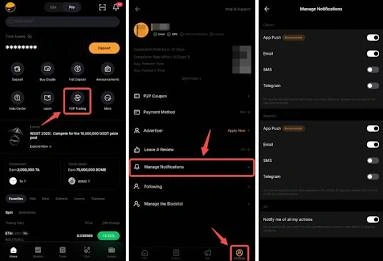
Peer-to-peer trading allows you to buy crypto directly from other users using local payment methods. This is especially useful in regions where direct fiat deposits have limited banking options.
Demo Trading
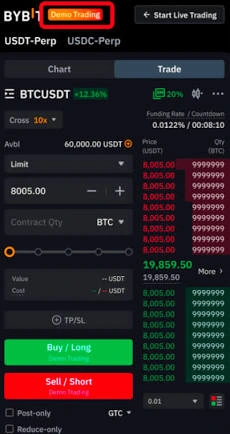
Bybit offers a testnet/demo trading environment where you practice with virtual funds. This feature alone puts Bybit ahead of many competitors for beginners. You get market conditions, real-time charts, and zero financial risk. Use it heavily before touching real money.
5. Bybit Fees for Beginners
Nobody likes fee surprises. Here’s a transparent breakdown of what Bybit charges:
Spot Trading Fees
| Fee Type | Standard Rate |
| Maker Fee | 0.1% |
| Taker Fee | 0.1% |
A maker order adds liquidity to the order book (like a limit order). A taker order removes liquidity (like a market order). Bybit doesn’t differentiate at the standard level both cost 0.1%.
To put that in perspective: a $1,000 trade costs you $1 in fees. That’s competitive with industry standards.
Derivatives Fees
| Fee Type | Standard Rate |
| Maker Fee | 0.02% |
| Taker Fee | 0.055% |
Futures fees are significantly lower than spot. This makes high-frequency derivatives trading more cost-effective.
VIP Fee Tiers
Bybit operates a VIP tier system. Higher trading volume and Bybit token (BIT) holdings unlock progressively lower fees. As a beginner, you’ll start at the standard tier which is perfectly reasonable.
Withdrawal Fees
Withdrawal fees on Bybit are network-based – meaning the fee depends on the blockchain you use. For example, withdrawing USDT on TRC-20 (Tron network) costs less than withdrawing on the Ethereum network. Always check the fee at the time of withdrawal, as network fees fluctuate.
Bybit’s Fee Comparison Context
Binance (where available) charges 0.1% spot fees as well so Bybit is in line with the dominant market standard. Coinbase, by contrast, charges significantly higher fees on its consumer product.
6. Deposit & Withdrawal Methods
Getting money into and out of Bybit is reasonably straightforward, though the options vary by region.
Deposit Methods
Crypto Deposits: Free you simply send crypto from another wallet or exchange to your Bybit address. This is the most common method globally.
Fiat Deposits (via third-party providers): Bybit partners with third-party payment providers to support fiat on-ramps. Supported methods typically include:
- Credit/Debit cards (Visa, Mastercard)
- Bank transfers (availability varies by country)
- P2P trading (buy directly from other users)
Fiat deposit fees depend on the payment processor used, not Bybit directly. Card purchases typically carry a convenience fee check the exact rate at the time of purchase.
Withdrawal Methods
Crypto Withdrawals: Standard across all networks Bybit supports. Network fees apply, and minimums vary by coin.
Fiat Withdrawals: Available through P2P and select regional bank transfer options.
Bybit Card: Bybit offers a crypto debit card (availability varies by region) that lets you spend your crypto balance at merchants that accept standard card payments.
Withdrawal Limits
Unverified accounts face very low withdrawal limits. Completing KYC verification is essential for meaningful trading activity. Bybit publishes its current withdrawal limits on its official help center at help.bybit.com.
Processing Time:
- Crypto withdrawals: Usually within minutes; can take longer during network congestion
- Fiat: Depends on the method and region
7. Pros and Cons
No exchange is perfect. Here’s an honest scorecard:
Pros
Low Trading Fees – 0.1% spot and 0.02%/0.055% derivatives fees are competitive, with VIP tiers reducing them further.
Copy Trading – A genuinely useful feature for beginners who want market exposure without making every decision themselves.
Demo Trading – Practice with virtual funds in real market conditions. Not every exchange offers this.
Wide Asset Selection – 500+ cryptocurrencies covers the mainstream and many mid-tier altcoins.
Clean Interface – The spot trading UI is simple enough for beginners without sacrificing depth for advanced users.
Bybit Earn – Passive yield options make Bybit more than just a trading platform.
Strong Liquidity – Top-tier derivatives volume means tight spreads and smooth order execution.
Cons
Not Available in the US – A significant portion of the global crypto audience cannot access Bybit directly.
Derivatives Can Be Dangerous for Beginners – The platform makes it easy to access high-leverage futures. Beginners who stumble into this section without preparation can lose funds very quickly.
Customer Support Response Times – Live chat exists but response speed can vary under high traffic.
Fiat Options Are Region-Dependent – Direct bank deposit options depend heavily on where you live.
Overwhelming Feature Set – Bybit now has so many products (Earn, NFT, Copy, Futures, Options, P2P) that new users can feel lost navigating the full ecosystem.
8. Bybit Supported Cryptocurrencies
Bybit supports 500+ cryptocurrencies across spot, futures, and other products. The core list covers:
Major Assets:
- Bitcoin (BTC)
- Ethereum (ETH)
- Tether (USDT)
- USD Coin (USDC)
- Solana (SOL)
- XRP
- Cardano (ADA)
- Polkadot (DOT)
- Dogecoin (DOGE)
Bybit’s Native Token:
- Bybit Token (BIT) – Used for fee discounts, governance, and platform rewards.
Bybit lists new tokens regularly through its Launchpad and Launchpool programs, which let users participate in new project token distributions.
For the complete, up-to-date list of supported assets, check bybit.com/en/markets. Token availability changes as new listings happen and projects are delisted.
A quick note: not every token available for trading has equivalent depth in its order book. Smaller altcoins may have lower liquidity – meaning large orders can move the price noticeably. For beginners, sticking to higher-volume pairs (BTC/USDT, ETH/USDT, SOL/USDT) is the smarter starting point.
9. Common Beginner Mistakes on Bybit
This section might be the most valuable part of this entire review. These are the mistakes new traders make repeatedly on Bybit – and how to avoid them.
Mistake 1: Using High Leverage Without Understanding It
Bybit offers up to 100x leverage on some futures contracts. That means a 1% move against your position can wipe out your entire margin. Many beginners see “leverage” and think “free money amplifier.” It’s actually a “loss amplifier” just as much. Start with spot trading. Learn leverage in demo mode first.
Mistake 2: Skipping KYC
Some users avoid identity verification for privacy reasons. The consequence? Very low withdrawal limits that will frustrate you the moment you want to take profits. Complete KYC early.
Mistake 3: Ignoring Network Fees on Withdrawal
Withdrawing your USDT on the Ethereum network (ERC-20) can cost several dollars in gas fees. Withdrawing the same USDT on TRC-20 (Tron) often costs a fraction of that. Always check which network option is available and cheapest before confirming.
Mistake 4: Trading Without a Stop-Loss
Spot trading doesn’t require a stop-loss – but it’s still good discipline. On futures, skipping a stop-loss is how accounts go to zero. Bybit’s interface makes setting stop-losses simple. Use them.
Mistake 5: Treating Copy Trading as a “Passive Income Button”
Copy Trading is excellent, but it’s not a guaranteed profit machine. The traders you copy can enter drawdown periods. Monitor your copy trading portfolio regularly. Don’t set it and forget it permanently.
Mistake 6: Not Using 2FA
Skipping two-factor authentication on any crypto account is genuinely reckless. Bybit supports Google Authenticator. Enable it immediately after registration.
Mistake 7: Depositing More Than You Can Afford to Lose
This applies to all crypto exchanges, not just Bybit. Crypto markets move violently. Only trade with funds whose loss would sting but not destroy your financial life.
Mistake 8: Confusing Bybit’s Many Products
Bybit has spot trading, futures, options, copy trading, Earn, Launchpad, NFT marketplace, and P2P all under one roof. Beginners who try to explore everything simultaneously end up confused, distracted, and often making poor decisions. Start with one product. Master it before moving to the next. Breadth of features is only an advantage once you know how to use them.
10. Is Bybit Safe for Beginners?
Security is the question that matters most when real money enters the picture. Let’s look at what Bybit actually does to protect user funds.
Cold Storage
Bybit stores the vast majority of user funds in cold wallets , offline storage physically disconnected from the internet. This is the industry standard best practice for exchange security.
Two-Factor Authentication (2FA)
Bybit supports Google Authenticator and SMS verification. Google Authenticator is the stronger option between the two.
Withdrawal Address Whitelisting
You can whitelist specific wallet addresses, so that withdrawals can only go to pre-approved destinations. This is a powerful safeguard against unauthorized transfers.
Anti-Phishing Code
Bybit lets users set a personal anti-phishing code that appears in all official emails. If an email from “Bybit” doesn’t contain your code, it’s a fake.
Insurance Fund
For derivatives trading, Bybit maintains an insurance fund to cover losses in situations where a trader’s account goes negative. This protects other traders from socialized losses in extreme market events.
Security Track Record
In February 2025, Bybit suffered the largest crypto exchange hack in recorded history — approximately $1.5 billion in Ethereum was stolen by the Lazarus Group, a hacking collective linked to North Korea. The attack exploited a vulnerability in Safe{Wallet}, a third-party multisig interface used for internal fund transfers. Critically, Bybit covered all user losses in full within 72 hours, kept withdrawals open throughout the incident, and passed an independent solvency audit shortly after. No users lost funds.
Bybit has since significantly upgraded its security infrastructure, adding TEE (Trusted Execution Environments) and TSS (Threshold Signature Schemes) to its cold storage architecture. The incident is part of Bybit’s history and worth knowing about — but so is how the exchange responded to it.
11. Customer Support
Customer support quality can make or break the experience on any platform, and Bybit’s support is a mixed bag , not terrible, but not exceptional either.
Live Chat: Available 24/7 on the Bybit website and mobile app. Response times are generally fast during low-traffic periods. During high market volatility (when everyone is simultaneously confused and panicking), wait times increase.
Help Center: Bybit’s official Help Center at help.bybit.com is genuinely well-organized. It covers account setup, KYC, trading tutorials, fee structures, and withdrawal guides with clear documentation.
Email Support: Available for more complex issues. Response times vary.
Community Resources:
- Bybit’s official Telegram groups and community forums can be useful for quick answers
- Be cautious of unofficial channels; crypto scammers frequently pose as exchange support in Telegram and Discord
Languages: Bybit supports multiple languages, making it accessible to a genuinely global user base.
Honest Assessment: For straightforward account issues (KYC problems, failed deposits, standard questions), Bybit’s support resolves things adequately. For unusual or complex account issues, persistence may be required. This is, unfortunately, consistent with most major crypto exchanges globally.
12. Bybit Alternatives
Bybit is good , but it’s not the only option. Here are the legitimate alternatives worth considering:
Binance
The world’s largest exchange by trading volume. Offers more coins than Bybit and a wider range of financial products. Not available in the US either, though Binance.US operates as a separate, more limited service. Fees are comparable to Bybit.
Coinbase
US-friendly, publicly listed, and highly regulated. The most beginner-friendly interface in mainstream crypto. The trade-off is higher fees compared to Bybit and fewer trading pairs. For absolute beginners in the US, Coinbase is often the recommended starting point.
Kraken
Another well-regulated exchange with a strong security reputation. Available in many countries including the US. Good for beginners who prioritize regulatory clarity. Slightly smaller asset selection than Bybit.
OKX
Similar to Bybit in product range , spot, futures, earn, copy trading. Competitive fees. A legitimate alternative if Bybit’s supported regions don’t include yours.
KuCoin
As discussed earlier in this Bybit review for beginners, KuCoin offers a wider altcoin selection. Good choice for those specifically hunting smaller market cap tokens. Not available to US users either.
13. Final Verdict & Rating
Quick Comparison for Beginners:
| Exchange | Best For | US Available |
| Bybit | Derivatives + copy trading | No |
| Coinbase | True beginners (US) | Yes |
| Kraken | Security-focused beginners | Yes |
| Binance | Widest selection globally | Limited (Binance.US) |
| OKX | Bybit alternative globally | No |
| KuCoin | Obscure altcoin hunters | No |
14. Final Verdict
Should a beginner use Bybit in 2026?
Yes – with conditions.
If you’re outside the US, want a platform with a genuine beginner safety net (copy trading, demo mode), competitive fees, and the ability to grow into advanced trading over time, Bybit is a serious contender.
Start simple:
- Complete KYC
- Enable 2FA
- Practice with demo trading
- Make your first small spot trade
- Explore Copy Trading before futures
- Read Bybit’s help documentation for anything unclear
Bybit won’t hand you profits. No exchange does. But it gives you the tools to trade intelligently – which is more than most platforms offer.
The crypto market rewards patience, discipline, and education. Bybit, used correctly, supports all three.
Disclaimer
This article is written for informational and educational purposes only. Nothing in this content constitutes financial advice, investment advice, trading advice, or any other type of advice.
Cryptocurrency trading involves significant risk. The value of digital assets can go up or down dramatically in short periods. You could lose some or all of your invested capital. Past performance of any asset does not guarantee future results.
Always conduct your own research (DYOR) before using any cryptocurrency exchange or investing in any digital asset. Verify all platform details, fees, supported regions, and features directly on Bybit’s official website at bybit.com before making any decisions.
The author and publisher of this article hold no responsibility for any financial losses incurred as a result of actions taken based on this content.
