
Picking a crypto exchange feels a bit like picking a gym. Every option promises the world, the fine print hides the truth, and somebody always gets stuck with a fee they didn’t see coming. KuCoin and Gate.io are two of the oldest names in the altcoin trading game, and both have survived hacks, lawsuits, and enough regulatory drama to fill a Netflix docuseries.
This guide breaks down KuCoin vs Gate.io across fees, security, supported countries, apps, and everything in between, using verifiable data instead of marketing fluff. No guessing, no invented numbers, just what each exchange actually offers.
Quick Verdict — KuCoin vs Gate.io at a Glance
If you only have thirty seconds, here’s the short version.
KuCoin generally wins on lower base trading fees, a more polished mobile app, and a slightly cleaner regulatory story after settling with US authorities. Gate.io wins on raw coin selection, offering thousands more listed tokens, plus a wider derivatives menu that includes options trading.
Neither exchange serves US customers for spot or derivatives trading. Both carry a hack in their history. Both are worth using only if you follow basic security hygiene, which we’ll cover below.
Company Background & Trust Factor
KuCoin launched in China in September 2017, founded by Chun Gan, Ke Tang, and Johnny Lyu. Chinese regulatory pressure on crypto pushed the company to Singapore, and it eventually settled in the Seychelles, where it remains headquartered today, according to Wikipedia’s company profile. BC Wong currently serves as CEO.

Gate.io has an older story. Dr. Lin Han founded the exchange in 2013 as Bter.com, one of the earliest platforms to list a wide range of altcoins. After regulatory changes hit Bter, the business rebranded as Gate in 2017 and moved its legal home to the Cayman Islands, where Gate Technology Inc. is incorporated.

Here’s the part that matters more than founding dates: how each company behaved when things went wrong.
In March 2024, the US Department of Justice indicted KuCoin and its founders for running an unlicensed money transmitting business and violating the Bank Secrecy Act, according to the official DOJ press release. In January 2025, KuCoin’s operating entity pleaded guilty and agreed to pay roughly $297 million in fines and forfeitures. In November 2025, KuCoin secured a Markets in Crypto Assets (MiCA) license, which lets it legally operate across the European Economic Area under ongoing proof-of-reserves audits.
Gate.io’s regulatory record looks steadier on paper. It has picked up licenses in Malta (MiCA), Dubai (VARA), Gibraltar, Italy, and the Bahamas. But its trust history has a quieter blemish: on-chain investigator ZachXBT alleged in 2022 that Gate.io suffered a roughly $230 million breach back in 2018 and never disclosed it publicly, a claim reported by CryptoSlate. Gate.io has disputed the characterization of that incident.
So the trust equation splits down the middle. KuCoin faced its problems in open court and paid a public price. Gate.io’s history includes an incident that investigators say was handled behind closed doors. Neither is spotless, and that’s worth remembering before you deposit a life savings’ worth of Bitcoin into either one.
Supported Countries & Regulatory Restrictions
Neither exchange serves the United States for spot or derivatives trading. That’s not a technicality; it’s the direct result of enforcement action, so don’t try to route around it with a VPN.
KuCoin also restricts access in the United Kingdom, Singapore, North Korea, Iran, and Crimea, among other jurisdictions. Its Austrian subsidiary was additionally barred from taking on new business in February 2026 by the Austrian Financial Market Authority over anti-money-laundering shortfalls.
Gate.io lists restrictions covering Cuba, Sudan, Syria, Iran, North Korea, Venezuela, Pakistan, Crimea, and portions of the US and Canada, alongside the broader US ban.
Practical takeaway: check your local rules before signing up for either platform, and don’t assume “worldwide availability” claims on the homepage apply to you.
Account Setup & KYC Process
Both exchanges follow the now-standard three-step account flow: sign up with an email or phone number, verify identity with a government ID and a selfie, then fund the account.

KuCoin’s tiered verification system unlocks higher withdrawal limits as you complete more steps, a structure common across the industry and covered in more detail in our guide to beginner-friendly crypto exchanges.
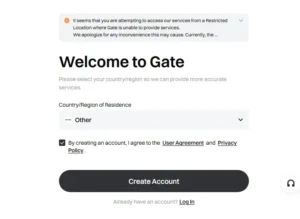
Gate.io requires KYC before meaningful withdrawal limits kick in too, and it explicitly disallows workarounds like VPN access from restricted regions, since that would violate its terms of service.
Neither KYC process is instant, and both can experience delays during high-traffic periods, so don’t wait until the night before a big trade to verify your account.
Trading Fees Breakdown
This is where KuCoin pulls ahead on paper. KuCoin’s base spot trading fee sits at 0.10% for both makers and takers. Holding KCS, KuCoin’s native token, and toggling “pay fees with KCS” shaves 20% off that rate. Futures trading starts lower, at 0.02% for makers and 0.06% for takers.
Gate.io’s base spot fee is commonly quoted at 0.20% maker and taker, roughly double KuCoin’s default rate, according to a detailed breakdown from Financer’s exchange review. Paying in GT, Gate’s native token, can bring that down toward 0.09%, and its 17-level VIP ladder eventually drops maker fees to 0% at high volume. Gate’s futures fees start lower than its spot fees too, near 0.015% maker and 0.05% taker.
The math is simple for casual traders: if you’re not holding thousands in native tokens or clearing huge monthly volume, KuCoin’s default spot fee is meaningfully cheaper. Active futures traders will find the two exchanges much closer together.
Product Range & Trading Tools
KuCoin lists more than 700 cryptocurrencies and covers spot, margin, futures, leveraged tokens, and a growing lineup of stock index perpetual contracts, including Tesla and MicroStrategy exposure launched in March 2026.
Gate.io’s calling card is sheer breadth. The platform lists over 3,500 cryptocurrencies, one of the widest catalogs among centralized exchanges, and it supports spot, margin, and futures with leverage up to 100x on select contracts, and European-style vanilla options, a product KuCoin doesn’t currently offer.
Both platforms run built-in trading bots (grid, DCA, and martingale-style strategies), launchpad programs for new token listings, and copy trading features. If bot trading interests you specifically on KuCoin, our KuCoin trading bot review walks through how the native automation tools actually perform.
Bottom line: KuCoin covers the mainstream use cases well. Gate.io is the better hunting ground if you’re chasing small-cap altcoins nobody else has listed yet.
Security Track Record
Let’s talk about the elephant in both rooms.
KuCoin suffered a major hack on September 25, 2020, when attackers drained roughly $281 million from its hot wallets, as reported by CoinDesk at the time. Researchers later attributed the attack to North Korea’s Lazarus Group. KuCoin recovered the funds through on-chain tracking, exchange partnerships, and its insurance fund, and by November 2020 it had made every affected user whole. That’s a genuinely good outcome for what could have been an exchange-ending event.
Gate.io’s incident is murkier. The alleged 2018 breach, worth an estimated $230 million, was never confirmed or fully explained by the company, and it only surfaced publicly through independent blockchain investigators years later. No user funds were confirmed missing, but the lack of disclosure is the real red flag here, not the hack itself. Hacks happen to everyone; hiding them doesn’t.
On the current state of security, both exchanges have cleaned up their act considerably. KuCoin holds a CER.live AAA security rating and CCSS certification. Gate.io holds an AA rating from the same firm, ISO 27001 certification, and publishes zk-SNARK-based proof of reserves reporting above 120% of user liabilities, according to Datawallet’s safety assessment. Both maintain cold storage for the large majority of user assets.
Our full breakdown of Gate.io’s safety record, including how that 2018 incident is viewed today, is available in our Gate.io safety review.
User Experience: App & Interface
KuCoin’s interface leans clean and approachable, with a layout that doesn’t bury basic functions under six layers of menus. Traders coming from Coinbase or Kraken tend to find the transition manageable within a day or two.
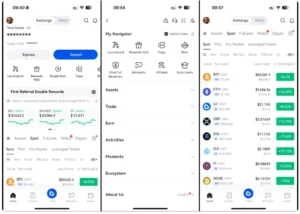
Gate.io’s interface carries more visual density. The tradeoff for a wider product range, including options, NFTs, and pre-market trading, is a platform that takes longer to feel comfortable in. Beginners often report feeling overwhelmed in the first week.
Neither app is objectively “bad”; they’re just built for different comfort levels. If you’re brand new to crypto, KuCoin’s onboarding will likely feel gentler.
Withdrawal Fee Comparison Table
Withdrawal fees on both platforms move constantly with network congestion, so treat the figures below as a general shape rather than gospel. Always check the live fee shown at your withdrawal confirmation screen before confirming a transfer.
| Asset / Method | KuCoin | Gate.io |
|---|---|---|
| Bitcoin (BTC) | Flat network fee, historically around 0.0005 BTC | Variable, network-dependent, no fixed percentage |
| USDT (TRC-20) | Low, typically under $2 | Variable by network congestion |
| USDT (ERC-20) | Significantly higher than TRC-20, often 5-10x the cost | Variable, generally higher than TRC-20 |
| EUR withdrawal | Flat 1 EUR fee | Not natively supported |
| GBP withdrawal | 5 GBP or 25 GBP depending on method | Not natively supported |
The pattern to notice: picking the right network (TRC-20 over ERC-20 for stablecoins, for example) matters more than which exchange you’re using. Getting that wrong costs you far more than any base trading fee difference.
Mobile App Comparison
KuCoin’s Android app holds a 4.5-star rating across roughly 287,000 reviews on Google Play, with its iOS app scoring close to 4.7 stars depending on region.
Gate.io’s app sits a little lower, at 3.9 stars on Google Play and around 4.3 stars on the Apple App Store, based on more than 87,000 combined reviews reported by Cryptonews’ review.
Both apps mirror their respective web platforms reasonably well. KuCoin’s app edges ahead on polish and consistency; Gate.io’s app carries more features but a steeper learning curve, echoing the same pattern we saw on desktop.
Fiat On-Ramp & Payment Method Comparison
KuCoin supports direct fiat purchases through cards and bank transfers, covering over 50 fiat currencies through built-in payment partners. Bank transfer deposits are generally the cheaper route; card purchases carry a noticeably higher premium.
Gate.io takes a more crypto-first approach. It doesn’t offer native USD deposits or broad direct-bank fiat rails in most regions, leaning instead on third-party payment gateways for card purchases, which typically charge in the 1-3% range depending on the method and country.
If you’re planning to move fiat currency in and out regularly, KuCoin’s payment infrastructure will likely feel smoother. If you’re already holding crypto and just want to trade it for other crypto, this difference barely matters.
Liquidity & Order Execution
Both exchanges rank among the more liquid platforms for major pairs like BTC/USDT and ETH/USDT, where spreads stay tight and slippage stays minimal during normal market conditions.
The gap widens on smaller-cap altcoins. Gate.io’s larger coin catalog means many of its lower-cap listings simply don’t have deep order books, so large market orders can move the price more than you’d expect. KuCoin’s more curated (though still large) listing approach tends to concentrate liquidity a bit more per asset.
Practical rule of thumb: use limit orders on thin altcoin pairs on either exchange, and never market-buy a low-cap token with a large position size without checking the order book depth first.
Staking / Earn APY Comparison
Both platforms run flexible savings, fixed-term staking, and structured products, and both change their advertised rates frequently based on market demand and token supply.
KuCoin’s Earn hub covers staking on 50+ assets, plus dual investment and Shark Fin structured products. KuCoin also pays a variable daily bonus to users holding at least 6 KCS, funded from a share of platform trading revenue, though the yield fluctuates day to day rather than sitting at a fixed rate.
Gate.io runs a comparably sized Earn suite with flexible and locked staking across its major listed assets, plus GT-token staking perks tied to VIP tier progression.
Because APY figures shift constantly on both platforms, and neither exchange publishes a fixed long-term rate, the only reliable move is to check the live rate inside each app before committing funds. Anyone quoting you a specific “guaranteed” percentage for either exchange right now is working from an outdated screenshot.
Last verified: September 2, 2026. Exchange fees, licenses, and app ratings change regularly; confirm current figures directly on each platform before making a decision.
Customer Support Reality Check
Neither exchange has a customer support reputation to brag about, and pretending otherwise would defeat the point of this article.
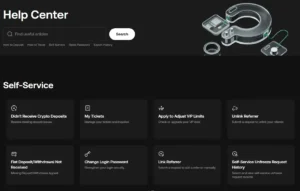
User reports across independent comparison sites describe KuCoin’s support as functional for routine questions but slow and frustrating during disputes involving frozen funds or P2P payment issues. Gate.io draws similar complaints, with some reviewers citing response times exceeding five business days during account freezes or withdrawal holds, per Financer’s user-feedback analysis.
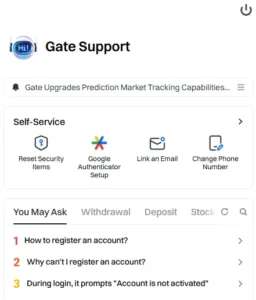
Neither platform offers phone support. Both rely on ticket systems, live chat bots, and community channels as the first line of contact. If a real emergency hits your account, expect a wait, not a callback.
Unique Differentiators — What Sets Each Exchange Apart
KuCoin’s standout features:
- KCS token with a daily revenue-share bonus for holders
- Spotlight launchpad for early-stage token access
- KuCard, a crypto debit card usable at point-of-sale in supported regions
- Stock index perpetual contracts (Tesla, MicroStrategy, and more added regularly)
- CER.live AAA security rating
Gate.io’s standout features:
- The widest altcoin catalog of any major centralized exchange (3,500+ tokens)
- Vanilla options trading, a product most competitors skip
- Gate Ventures, an active venture arm backing early crypto projects
- A built-in NFT marketplace
- Deep licensing footprint across Malta, Dubai, and Gibraltar
Pros and Cons
KuCoin
Pros: Lower default spot trading fees, cleaner beginner-friendly app, stronger fiat payment coverage, transparent handling of its 2020 hack, MiCA-licensed for the EEA.
Cons: A costly 2024-2025 US enforcement history, restricted in the UK and Singapore, support can be slow during disputes.
Gate.io
Pros: Unmatched altcoin selection, competitive futures fees, options trading available, broad international licensing footprint, strong proof-of-reserves reporting.
Cons: Higher base spot fees, an undisclosed 2018 breach that still raises trust questions, no native fiat rails in most regions, a steeper learning curve for new users.
Verdict by User Type
New to crypto? KuCoin’s simpler interface and lower default fees make it the friendlier starting point.
Chasing early-stage altcoins? Gate.io’s catalog size is genuinely hard to beat, and its options market gives active traders another lever to pull.
Prioritizing regulatory clarity? KuCoin’s public settlement and new MiCA license arguably give it a cleaner slate going forward than an exchange that has never fully addressed a disputed 2018 breach.
Running high-frequency futures strategies? The two are close enough on futures fees that liquidity on your specific pair matters more than the headline rate.
Which Exchange Is Better? (Final Verdict)
There isn’t a universal winner here, and anyone telling you otherwise probably has an affiliate link to push.
KuCoin makes more sense for traders who want lower everyday fees, a smoother app, and a company that has already faced its regulatory reckoning in open court. Gate.io makes more sense for traders chasing the newest, smallest, and weirdest tokens on the market, and who are willing to accept a steeper interface and an unresolved trust question in exchange for that selection.
Whichever you pick, don’t leave large balances sitting on either exchange long-term. Use hardware wallet self-custody for savings, and treat exchange balances as working capital for active trades. That single habit protects you more than any fee discount ever will.
Frequently Asked Questions
Is KuCoin available in the United States? No. KuCoin does not offer spot or derivatives trading to US residents following its 2025 settlement with US authorities.
Is Gate.io available in the United States? No. Gate.io also restricts US residents from trading on its platform.
Which exchange has lower trading fees, KuCoin or Gate.io? KuCoin’s default spot fee (0.10% maker/taker) is lower than Gate.io’s default spot fee (0.20% maker/taker). Both offer native-token discounts and VIP tiers that narrow the gap at high volume.
Has KuCoin or Gate.io ever been hacked? Yes, both. KuCoin lost roughly $281 million in a 2020 hack and fully reimbursed affected users. Gate.io allegedly lost around $230 million in an undisclosed 2018 breach that the company has disputed.
Which exchange has more coins listed? Gate.io, by a wide margin, with over 3,500 listed cryptocurrencies compared to KuCoin’s 700+.
Is KuCoin or Gate.io better for beginners? KuCoin generally suits beginners better, thanks to a cleaner interface, stronger fiat on-ramps, and lower default fees. New traders exploring their options can also compare more platforms in our best crypto exchanges for beginners guide.
Do KuCoin and Gate.io require KYC verification? Yes, both require identity verification for meaningful account limits, and neither allows bypassing KYC through VPN use under their terms of service.
Which exchange is safer today, KuCoin or Gate.io? Both hold strong current security ratings (KuCoin: AAA, Gate.io: AA from CER.live) and publish proof-of-reserves data. KuCoin’s transparency around its past hack gives it a slight edge on trust, since Gate.io’s 2018 incident was never officially confirmed or explained by the company.
