
Picking a crypto exchange shouldn’t feel like picking a life partner. Yet here we are, comparing fee schedules like they’re compatibility quizzes. Binance and Gate.io are both giants in the exchange world, but they built their reputations on very different things: one on scale and brand trust, the other on speed and sheer coin variety. This guide breaks down both platforms honestly, with real numbers, so you don’t have to open twelve browser tabs to figure out which one fits you.
Quick Verdict — Binance vs Gate.io at a Glance
If you want the short answer before the long one: Binance wins on liquidity, brand trust, and beginner-friendliness. Gate.io wins on coin selection and early access to new tokens.
- Best for beginners: Binance, thanks to its cleaner interface and deeper liquidity.
- Best for altcoin hunters: Gate.io, which lists thousands of smaller tokens well before larger exchanges touch them.
- Best trading fees at entry level: Binance, with a flat 0.10% spot rate versus Gate.io’s standard 0.20%.
- Best for regulatory comfort: Binance holds more licenses globally, though both carry regulatory baggage worth knowing about.
Neither exchange serves US residents on their main global platforms, so if you’re in the US, this comparison isn’t for you anyway. Everyone else, keep reading.
| Feature | Binance | Gate.io |
|---|---|---|
| Founded | 2017 (Changpeng Zhao, Yi He) | 2013 (as Bter, founder Dr. Lin Han) |
| Spot trading fee (standard) | 0.10% maker / 0.10% taker | 0.20% maker / 0.20% taker |
| Futures fee (standard) | 0.02% maker / 0.05% taker | 0.015% maker / 0.05% taker |
| Native token discount | Up to 25% with BNB | Discount with GT |
| Coins listed | ~500–600 | 2,000+ |
| Median daily volume | ~$16 billion+ | ~$2.9 billion |
| US residents allowed | No (Binance.US separate) | No |
| Regulatory highlights | $4.3B US DOJ/Treasury settlement (2023); DASP license (France); expanding across Asia | Full MiCA license (Malta); PSD2 payment institution license (Feb 2026) |
| Major security incidents | 2019 hot wallet hack ($40M); 2022 BNB bridge hack ($570M) | Alleged, undisclosed 2018 breach (~$230M) |
| Best for | Beginners, major-pair traders, liquidity-focused users | Altcoin hunters, early token access, futures traders |
Company Background & Trust Factor
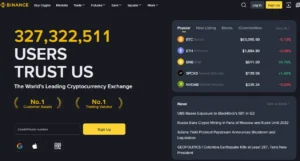
Binance launched in July 2017, founded by Changpeng Zhao (widely known as CZ) and Yi He. Within six months it became the largest exchange in the world by trading volume, and it has mostly stayed there since. It’s currently led by co-CEOs Richard Teng and Yi He, and it operates without one fixed company headquarters, a structural choice that has drawn regulatory attention over the years.
Gate.io has a longer, quieter history. It started life in 2013 as Bter, founded by Dr. Lin Han, and rebranded to Gate.io in 2017 before later shortening its name to just Gate. That makes it one of the older exchanges still operating today, and it has built a venture arm that has backed roughly 20 portfolio companies, including names like Pyth Network and Wormhole.

Trust isn’t just about age or size, though. It’s about what happens when things go wrong. Binance pleaded guilty in November 2023 to violating US anti-money laundering laws and agreed to pay $4.3 billion in fines to US authorities, one of the largest corporate penalties in history. CZ stepped down as CEO and later served a prison sentence tied to the case. It’s a serious chapter, but Binance has operated under a court-appointed compliance monitor since, and reporting on that monitoring has stayed relatively clean.
Gate.io’s biggest trust question dates back further, to an alleged 2018 breach that on-chain investigators say the exchange never fully disclosed. More recently, in December 2024, social media rumors about a Gate.io hack spread quickly. The exchange denied any breach, and no security firm confirmed one. Since then, Gate has focused heavily on compliance, picking up a full MiCA license through its Malta entity and building out proof-of-reserves reporting.
If you want a deeper look at Gate’s safety record specifically, our team put together an in-depth Gate.io safety review worth reading before you deposit anything.
Supported Countries & Regulatory Restrictions
Both exchanges avoid the US on their global platforms. Binance geo-blocks US IP addresses entirely and requires non-US residency at sign-up. Americans get routed to Binance.US instead, which is a separate, more limited entity. Gate.io similarly restricts access in the United States, China, India, and Canada due to local regulatory requirements.
Where the two differ is in how they’re building out regulated access elsewhere. Binance holds a Digital Asset Service Provider registration with France’s AMF and says it’s targeting five additional licenses across Asian markets in 2026, pushing its regulated footprint past 20 jurisdictions. Gate’s Malta entity, Gate Technology Ltd, secured a full MiCA license covering the European Economic Area, and in February 2026 it also picked up a Payment Institution license under the EU’s PSD2 framework from Malta’s financial regulator.
Practically speaking, if you live in a supported country and you’re fine with standard KYC requirements, both platforms will let you trade. The real difference shows up if you’re in a gray-zone jurisdiction, where it’s worth checking each exchange’s current restricted-countries list directly, since these change based on local enforcement actions.
Account Setup & KYC Process
Signing up for either exchange takes a few minutes. Email or phone verification, a password, maybe a referral code if a friend sent you one. That part’s identical everywhere.

The KYC (Know Your Customer) step is where it gets more involved. Both platforms let you do basic trading with limited verification, but full functionality, higher withdrawal limits, and fiat on-ramps require submitting a government ID and proof of residence. Binance’s verification tends to move quickly for most users, often within minutes for standard tiers. Gate.io’s process is generally comparable but has drawn more complaints about delays, particularly during high-traffic periods or for users triggering additional review.

One practical tip that applies to any exchange: complete identity verification before you deposit meaningful funds, not after. Getting money “stuck” during a pending KYC review is one of the most common frustrations reported across crypto platforms, and it’s entirely avoidable with a bit of sequencing.
Trading Fees Breakdown
This is where most people actually make their decision, so let’s get specific.
Binance spot trading starts at a flat 0.10% for both maker and taker orders. Pay fees in BNB, Binance’s native token, and you get a 25% discount, bringing your effective rate down further. High-volume traders climbing the VIP ladder (there are ten tiers) can push fees down toward 0.02% at the very top, though that requires enormous monthly volume.
Gate.io spot trading opens higher, at 0.20% maker and taker for standard users. Paying fees in GT, Gate’s native token, knocks a meaningful chunk off that rate. Gate runs a longer VIP ladder, with roughly 17 tiers, and fees can fall close to zero for makers at the top end, though again, that requires either serious trading volume or a large GT holding.
Futures fees are closer between the two. Binance charges 0.02% maker and 0.05% taker on standard USDT-margined perpetuals. Gate.io runs nearly identical numbers, around 0.015% maker and 0.05% taker, making derivatives one of the more competitive corners of its fee schedule.
The honest takeaway: for casual spot traders who aren’t holding native tokens or hitting VIP tiers, Binance is cheaper out of the box. For futures traders, the gap mostly disappears.
Product Range & Trading Tools
Binance supports roughly 500 to 600 cryptocurrencies and over a thousand trading pairs, according to research compiled by The Motley Fool, which tracked median daily volumes and coin counts across major exchanges. That same research pegs Gate at more than 2,000 listed coins, and other industry trackers put the number even higher, into the thousands, when factoring in smaller and newer tokens.
The pattern holds across most comparisons: Binance is selective, focusing on established projects with a more rigorous listing review. Gate.io moves faster and lists more experimental tokens, including AI-sector coins, DePIN projects, and meme coins, often days or weeks before they show up on Binance.
Beyond spot and futures, both platforms offer margin trading, staking, copy trading, and launchpad-style early token access. Binance leans on its BNB ecosystem for perks and fee discounts. Gate.io leans on breadth, supporting options trading, block trading, and an unusually wide altcoin catalog for people who like to dig for smaller projects before they trend.
If broad coin selection is your priority, our full Gate.io review for 2026 covers the product lineup in more detail, including where the interface gets genuinely overwhelming for newcomers.
Security Track Record
Neither exchange has a perfectly clean history, and anyone telling you otherwise is selling something.
Binance suffered a hot wallet breach in May 2019, losing 7,000 BTC (about $40 million at the time). The exchange reimbursed affected users fully through its Secure Asset Fund for Users (SAFU), a reserve built from a slice of trading fees. In October 2022, attackers exploited a flaw in the BNB Smart Chain bridge, minting and withdrawing roughly $570 million in BNB tokens before the network was halted. Binance has not reported a customer-loss hack since 2019, and the SAFU fund’s public wallet reportedly held over $1 billion in reserves as of early 2026.
Gate.io’s most serious security question is the alleged 2018 breach worth around $230 million, which blockchain investigators flagged years later after noticing stolen funds moving between wallets. Gate never gave a detailed public accounting of that incident, which remains the main mark against its transparency record. Since then, the exchange hasn’t had a confirmed hack, has earned an AA security rating from CER.live, and holds ISO 27001 certification alongside quarterly proof-of-reserves reports.
Both exchanges now publish reserve ratios above 100%, meaning they hold more in verified assets than customer liabilities on paper. That’s a reasonable baseline check, though proof-of-reserves audits have real limitations and shouldn’t be treated as a full guarantee.
User Experience: App & Interface
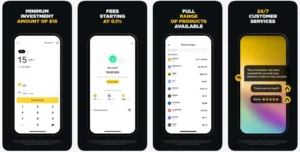
Binance’s interface has matured into something genuinely approachable. There’s a simplified “Lite” mode for beginners and an advanced mode for people who want full order books and charting tools. The mobile app mirrors this split, and most reviewers consistently rank it as more intuitive than Gate.io’s.
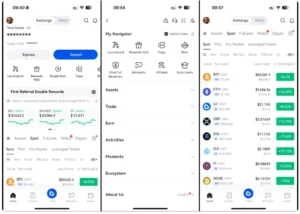
Gate.io’s interface, by contrast, tries to do a lot in one screen. Between spot, futures, margin, options, NFTs, and a long list of earn products, first-time users often describe it as cluttered. That’s not necessarily a dealbreaker; experienced traders sometimes prefer having everything visible, but it’s a real adjustment curve for anyone coming from a simpler platform.
Liquidity & Order Execution
Liquidity is the part people underestimate until they place a large order and watch the price move against them. Binance’s median daily trading volume has been reported north of $16 billion, dwarfing most competitors, and the exchange reportedly controls over 71% of stablecoin liquidity across centralized exchanges. That translates into tighter spreads and less slippage, especially on major pairs like BTC/USDT.
Gate.io’s daily volume sits considerably lower, in the range of a few billion dollars, which is still substantial but noticeably behind Binance. For major coins, the difference in execution quality is usually small. For thinly traded altcoins, though, Gate.io’s own listings can suffer from wide spreads simply because fewer people are trading them, an unavoidable side effect of listing thousands of smaller tokens.
Customer Support Reality Check
Both platforms offer 24/7 live chat and email support, and both get mixed reviews for it, which is honestly true of nearly every major exchange in this industry.
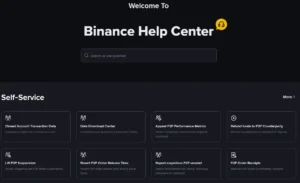
Gate.io users commonly report response times ranging from a few hours to nearly two days for more complex issues, particularly account restrictions or withdrawal disputes. Binance’s support scales better simply because of its size and automation, but users still flag slow escalation paths for anything beyond routine questions, like frozen accounts or disputed trades.
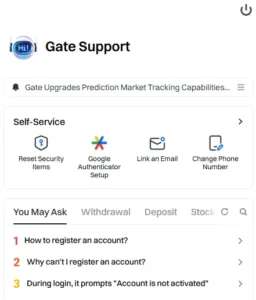
Neither exchange is going to feel like a boutique concierge service. If white-glove support matters most to you, that’s a factor worth weighing against the fee savings either platform offers.
Unique Differentiators — What Sets Each Exchange Apart
Binance’s edge is scale and ecosystem depth. The BNB token ties into fee discounts, launchpad access, and an entire chain (BNB Smart Chain) with its own DeFi ecosystem. Binance also owns Trust Wallet, giving it a self-custody option that complements its exchange business, something Gate.io doesn’t have an equivalent for.
Gate.io’s edge is speed to market on new listings and sheer catalog depth. Its venture arm gives it early relationships with emerging projects, and its lighter listing process means traders chasing new narratives, AI tokens, RWA projects, and DePIN infrastructure tend to find them on Gate before they hit Binance. For a certain type of trader, that’s the entire value proposition.
Pros and Cons
Binance
Pros:
- Deepest liquidity of any centralized exchange
- Lower base spot fee (0.10% vs 0.20%)
- Cleaner, more beginner-friendly interface
- Broader regulatory licensing footprint
Cons:
- Fewer total coin listings than Gate.io
- Past $4.3 billion US regulatory settlement
- Slower to list newer, smaller-cap tokens
Gate.io
Pros:
- Massive altcoin selection, often first to list new tokens
- Competitive futures fees
- Full MiCA license through its Malta entity
- Established venture capital arm backing early-stage projects
Cons:
- Higher standard spot trading fee
- Interface can overwhelm beginners
- Undisclosed 2018 breach remains an open trust question
- Lower liquidity than Binance on most pairs
Verdict by User Type
New to crypto? Binance’s simpler interface and deeper liquidity make early mistakes less costly.
Chasing new altcoins and early listings? Gate.io is built for exactly this, though it demands more due diligence on your part since not every listed token is vetted equally.
Active futures trader? Either works well here, since fees are nearly identical. Pick based on which coins you actually want to trade.
Cost-conscious spot trader on a small budget? Binance’s lower base fee adds up faster than you’d think, though Gate.io’s GT-token discounts can close some of that gap. If you’re starting with a small amount, it’s worth comparing this against other budget-friendly platforms, like our breakdown of Gate.io for low-budget users or our MEXC review for beginners, which also competes hard on fees.
Which Exchange Is Better? (Final Verdict)
There isn’t a universal winner here, and anyone claiming otherwise probably hasn’t used both platforms seriously. Binance is the safer default for most people: better liquidity, lower entry fees, a cleaner app, and a broader regulatory footprint, even with its expensive legal history now behind it. Gate.io earns its place for a narrower but genuine reason: if you’re actively hunting for new tokens before they go mainstream, its listing speed and catalog size are hard to match.
If you only trade major coins like BTC and ETH, Binance is the more sensible choice on cost and execution alone. If altcoin discovery is your actual strategy, Gate.io’s breadth outweighs its higher base fee. Some traders reasonably use both, Binance for core holdings and majors, Gate.io for early speculative positions, treating them as complementary tools rather than competitors.
Whichever you choose, verify your account thoroughly before depositing real funds, enable two-factor authentication immediately, and never keep more on any exchange than you’re prepared to actively manage.
Frequently Asked Questions
Is Gate.io as safe as Binance? Both exchanges carry security track records with real blemishes. Binance’s issues are more publicly documented (two confirmed hacks, a major US settlement), while Gate.io’s biggest concern is a 2018 breach it never fully disclosed. Since 2019, Gate.io hasn’t had a confirmed hack, and it now holds a full MiCA license alongside an AA security rating from CER.live.
Which exchange has lower fees, Binance or Gate.io? Binance’s standard spot fee (0.10%) is lower than Gate.io’s (0.20%) at the base tier. Futures fees are nearly identical between the two. Both offer discounts for paying fees in their native token or reaching higher volume tiers.
Can US residents use Binance or Gate.io? No. Neither exchange’s global platform serves US residents. Binance.US exists as a separate, more limited entity for American users; Gate.io has no equivalent US-facing product.
Which exchange lists more cryptocurrencies? Gate.io lists significantly more coins than Binance, well over 2,000 compared to Binance’s roughly 500 to 600, according to industry volume-and-listing data. Binance’s selection is smaller but more rigorously vetted.
Is Gate.io good for beginners? Not particularly. Its interface packs in a lot of products at once, which experienced traders may like, but beginners often find overwhelming. Binance’s simplified mode is generally the easier starting point for someone new to crypto trading.
Do both exchanges require KYC verification? Yes. Basic trading may be available with limited verification on both platforms, but full access, including higher withdrawal limits and fiat deposits, requires standard KYC: a government ID and proof of residence.
This article is for informational purposes only and does not constitute financial advice. Cryptocurrency trading carries significant risk, including the potential loss of your entire investment. Always do your own research before choosing an exchange or making a trade.
