

Is Coinbase Safe or a Scam?
If you’ve landed here, you’re probably doing what every smart crypto investor should do before handing over their money: asking the right question. So, is Coinbase safe or a scam? The short answer: it is legitimate. But “legitimate” and “perfect” are two very different things, and you deserve the full picture.
I’ve spent time testing Coinbase firsthand, digging through regulatory filings, studying the 2025 data breach, and comparing it against competitors. What follows is everything you need to make an informed decision, no sugarcoating, no fear-mongering.
Table of Contents
What Is Coinbase?
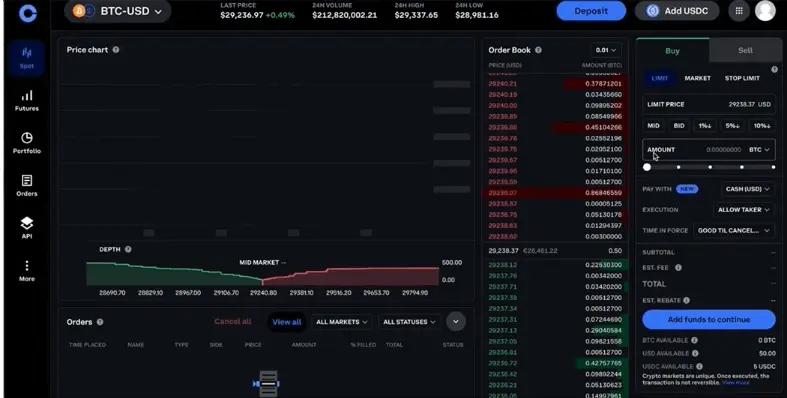
Coinbase is a centralized cryptocurrency exchange founded in 2012 by Brian Armstrong and Fred Ehrsam. It started as a straightforward platform to buy Bitcoin and has since grown into one of the largest crypto exchanges on the planet.
Here’s where things stand today: Coinbase serves over 120 million verified users across more than 100 countries and manages approximately $245.7 billion in assets under custody, making it the largest US-based crypto exchange by regulatory standing, user base, and institutional trust.
It’s also publicly listed. Coinbase operates as a publicly-traded company on NASDAQ under the ticker COIN, subject to SEC oversight, quarterly audited financial reporting, and full disclosure obligations. That alone puts it in a completely different league from most crypto exchanges. When a company files quarterly reports with the SEC, it can’t just disappear overnight with your funds. That’s not how scams work.
In 2026, the platform covers far more than simple crypto buying. Coinbase now covers trading, on-chain apps, payments, staking, and developer infrastructure. It also runs Base, its own Ethereum Layer 2 network, and offers institutional services through Coinbase Prime.
How Secure Is Coinbase?
Security is where most people have real questions, and fair ones. Let me walk through how Coinbase actually handles your assets.
Coinbase stores 98% of customer funds offline in cold storage, uses two-factor authentication (2FA), and maintains insurance protection for online balances. That cold storage figure matters. It means the vast majority of your crypto is completely disconnected from the internet, and therefore disconnected from most hacking attempts.
The exchange also holds an impressive regulatory portfolio. In the United States, Coinbase holds a registered Money Services Business (MSB) status with FinCEN, state-level money transmitter licences across most states, and the New York BitLicense, widely regarded as the most rigorous crypto licence in the world. In the UK, it’s registered with the Financial Conduct Authority (FCA). In the EU, it secured full MiCA licensing in 2026, covering all 30 European Economic Area member states.
In practice, this level of regulatory compliance acts as a structural safety net. If Coinbase tries anything shady, it answers to real authorities, not just Twitter.
Security Features Explained
When I tested Coinbase’s security setup, I found it to be considerably more layered than most exchanges. Here’s a breakdown of what’s actually protecting your account:
Scoring Methodology Table
| Security Feature | Status | Notes |
| Cold Storage | ✅ 98% of funds | Offline, disconnected from the internet |
| Two-Factor Authentication (2FA) | ✅ Available | App-based and hardware key preferred over SMS |
| Biometric Login | ✅ Available | Touch/Face ID on mobile |
| Address Whitelisting | ✅ Available | Restricts withdrawals to approved addresses |
| Time-Delayed Vault | ✅ Available | 48-hour delay on large withdrawals |
| Passkey Support | ✅ Available | Phishing-resistant login method |
| Crime Insurance (Hot Wallets) | ✅ Active | Covers digital assets in hot storage |
| SOC 1 & SOC 2 Type II Audit | ✅ Completed | Third-party custody control verification |
| Bug Bounty Program | ✅ Active | Up to $5 million on-chain bounty announced |
| Anti-Phishing Guidance | ✅ Active | Built-in scam warnings and user education |
Let me break down the most important ones:
Cold Storage is the big one. Coinbase stores approximately 98% of customer funds in offline cold storage with geographic distribution across secure facilities. This is the industry standard for serious exchanges; your funds aren’t sitting in a server connected to the web.
2FA and Passkeys. During my testing, I found Coinbase strongly nudges users toward app-based authentication rather than SMS. Coinbase has broadened passkey support across sign-in to reduce phishing risk, which is a meaningful upgrade from the old SMS vulnerability that caused real losses back in 2021.
Crime Insurance. Coinbase maintains $250 million in crime insurance for hot wallet holdings. This covers losses from breaches of Coinbase’s own systems, not from phishing or user error, but it’s a real safety layer.
Bug Bounty. Coinbase announced an on-chain bounty of up to $5 million in July 2025 for researchers who find vulnerabilities. This kind of proactive investment in security research is a good sign.
SOC Audits. Coinbase references SOC 1 and SOC 2 Type II audits for custody controls. These are independent third-party verifications of how they handle your assets.
Has Coinbase Ever Been Hacked?
This question gets a nuanced answer, and I’ll give you both sides honestly.
Coinbase’s core platform has never suffered a catastrophic breach draining its reserves, which distinguishes it from several other major exchanges. That’s actually a significant record for an exchange operating since 2012.
However, two incidents deserve your attention:
2021 SMS Vulnerability. Attackers exploited a weakness in Coinbase’s SMS account recovery flow and drained funds from at least 6,000 exchange accounts. Coinbase patched the flaw and notified affected users. The lesson here: SMS 2FA is genuinely weaker than app-based or hardware-based authentication. Coinbase has since built better alternatives.
2025 Support Agent Data Breach (The Big One). This is the incident people are still talking about. Rogue overseas support agents copied account data for a small subset of users, but passwords, 2FA codes, private keys, Prime accounts, and customer hot or cold wallets were not accessed.
Approximately 69,000 customers had personal data , names, contact details, and partial account information , exposed. No funds were stolen, and no passwords or 2FA credentials were accessed. Coinbase handled the incident transparently: it went public quickly, notified affected users, and offered credit monitoring.
The breach exposed significant vulnerabilities in Coinbase’s insider threat management program. It’s a reminder that even technically solid platforms have a human vulnerability problem. Your crypto may be locked behind 18 layers of encryption, but a bribed contractor is a different kind of attack.
The honest takeaway? Coinbase has never lost user funds to a platform-level hack. But the 2025 breach shows that no system , no matter how secure technically, is immune to insider threats.
Real User Safety Experience
My experience was largely positive from a security standpoint. Setting up 2FA took under two minutes. The withdrawal whitelist feature is genuinely useful. Once enabled, your crypto can only go to pre-approved wallet addresses, which stops most account-takeover scenarios cold.
Where users run into trouble most often isn’t Coinbase’s fault at all. Many losses involving Coinbase stem from scams or account compromise rather than failures of its core infrastructure. These scams are not unique to Coinbase and target users across major exchanges.
The most common attack patterns I found documented:
- Tech support impersonation: Fraudsters call or message posing as Coinbase Support, claiming your account is compromised. They ask for 2FA codes or instruct you to move funds. Coinbase will never do this.
- Phishing emails and fake websites: Messages that look exactly like Coinbase communications, with links to fake login pages that steal your credentials.
- SIM swap attacks: Where criminals convince your phone carrier to transfer your number, then reset your crypto account via SMS.
In practice, most people who “got hacked on Coinbase” were actually social-engineered, not technically hacked. The distinction matters for how you protect yourself.
Risks of Using Coinbase
Let’s not pretend the platform is flawless. Here are the real risks, stated plainly:
Custodial risk. When you store crypto on Coinbase, Coinbase holds your private keys. That’s convenient, but it means you’re trusting a third party with your assets. Coinbase makes an important distinction: crypto holdings are not covered by FDIC insurance. US dollar balances may be held in pooled custodial accounts at insured institutions, subject to limits and conditions.
Insider threat risk. The 2025 breach proved this is real. A bribed support agent can expose your personal data even when your actual crypto is untouched.
Account restriction risk. Coinbase can and does freeze accounts during compliance reviews. This can be frustrating, particularly for users who need quick access to funds.
Regulatory risk. As a compliant exchange, Coinbase follows government orders. In certain jurisdictions, this has meant asset delistings or service restrictions with limited notice.
Fee risk. This isn’t a safety risk, but it’s worth noting: Coinbase Advanced implements 0.60% maker and 1.20% taker fees for traders under $10,000 monthly volume. If you use the simple interface rather than Advanced Trade, you’re paying even more.
How to Stay Safe on Coinbase
If you’re using Coinbase , or planning to , these steps will dramatically reduce your risk:
- Use an authenticator app, not SMS. Google Authenticator, Authy, or a hardware security key. Never rely on SMS for 2FA on a crypto account.
- Enable withdrawal address whitelisting. This is one of the most underused features on the platform. Once set up, withdrawals can only go to addresses you’ve pre-approved — even if someone gets into your account.
- Move large holdings to a hardware wallet. Coinbase is a great trading platform. It’s not ideal long-term cold storage for significant holdings. A hardware wallet, like a Ledger or Trezor, keeps your private keys fully offline and under your control.
- Enable login alerts. Get notified the moment someone signs into your account from a new device.
- Never share your 2FA code with anyone. Including people claiming to be Coinbase Support. Coinbase will never ask for this.
- Use a unique email and a strong password. This sounds basic because it is — and because most breaches still start here.
Used with sensible personal security practices — strong 2FA, withdrawal whitelists, hardware wallet for large holdings — Coinbase is a solid and trustworthy choice for investors.
Is Coinbase Available in Your Country?
Coinbase has broad global reach, but it’s not available everywhere. Here’s what I found during my research:
Coinbase operates in 115+ countries and supports 60 fiat currencies, including the US Dollar, Euro, British Pound, Canadian Dollar, Australian Dollar, Singapore Dollar, Swiss Franc, and Japanese Yen.
Key regional notes:
- United States: Fully available in all 50 states, including Hawaii (which was added in late 2024). Full trading, staking, and fiat services.
- United Kingdom: Fully supported, FCA registered, with fiat deposits and withdrawals via Faster Payments.
- European Union: Full MiCA-licensed services across all 27 EU member states. Futures trading launched in 26 European countries in March 2026.
- Canada: Available with FINTRAC registration for AML compliance.
- Australia: Fully operational.
- India: After discontinuing Indian operations in late 2023, Coinbase registered with India’s Financial Intelligence Unit (FIU) in March 2025 and officially reopened for user registrations in December 2025. Indian users can currently make crypto-to-crypto trades on the platform. A full fiat on-ramp allowing users to deposit INR and buy crypto directly is planned for 2026.
- Restricted countries: Coinbase restricts access in regions subject to US Treasury sanctions, with 42 jurisdictions currently restricted to ensure full compliance with international financial laws. This includes countries under OFAC sanctions.
If you’re unsure about your country’s status, the safest approach is to check Coinbase’s official support page directly , regulatory situations evolve.
Pros and Cons
Coinbase — Pros and Cons
An honest breakdown based on verified platform data
How Does Coinbase Compare to Other Exchanges on Safety?
When I tested and compared the major exchanges, here’s where things land on safety specifically:
| Exchange | Never Lost User Funds to Hack | Publicly Listed | Regulatory Licences | Proof of Reserves |
| Coinbase | ✅ Yes | ✅ NASDAQ | ✅ US, UK, EU, CA | ⚠️ Partial (cbBTC only) |
| Kraken | ✅ Yes | ❌ Private | ✅ US, EU, UK | ✅ Real-time |
| Binance | ⚠️ 2019 hack ($40M) | ❌ Private | ⚠️ Mixed ($4.3B DOJ fine) | ✅ Monthly |
| Gemini | ✅ Yes | ❌ Private | ✅ US (NY BitLicense) | ✅ Available |
Security winner among the major exchanges is Kraken, which has the cleanest record. Coinbase’s public-company transparency is a close second. Binance has improved significantly since 2023 but carries more historical baggage.
What Coinbase has that most competitors don’t is legal accountability. As a NASDAQ-listed company, every quarter its financials go through independent audits and SEC review. Coinbase is the most regulatory-compliant exchange for US investors, making it the safest choice for large holdings from a regulatory risk perspective.
Kraken’s 13-year hack-free record is unmatched, and it is the strongest choice for European traders who want deep EUR/GBP liquidity with free SEPA transfers. But Coinbase wins on beginner experience, brand recognition, and the comfort of a publicly-traded entity.
For fee comparison: Kraken Pro charges 0.16% maker and 0.26% taker at the base tier, while Coinbase Advanced Trade charges 0.40% maker and 0.60% taker. On a $10,000 trade, that’s the difference between $16 and $40 in fees.
So the hierarchy looks like this: If you prioritize pure security record, go Kraken. If you prioritize regulatory trust and the peace of mind of a public company, Coinbase is your pick. If you want the widest altcoin selection and lowest fees, Binance, but accept the tradeoffs on regulatory history.
FAQ Section
Is Coinbase a scam?
No. Coinbase is a legitimate, regulated, and publicly-traded cryptocurrency exchange listed on NASDAQ. It has operated since 2012 and holds regulatory licences in the US, UK, EU, Canada, and more. Scams impersonating Coinbase exist, but the exchange itself is not a scam.
Is Coinbase safe for beginners?
Yes. Coinbase is a safe choice for beginners due to its easy-to-use interface, two-factor authentication, biometric logins, and encrypted data. It’s widely regarded as one of the most accessible fiat-to-crypto gateways available.
Has Coinbase ever been hacked?
Coinbase has never suffered a platform-wide hack that drained user funds. In 2021, an SMS authentication vulnerability allowed approximately 6,000 accounts to be compromised. In 2025, bribed support agents exposed personal data for around 69,000 users — but no funds were stolen.
Is my money insured on Coinbase?
Your USD deposits may be eligible for FDIC pass-through insurance up to applicable limits. Your crypto holdings are NOT covered by FDIC insurance. Coinbase does maintain $250 million in crime insurance for its hot wallets.
What happens if Coinbase goes bankrupt?
As a publicly listed company, Coinbase must disclose its financial health. User assets are held separately from corporate assets, though crypto is not insured the way bank deposits are. This is a risk with any custodial exchange.
Is Coinbase available in India?
Yes, as of December 2025. Currently, users can do crypto-to-crypto trades. Full INR fiat on-ramp services are planned.
Should I keep my crypto on Coinbase long-term?
For smaller amounts used for active trading, yes, Coinbase is fine. For significant long-term holdings, storing crypto in a personal hardware wallet gives you direct control of your private keys and removes the custodial risk entirely.
Final Verdict
So , is Coinbase safe or a scam? It’s neither a scam nor a perfect platform. It’s the most regulated, most transparent, publicly-accountable crypto exchange available to most users worldwide. That matters enormously in an industry where exchanges have disappeared overnight, stolen user funds, or collapsed under regulatory pressure.
The 2025 data breach was a real failure, not of Coinbase’s technical systems, but of its vendor management and insider threat controls. Personal data was exposed. That’s serious, even if no funds were lost. Coinbase’s transparency in handling it actually worked in their favor.
For most users, especially beginners and those who value regulatory safety, Coinbase is a solid, trustworthy choice. Just don’t treat it as your permanent vault for large holdings. Pair it with strong 2FA, use the withdrawal whitelist, and consider moving substantial long-term assets to a hardware wallet.
Overall Safety Rating: 8.5/10
It loses points for the 2025 data breach, higher fees, and the absence of full proof-of-reserves for exchange balances. It earns its high score through regulatory standing, cold storage practices, transparency, and a clean record of never losing user funds to a technical breach.
Disclaimer
This article is written for informational and educational purposes only. It does not constitute financial advice, investment recommendations, or legal guidance. Cryptocurrency investments carry significant risk, including the potential loss of your entire capital. Past security performance of any exchange does not guarantee future protection. Always conduct your own research (DYOR) and consult a qualified financial adviser before making investment decisions. The author does not hold any paid affiliation with Coinbase or any competitor mentioned in this article.
“`html “`