
Picking a crypto exchange in 2026 feels a bit like picking a gym. Everyone promises results, the pricing page is confusing on purpose, and the real test only shows up after you have signed the contract. Binance and KuCoin are the two names that keep showing up in that search, and for good reason. Both are massive. Both are cheap. Both have, at some point, had an uncomfortable conversation with the United States Department of Justice.
This guide compares Binance and KuCoin the way a trader actually needs them compared: fees, security history, country access, tools, and support. No filler, no guessing, no dates pulled out of thin air.
Quick Verdict — Binance vs KuCoin at a Glance
If you want the short version before the long version, here it is.
Binance is the better all-around exchange for most people. It has deeper liquidity, a lower futures taker fee, a longer track record of rebuilding after regulatory trouble, and more beginner-friendly tools.
KuCoin is the better pick if you specifically want access to smaller altcoins, a large native library of trading bots, and a slightly leaner fee structure on paper.
Neither one is automatically the right choice for every country, so the regulatory section below matters more than the marketing pages let on.
| Feature | Binance | KuCoin |
| Founded | 2017 | 2017 |
| Headquarters/entity | Global, no fixed HQ | Seychelles (Peken Global Limited) |
| Spot trading fee | ~0.1% maker/taker | ~0.1% maker/taker |
| Futures taker fee | Lower base rate | Slightly higher base rate |
| Coins listed | ~400+ | 800+ |
| Native token discount | BNB | KCS |
| US access | Binance.US (limited features) | Exiting US market for 2 years (2025 DOJ settlement) |
| Major regulatory action | $4.3B settlement (Nov 2023, DOJ/Treasury/CFTC) | $297M settlement (Jan 2025, DOJ) |
| Security incident | No major breach on main platform; SAFU fund | $275M breach in 2020; users reimbursed |
| Trading bots | Available | Strong native bot suite |
| Best for | Beginners, majors, futures, liquidity | Altcoins, automation, low-cap discovery |
Company Background & Trust Factor
Binance launched in 2017 and grew into the world’s largest cryptocurrency exchange by trading volume. Its founder, Changpeng Zhao, known widely as CZ, built the platform fast and expanded into nearly every corner of crypto: spot trading, futures, an academy, a research arm, even a charity wing.
That growth came with a price tag. In November 2023, Binance settled with the US Department of Justice, the Treasury, and the CFTC for violations connected to anti-money laundering rules and sanctions law, with penalties totaling roughly $4.3 billion, one of the largest settlements in the industry’s history. CZ personally pleaded guilty to a Bank Secrecy Act violation and stepped down as CEO. He was later pardoned by President Trump in 2025, but he no longer runs day-to-day operations. Richard Teng, a former regulator from Singapore and Abu Dhabi, has led Binance as CEO since. You can read the original Department of Justice statement on the Binance settlement here.
KuCoin also launched in 2017, operated by a Seychelles-based entity called Peken Global Limited. It grew a reputation as the “altcoin exchange,” the place traders go when a token has not landed anywhere else yet.
KuCoin has its own regulatory chapter. In January 2025, the company pleaded guilty to operating an unlicensed money transmitting business in the United States and agreed to pay penalties of roughly $297 million, according to the US Attorney’s Office for the Southern District of New York. As part of that deal, KuCoin agreed to exit the US market for at least two years, and its co-founders stepped back from management. KuCoin had already settled separately with the New York Attorney General in December 2023 for $22 million over unregistered securities activity.

Neither exchange gets to claim a spotless record. Both survived their scandals, kept operating globally, and rebuilt trust the hard way: by paying up and changing how they run compliance. That history matters more than a shiny homepage, so keep it in mind as you read the rest of this comparison.
Supported Countries & Regulatory Restrictions
This is the section most comparison articles skip, and it is the one that actually decides whether you can use either exchange at all.
Binance operates a global platform, but United States residents cannot use Binance.com. They are instead routed to Binance.US, a separate, more limited entity with fewer trading pairs and lower liquidity than the international platform. Binance also restricts or limits access in a handful of other jurisdictions where local licensing has not been finalized.
KuCoin’s situation is more direct right now. Following its January 2025 guilty plea, KuCoin agreed to formally exit the US market for a minimum of two years. US-based users can generally still withdraw existing funds, but new account creation and active trading from the US are off the table for the duration of that agreement.
Outside the US, both exchanges serve a wide range of countries, though local rules shift often. Some regions require a licensed local entity, some ban derivatives trading for retail users, and some ban crypto exchanges outright. Before signing up anywhere, check your country’s current status directly on the exchange, not from an old blog post. Regulatory pages age fast in this industry.
Account Setup & KYC Process
Signing up for either exchange follows a familiar pattern: email or phone number, password, then identity verification.
Binance requires KYC to unlock full account features, including higher withdrawal limits and fiat on-ramps. The process usually asks for a government ID and a selfie, and verification tends to complete within a short window for most users.

KuCoin technically allows limited use without full verification, but withdrawal limits stay low until you complete KYC. Given the exchange’s regulatory history around weak identity checks, expect KuCoin to keep tightening this process rather than loosening it going forward.
Practical tip: use a real, current ID and make sure your selfie matches your lighting—not-a-hostage-situation energy. Verification bots reject blurry photos more often than people expect.
Trading Fees Breakdown
Fees are where both exchanges like to advertise “lowest in the industry,” and honestly, they are not lying by much.
Standard spot trading fees on both Binance and KuCoin sit around 0.1% for maker and taker orders, before any discounts, putting them in a near-tie at the baseline rate. Where the two separate is futures trading. Binance generally runs a lower base taker fee on futures contracts, and its liquidity is deep enough that the effective cost of a trade, including slippage, tends to come in lower on major pairs.
Both platforms also offer native-token discounts. Hold BNB on Binance or KCS on KuCoin, and your trading fees drop further, sometimes stacked with a VIP volume tier as you trade more.
Here’s the part most fee comparisons gloss over: the sticker price is not the whole bill. Spread, slippage, and withdrawal fees eat into your actual cost per trade. A trader paying a slightly higher percentage fee on Binance can still walk away with a cheaper round trip than a KuCoin trader, purely because Binance’s order books are thicker on BTC/USDT and ETH/USDT. Cheap fees on a thin order book are like a discount ticket to a flight that never takes off.
If you want the withdrawal fee schedule broken down coin by coin, our KuCoin fees review covers the hidden costs in more detail.
Product Range & Trading Tools
Binance offers close to the full menu: spot trading, margin, USDⓈ-M and COIN-M futures, options, portfolio margin accounts, a Convert tool for quick swaps, Earn products like Simple Earn and structured yield, an NFT marketplace, and Binance Academy for people who still think “gas fee” is something you pay at a pump.
KuCoin leans into a slightly different identity. Its coin catalog is larger by raw count, reportedly 800-plus assets against Binance’s roughly 400-plus, which makes it the go-to for traders hunting smaller or newer tokens. KuCoin also built out one of the more accessible trading bot suites in the industry, including grid bots for both spot and futures, aimed at traders who want automation without writing code. Its Earn section covers staking, lending, and KCS holder dividends.
If your strategy depends on finding a coin before it’s popular, KuCoin’s breadth wins. If your strategy depends on trading BTC, ETH, and major pairs with tight spreads and deep books, Binance wins. Quantity and quality are pulling in different directions here, and that’s fine; they’re built for different traders.
Curious how KuCoin’s bots hold up in practice? We tested them directly in our KuCoin trading bot review.
Security Track Record
Security on a crypto exchange isn’t judged by whether something bad ever happened. It’s judged by what the exchange did after.
KuCoin experienced a major breach in 2020, when roughly $275 million in assets were taken from exchange wallets. Users were ultimately made whole, and KuCoin used the incident to overhaul its internal security operations.
Binance has avoided an incident of that scale on its main platform and maintains SAFU, an emergency insurance fund built from a portion of trading fees, specifically designed to reimburse users if something goes wrong.
Both exchanges now support the standard toolkit: two-factor authentication, device and login activity tracking, and withdrawal address allowlisting. Use all of it. An exchange’s insurance fund is a backstop, not a substitute for turning on 2FA yourself.
User Experience: App & Interface
Binance’s interface has grown into something close to an entire financial ecosystem crammed into one app. That’s a feature for power users and a bit of a maze for total beginners on day one. The learning curve flattens quickly, though, thanks to Binance Academy and a genuinely large library of guides.
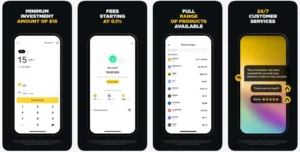
KuCoin’s interface tends to feel more approachable for everyday spot trading, and its futures dashboard is often described as easier to navigate for people jumping between multiple open positions. The trade-off is a slightly steeper learning curve if you want to dig into its more advanced automation tools.
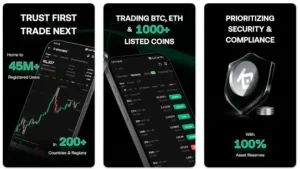
Neither app is going to win a design award for minimalism. Crypto trading interfaces exist somewhere between a cockpit and a Bloomberg terminal, and both of these lean into that identity rather than fight it.
Liquidity & Order Execution
This is where the gap between the two becomes hardest to argue with. Binance’s order books on major pairs like BTC/USDT and ETH/USDT run noticeably deeper than KuCoin’s, and deeper than most of the industry, period.
Why does that matter beyond the spreadsheet? Slippage. On a thin order book, a large market order moves the price against you before it fills. On a deep order book, it doesn’t. For high-frequency traders or anyone moving serious size, that difference adds up fast and quietly, long before you ever look at the advertised fee percentage.
For casual traders moving small amounts, this gap matters less. A $50 market order isn’t going to move Bitcoin’s price on either platform. But if you’re scaling up, liquidity depth becomes one of the more important, least discussed factors in picking an exchange.
Customer Support Reality Check
Support quality at scale is one of crypto’s oldest complaints, and neither exchange has fully solved it.
Binance offers live chat, a chatbot layer, and an extensive help center, but response times for complex account issues can stretch out during high-traffic periods, which in crypto usually means exactly when you need help the most.
KuCoin runs a similar structure: live chat, a support ticket system, and community channels. Response quality tends to depend heavily on how specific and well-documented your issue is when you submit it.
Practical advice for both platforms: screenshot everything, keep transaction IDs handy, and submit a clear, single-issue ticket rather than a novel. Support teams move faster on tickets they can actually act on.
Unique Differentiators — What Sets Each Exchange Apart
Binance’s edge is breadth and depth at the same time: the widest set of regulated regional entities, the deepest liquidity, a lower futures taker fee, and an education ecosystem that actually helps new users graduate into confident traders.
KuCoin’s edge is altcoin access and automation. Its raw asset count outpaces Binance, and its Launch Hub is built specifically around early access to newer projects. Pair that with a strong native bot suite, and KuCoin becomes the specialist tool in a trader’s kit rather than the only exchange they use.
Neither differentiator cancels the other out. A lot of experienced traders end up running both: Binance for majors and derivatives, KuCoin for the long tail of smaller coins.
Pros and Cons
Binance
Pros: deepest liquidity in the industry, lower futures fees, broad product range, strong educational resources, more regulated regional entities.
Cons: US users get a stripped-down Binance.US experience; past regulatory penalties were the largest in crypto history; the interface can overwhelm total beginners.
KuCoin
Pros: larger coin catalog, strong built-in trading bots, competitive spot fees, approachable interface for everyday trading.
Cons: currently exiting the US market under its DOJ settlement terms, thinner liquidity than Binance on major pairs, catalog includes lower-quality micro-cap listings that require real caution.
Verdict by User Type
New traders: Binance edges ahead here, mainly because of its educational resources and the sheer amount of documentation available for every feature.
Altcoin hunters: KuCoin wins, no real contest. If a coin hasn’t listed anywhere else yet, there’s a decent chance it’s already on KuCoin.
Futures and derivatives traders: Binance, thanks to lower taker fees and considerably deeper liquidity on major contracts.
Automation-focused traders: KuCoin’s native bot suite gives it an edge for anyone who wants grid trading without connecting a third-party tool.
US-based users: Neither is a straightforward yes right now. Binance.US offers a scaled-down experience, and KuCoin is formally winding down US access as part of its settlement terms. Check current eligibility directly before signing up.
Which Exchange Is Better? (Final Verdict)
If you need one primary exchange to handle almost everything, from spot trading to futures to actually learning how any of this works, Binance is the stronger overall pick. Its liquidity, product range, and lower derivatives fees carry real weight for both beginners and high-volume traders.
KuCoin earns its place as a specialist tool. If you’re chasing smaller altcoins or want built-in automation without extra software, it’s a legitimate second exchange to run alongside a bigger platform.
Use neither one as your only financial account if your country restricts access, if you can’t complete KYC, or if you need the kind of regulatory protection that comes with a fully licensed domestic exchange. Read the fine print on both platforms before funding an account, and never deposit more than you’re prepared to actively manage.
For a side-by-side look at how Binance compares against another major competitor, see our Binance vs Bybit comparison, and if you’re still narrowing down your first exchange, our guide to the best exchanges for beginners is a good next stop.
Frequently Asked Questions
Is Binance safer than KuCoin? Both exchanges have faced serious regulatory penalties, and KuCoin has a past security breach that Binance’s main platform has avoided at that scale. Binance also runs the SAFU emergency fund. Neither history should be ignored, and both point to the same lesson: use 2FA and withdrawal allowlisting no matter which exchange you choose.
Which exchange has lower fees, Binance or KuCoin? Standard spot fees are close to identical on both platforms, generally around 0.1%. Binance tends to offer a lower base taker fee on futures, and its deeper liquidity often lowers real trading costs further through tighter spreads.
Can US residents use KuCoin in 2026? KuCoin agreed to exit the US market for at least two years as part of its January 2025 settlement with the Department of Justice. Existing US users may be able to withdraw funds, but new account creation and active trading from the US are restricted for the duration of that agreement.
Does Binance work in the United States? US residents use Binance.US, a separate entity from the main international Binance.com platform, with a narrower set of trading pairs and features.
Which exchange has more coins, Binance or KuCoin? KuCoin lists a larger raw number of assets, reportedly over 800 compared to Binance’s roughly 400-plus, though KuCoin’s catalog includes more low-liquidity micro-cap tokens that require extra research before trading.
Is KuCoin good for beginners? KuCoin’s interface is approachable, but its large catalog of smaller, less-established coins means beginners should stick to major, well-known assets until they understand how to evaluate a token’s fundamentals.
Does either exchange offer trading bots? Yes. KuCoin has a stronger native bot suite, including grid bots for spot and futures. Binance offers automation tools as well, though KuCoin’s are generally considered more beginner-accessible for hands-off strategies.
This comparison is based on public exchange documentation, official fee schedules, and regulatory filings from agencies including the US Department of Justice and the New York Attorney General’s office. Crypto exchange policies, fees, and country availability change frequently — always verify current terms directly on each platform before creating an account or depositing funds.
