
Picking a crypto exchange feels a lot like picking a bank, except this bank sometimes gets hacked, occasionally gets sued by a government, and definitely does not have a branch you can walk into and yell at someone. So the stakes are real.
Binance and Bitget both show up on every “best crypto exchange” list you will ever read. Both are huge. Both are cheap. Both want your trading volume. But they are not the same company wearing different logos, and the differences matter once real money is involved.
This guide breaks down Binance vs Bitget across the things that actually decide whether an exchange is worth your time: trust, fees, security, product range, and support. No hype, no filler, no made-up statistics.
Quick Verdict — Binance vs Bitget at a Glance
Binance is the larger, more liquid, more regulated-by-volume exchange. It has more coins, deeper order books, and a documented (if bumpy) regulatory history that includes a $4.3 billion settlement with the US Department of Justice and, more recently, a full licence from Abu Dhabi’s Financial Services Regulatory Authority. Bitget is smaller and younger, built its name on copy trading, and competes hard on fees and token perks through BGB, its native token.
If liquidity, coin variety, and global brand recognition matter most, Binance generally wins. If you want copy trading, a slightly friendlier fee floor at the entry level, and a platform that feels less overwhelming, Bitget makes a reasonable case for itself. Neither exchange is available to US residents for centralized spot and futures trading, so that question is settled before you even open the app.
For a side-by-side breakdown of other platforms, our team keeps an updated comparison library at Exchange Review Lab, which is worth bookmarking if you plan to shop around beyond just these two.
Company Background & Trust Factor
Binance launched in 2017, founded by Changpeng Zhao, known across the industry as CZ. Within months, it became the largest exchange by trading volume, a position it has mostly held since. Richard Teng and co-founder Yi He have shared the CEO role since December 2025, while CZ, who stepped back from daily operations in 2023, remains the company’s majority shareholder.
Binance now serves roughly 300 million registered accounts and reported $34 trillion in total product volume for 2025. That scale is not a marketing number pulled from thin air; it shows up consistently across independent trading-volume trackers and Binance’s own quarterly reporting.

Bitget launched a year later, in 2018, and built its early reputation around derivatives and copy trading rather than spot trading. The company operates under Bitget Limited, based in the Cayman Islands, and is led by CEO Gracy Chen. Bitget reports around 120 million users across roughly 150 countries, a fraction of Binance’s footprint but still a genuinely large user base.
Trust in crypto is earned through track record, not slogans. Binance has the longer track record and the bigger regulatory scar tissue to show for it, including the 2023 DOJ settlement. Bitget has a shorter history and has not faced a comparable enforcement action, though it has also not been tested at the same scale or for as long.
Supported Countries & Regulatory Restrictions
Neither exchange operates centralized spot or futures trading for US residents, so American traders can rule this comparison out immediately for the main platform (Binance.US exists separately and runs under its own state-by-state money transmitter licences).
Binance holds registrations and licences across a patchwork of jurisdictions, including Dubai’s Virtual Assets Regulatory Authority, France, Italy, Spain, Poland, and El Salvador. In December 2025, Abu Dhabi’s Financial Services Regulatory Authority approved Binance for exchange, clearing, custody, and brokerage activity, with operations beginning in January 2026 — a meaningful milestone since it was the first global licence of its kind for the exchange. In the European Union, Binance has been navigating the Markets in Crypto-Assets Regulation (MiCA), which requires a single passportable licence to serve the entire bloc.
Bitget restricts roughly 25 jurisdictions, including the United States, Canada, and Singapore. It holds licences in Italy, Poland, and Australia, and recently added New Zealand, where it registered to offer foreign exchange, cross-border transfers, and asset custody. Singapore’s Monetary Authority added Bitget to its Investor Alert List after confirming the exchange is not licensed there, which is not an accusation of wrongdoing, but it is worth knowing before you try to sign up from Singapore.
Bottom line: both exchanges maintain a real, growing pile of licences, and both still block a meaningful list of countries. Always check the current restricted-countries page directly on each exchange before signing up, since access can and does change with little notice.
Account Setup & KYC Process
Signing up on either platform takes a few minutes: email or phone, password, then identity verification. Both exchanges use automated document scanning plus facial recognition for standard Know Your Customer (KYC) checks.
Binance processes the majority of straightforward KYC applications quickly, often within 15 minutes, though complex cases can take up to 48 hours of manual review. Bitget uses a three-tier verification structure, where basic access only needs email and phone confirmation, while higher withdrawal limits require government ID and address verification.
Here is where user experience starts to diverge in the reviews. Binance’s KYC and appeals process draws complaints for feeling rigid when accounts get flagged. Bitget’s user reviews on Trustpilot include a recurring complaint pattern: documents rejected with generic messages like “graphically edited,” repeated ID requests, and slow appeals when accounts get frozen for “unusual activity.” Neither exchange is uniquely bad here — account freezes and KYC friction are common industry-wide pain points — but Bitget’s public review volume shows this surfacing more frequently in recent complaints.
Practical takeaway: keep your documents clean, matching, and current on either platform, and don’t fund an account with money you might need back on short notice while verification is pending.
Trading Fees Breakdown
This is where most people actually make their decision, so let’s keep it concrete.
Binance spot trading starts at 0.10% for both maker and taker orders at the base (VIP 0) tier. Paying fees in BNB shaves off up to 25%, bringing the effective rate closer to 0.075%. Binance’s VIP ladder runs from VIP 1 (requiring roughly $250,000 in 30-day volume or 25 BNB) up through VIP 9, where fees can fall to around 0.02% maker and 0.04% taker, though that tier demands monthly volume in the billions.
Binance futures start at 0.02% maker and 0.05% taker, also reducible with BNB and VIP status.
Bitget spot trading also starts at 0.10% for both makers and takers, but the BGB token discount brings the effective rate down to roughly 0.08% — a smaller percentage cut than Binance’s BNB discount, but it kicks in at a lower entry bar for casual traders.
Bitget futures start at 0.02% maker and 0.06% taker, slightly higher on the taker side than Binance’s base futures rate.
So the headline numbers are almost identical on spot trading. The real difference shows up in how each exchange structures its discount ladder: Binance rewards very high volume more aggressively, while Bitget’s BGB discount is easier for a smaller trader to unlock. Neither is objectively “cheap” or “expensive” compared to the other at typical retail volumes — the gap is a few basis points, not a game-changer. Withdrawal fees vary by network on both platforms and are worth checking before moving funds, since they are not part of the trading fee schedule.
Product Range & Trading Tools
Binance is the broader supermarket. It lists over 1,600 spot trading pairs and offers spot, margin, futures, options, staking, an NFT marketplace, a Web3 wallet, and a peer-to-peer fiat on-ramp — essentially everything a crypto trader could want under one roof. Binance also holds close to 39% of centralized spot market share, meaning its order books are typically the deepest in the industry.
Bitget supports more than 900 to 1,300 coins and trading pairs, depending on the reporting period, and covers spot, USDT-M and Coin-M futures, margin, and earn products. Its standout feature is copy trading: Bitget built one of the most sophisticated social trading systems in the industry, with position-based copying and high-water-mark profit sharing that lets newer traders mirror experienced ones. Bitget has also expanded into tokenized stocks, commodities, and forex through what it calls its Universal Exchange model.
If you want the widest possible selection of assets and the deepest liquidity, Binance leads. If copy trading is genuinely your priority, Bitget has invested more specifically in that feature than almost any competitor.
Security Track Record
Security history is not something either exchange can spin away, so let’s look at the record.
Binance suffered a hot-wallet breach in May 2019, when attackers used phishing and stolen API keys to withdraw roughly 7,000 BTC. Binance covered the loss in full through its Secure Asset Fund for Users (SAFU), a reserve the company started building in 2018 by allocating a portion of trading fees to cold storage. No user funds were lost as a result. SAFU has since grown to roughly $1 billion in assets, now largely held in USDC for transparency, and Binance publishes regular proof-of-reserves data.
Bitget maintains a similar mechanism called the Protection Fund, publicly reported at more than $300 million, backed by partnerships with security auditors like CertiK and Hacken. Bitget has also published Proof of Reserves reports for over three years running. Independent reviewers differ on whether Bitget has ever suffered a platform-level breach of user funds — some describe a clean record, others note unspecified past incidents — so it’s fair to say Bitget’s public disclosure on this specific point is less detailed than Binance’s, which has been transparent about its 2019 incident from day one.
Both exchanges keep the large majority of user assets in cold storage, require two-factor authentication, and run bug bounty programs. Binance’s longer track record simply means more data points to judge it by — both good and bad.
User Experience: App & Interface
Binance’s interface is powerful but dense. New users often describe it as overwhelming at first, with dozens of menu items, product tabs, and settings crammed into one app. Once you learn where things live, it is efficient, but the learning curve is real. Binance offers both a simplified “Lite” mode and an advanced Pro mode to soften this.
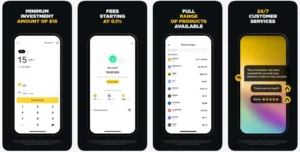
Bitget’s interface generally gets credit for being cleaner and more approachable for beginners, particularly around its copy trading dashboard, which is designed to be usable without deep trading knowledge. That said, some user reviews describe the platform as clunky in specific areas, particularly around deposit and withdrawal flows.
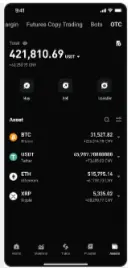
Neither app is going to win a design award over the other by a wide margin. If you are brand new to crypto, Bitget’s simpler surface area may feel less intimidating on day one. If you plan to actively trade across multiple product types, Binance’s Pro interface, once learned, tends to scale better with your needs.
Liquidity & Order Execution
Liquidity is not a vanity metric — it directly affects your slippage, especially on larger orders. Binance’s roughly 39% share of centralized spot trading volume translates into consistently tighter spreads and faster fills across most major pairs, particularly BTC, ETH, and top altcoins.
Bitget’s order books are thinner outside its top pairs, which is normal for a smaller exchange, but its futures volume is genuinely substantial — Bitget reported nearly $70 billion in perpetual trading volume for a single quarter in 2026, showing real depth in derivatives specifically.
For high-frequency or large-size spot traders, Binance’s liquidity advantage is hard to ignore. For futures and copy trading specifically, Bitget’s execution quality holds up reasonably well against much larger rivals.
Customer Support Reality Check
Neither exchange offers phone support, which is standard for the industry but still worth setting expectations around. Both rely on live chat, ticketing systems, and help-center articles.
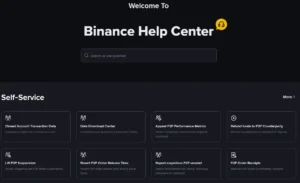
Binance’s support scales to its user base with 24/7 live chat and a large multilingual help center, though response quality on complex account issues (frozen funds, KYC appeals) draws mixed reviews, a common complaint across nearly every major exchange.
Bitget’s public Trustpilot reviews show a recurring theme: users describing slow ticket resolution, repetitive automated replies, and frustration with account restrictions that take weeks to resolve. This does not mean Bitget’s support is universally bad — many transactions and simple queries get resolved without issue — but the pattern of complaints specifically around frozen accounts and KYC appeals shows up often enough in public reviews to flag here.
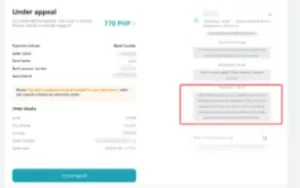
If dedicated, fast support is a top priority, treat this as a genuine point of caution on both platforms, and keep your own records (screenshots, ticket numbers, timestamps) for anything involving locked funds.
Unique Differentiators — What Sets Each Exchange Apart
Binance’s biggest edge is sheer scale: the most trading pairs, the deepest liquidity, the widest global licence footprint, and a genuinely all-in-one ecosystem spanning trading, staking, NFTs, and Web3 tools. Its BNB token also underpins one of the most established fee-discount and utility systems in the industry.
Bitget’s biggest edge is specialization. Its copy trading system is arguably the most developed in the space, and its push into tokenized stocks, commodities, and forex through a single USDT-based account is a genuinely distinct product direction. Bitget’s BGB discount also unlocks meaningful savings without requiring the huge volume thresholds Binance’s top VIP tiers demand.
Pros and Cons
Binance
Pros: deepest liquidity in the industry, widest coin selection, established regulatory footprint including a new Abu Dhabi licence, long-standing SAFU insurance fund with transparent history, extensive product ecosystem.
Cons: interface can overwhelm beginners, past $4.3 billion DOJ settlement remains part of its history, KYC appeals process draws criticism, not available to US residents on the main platform.
Bitget
Pros: strong copy trading tools, BGB discount is accessible at lower volume, cleaner beginner-facing interface, growing list of regulatory licences including a recent New Zealand registration.
Cons: shallower liquidity outside top pairs, blocked in around 25 countries including the US, Canada, and Singapore, recurring customer support and KYC complaints in public reviews, shorter overall track record than Binance.
Verdict by User Type
Beginners: Bitget’s simpler interface and lower BGB-adjusted fees make the first few trades feel less intimidating, though Binance’s Lite mode is a reasonable alternative.
Active/high-volume traders: Binance’s deeper liquidity and steeper VIP fee reductions favor traders who move serious volume.
Copy traders and passive investors: Bitget’s copy trading infrastructure is purpose-built for this and remains its clearest strength.
Altcoin hunters: Binance’s larger coin catalog and higher liquidity give it the edge for accessing newer or smaller-cap tokens.
Security-conscious, risk-averse users: Binance’s longer, more transparent security disclosure history and larger insurance fund offer more data points to evaluate trust.
Which Exchange Is Better? (Final Verdict)
There is no single universal winner here, and anyone claiming otherwise is probably trying to sell you a referral link. Binance is the stronger overall choice for most traders because of its liquidity, coin selection, and longer regulatory and security track record. It is the safer default for anyone who is not sure yet what kind of trader they will become.
Bitget earns its spot specifically for copy trading, a friendlier entry-level fee structure, and traders who want a slightly less overwhelming interface. It is a legitimate exchange with real licences and a real user base, but it comes with a shorter track record and a more visible pattern of support complaints in public reviews.
If you are still comparing options beyond just these two, our full breakdowns and methodology are available at Exchange Review Lab, where we track fee changes and regulatory updates as they happen.
Frequently Asked Questions
Is Binance safer than Bitget? Binance has a longer, more transparent security disclosure history, including its public handling of the 2019 hack through SAFU. Bitget maintains a comparable Protection Fund but has less publicly detailed incident history. Both use cold storage and 2FA as standard practice.
Which exchange has lower fees, Binance or Bitget? Base spot fees are nearly identical at 0.10% on both platforms. Bitget’s BGB discount is easier to unlock for smaller traders, while Binance’s VIP tiers offer deeper discounts at very high volume.
Can US residents use Binance or Bitget? No. Neither exchange’s main centralized platform serves US residents for spot or futures trading. Binance.US operates as a separate, US-focused entity under state money transmitter licences.
Does Bitget support copy trading better than Binance? Bitget’s copy trading system is more specialized and widely regarded as one of the most developed in the industry, though Binance also offers its own copy trading feature.
Which exchange has more coins listed? Binance lists more trading pairs overall, generally cited as above 1,600, compared to Bitget’s reported range of roughly 900 to 1,300 coins and pairs.
Is KYC required on both exchanges? Yes. Both Binance and Bitget require identity verification for full account access, including higher withdrawal limits and fiat features.
This article reflects publicly available information on regulatory status, fee schedules, and security history as reported by the sources linked throughout. Crypto exchange policies, fees, and licences change frequently — always verify current terms directly on each platform before trading.
Sources referenced: Binance ADGM licence announcement (PRNewswire), Binance regulatory and MiCA reporting, Bitget compliance and regulatory license pages, Monetary Authority of Singapore Investor Alert List reporting via crypto. news, Techopedia and Cointelegraph coverage of the 2019 Binance SAFU incident, and independent fee-tracking sources including TradersUnion and Bitget’s official Academy fee documentation.
