
Is Phemex Safe or a Scam?
You just found Phemex. Looks good. Competitive fees, decent leverage, sleek interface. But before you wire in your hard-earned money, you Googled: “Is Phemex safe or a scam?”
Smart move. That question alone puts you ahead of half the people who get burned in crypto.
This review gives you the straight answer, no sponsor bias, no filler paragraphs about how crypto is “changing finance.” Just real facts, real security details, and the one incident every Phemex user should know about.
What is Phemex?
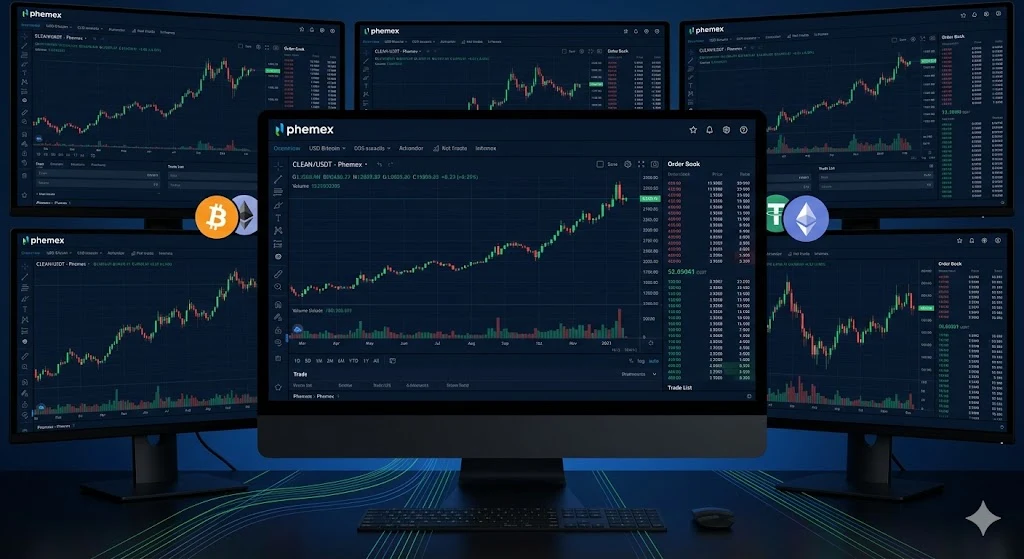
Phemex is a centralized cryptocurrency exchange (CEX) founded in 2019 and headquartered in Singapore. The platform operates under Phemex Technology Pte. Ltd. and was built by a team of former Morgan Stanley executives, which, to be fair, gives it a slightly more professional pedigree than most exchanges born out of a garage somewhere.
The exchange has grown to serve over 10 million registered users worldwide and supports 600+ cryptocurrencies for spot trading. Beyond spot, Phemex offers perpetual futures contracts with up to 100x leverage, copy trading, AI-powered trading bots, P2P trading, OTC services, and earn products with advertised APYs of up to 15%.
Since 2023, the exchange has been led by CEO Federico Variola.
In short: Phemex is a real, functioning exchange, not a fly-by-night operation. But real doesn’t always mean risk-free, and the platform’s history has a notable chapter that any prospective user needs to read.
How Secure is Phemex?
Security on any crypto exchange lives and dies by two things: what happens before a hack and what happens after one. Phemex has now been tested on both counts.
The core infrastructure is built on Amazon Web Services (AWS), with trading zones separated from the internal network. The platform uses segmented firewalls and whitelisted system zones to reduce attack surfaces. Internal risk management monitors withdrawal requests, and suspicious transactions get flagged for manual review.
For several years after its 2019 launch, Phemex ran without a single publicly disclosed security incident, a clean record in an industry where even household names get compromised.
Then January 2025 happened.
Security Features Explained
Before we get to the hack, here’s what Phemex actually deploys on the security side. Some of these are genuine differentiators; others are industry standard.
Hierarchical Deterministic (HD) Cold Wallet System
This is Phemex’s headline feature. Each user on the platform is assigned a unique cold wallet deposit address using an HD wallet architecture. The vast majority of user funds are held in offline multisig wallets, meaning they never touch the internet unless triggered by an authorized withdrawal.
Multi-Signature Authorization
Every withdrawal from cold storage requires approval by multiple offline signatures. A single compromised key cannot move funds. This is the technical equivalent of requiring three different bank managers to open a vault simultaneously.
Two-Factor Authentication (2FA)
Users can enable 2FA through apps like Google Authenticator. This is optional but strongly recommended, and Phemex supports passkeys as an additional layer.
Anti-Phishing Code
Phemex lets users set a personal anti-phishing code embedded in all official emails. If you receive an email without that code, it’s not from Phemex. Simple but effective.
Withdrawal Address Whitelisting
Users can restrict withdrawals to pre-approved wallet addresses only. Even if someone steals your login, they can’t send funds to any wallets you haven’t previously authorized.
Merkle Tree Proof of Reserves (PoR)
Phemex publishes Proof of Reserves for BTC, ETH, and USD, verified using Merkle Tree cryptography. This allows any user to independently verify that the exchange holds the assets it claims to hold, a level of transparency that many smaller exchanges don’t bother with.
It’s worth noting that Phemex does not hold recognized certifications like ISO/IEC 27001 or SOC 2, two industry benchmarks that would add additional credibility to its security claims. That’s a gap worth acknowledging.
Has Phemex Ever Been Hacked?
Yes. This is the part you came here to read, so let’s be direct.
On January 23, 2025, Phemex suffered a serious security breach. Hackers targeted the exchange’s hot wallets, the small portion of funds kept online for daily operational liquidity, across 16 different blockchains. The estimated losses ranged between $69 million and $85 million in cryptocurrency, depending on which auditing source you reference.
Phemex responded quickly. The exchange immediately suspended all deposits and withdrawals, published a transparent Proof of Reserves report, and brought in a third-party cybersecurity partner to investigate and upgrade the system. According to multiple sources, all affected user losses were fully covered by the exchange, and full withdrawal operations resumed within three days.
The critical point here: the hot wallet compromise did not touch cold wallet funds. The HD cold wallet system held. Users who held assets in cold-wallet-backed accounts were unaffected.
What changed after the hack? Phemex overhauled its hot wallet infrastructure, tightened the separation between hot and cold storage, implemented enhanced real-time Merkle Tree Proof of Reserves, and entered a monitoring partnership with an external cybersecurity firm.
Is this a red flag? It is a flag, one that deserves a measured response, not a panicked one. The breach happened. But Phemex did not deny it, delay compensation, or disappear. That behavior matters. It does not erase the risk, but it does distinguish Phemex from exchanges that have simply run away with user funds.
Real User Safety Experience
Real users tell a mixed story. The platform has a Trustpilot score of 2.4/5 based on user reviews, not a glowing endorsement, though it’s worth noting that crypto exchanges almost universally score low on Trustpilot, partly because dissatisfied users are far more motivated to leave reviews than satisfied ones.
Common complaints include frozen funds pending “security checks,” slow customer support response during high-traffic periods, and confusion around KYC requirements. Some users report positive multi-year experiences with no issues.
The most consistent user concern involves fund freezes during security reviews – a process Phemex appears to apply to transactions flagged by its risk engine. While this is a security feature in theory, it becomes a frustration when legitimate users find their deposits locked without clear timelines for resolution.
The lesson: Phemex’s security systems are real and active. Sometimes they activate on legitimate transactions. Document your fund sources, complete KYC, and contact support proactively if funds are held.
Risks of Using Phemex
No exchange review is complete without an honest look at the risks. Here are the ones that actually matter.
Hot Wallet Vulnerability: The 2025 breach proved that hot wallets remain a real attack vector. Phemex has restructured this, but no hot wallet system is mathematically immune to compromise.
Regulatory Gap: Phemex holds a Money Services Business (MSB) license in the United States and has permits in Canada, Turkey, and Lithuania, but it does not serve US residents and operates without major financial regulator oversight in many jurisdictions. The UK’s Financial Conduct Authority (FCA) issued a warning that Phemex was providing financial services in the UK without proper authorization.
No SAFU-Style Insurance Fund: Binance operates a well-publicized Secure Asset Fund for Users (SAFU) that provides a public buffer for emergencies. Phemex’s insurance fund covers leveraged trading losses but does not provide comprehensive protection for fiat deposits or full digital asset holdings.
Mixed Trustpilot Track Record: The 2.4/5 score reflects genuine user frustrations, even accounting for review bias.
No ISO/IEC 27001 or SOC 2: These third-party certifications are benchmarks for institutional-grade security. Their absence doesn’t mean the platform is unsafe, but it does mean fewer independent audits of security practices.
How to Stay Safe on Phemex
If you decide to use Phemex, the following steps aren’t optional – they’re your baseline. Think of them as wearing a seatbelt. The car might be fine, but you don’t skip it.
Enable 2FA immediately. Use Google Authenticator or a similar app. SMS-based 2FA is better than nothing, but weaker than app-based.
Set your anti-phishing code. Go into your account settings and configure this before you do anything else. It takes two minutes.
Whitelist withdrawal addresses. Only allow withdrawals to wallets you control and have pre-approved.
Complete KYC verification. Verified accounts have higher withdrawal limits and face fewer security-triggered holds. The full KYC tier enables a daily withdrawal limit of up to 100 BTC.
Store large balances elsewhere. No exchange, regardless of how good their cold wallet system is, should hold more of your crypto than you can afford to lose access to temporarily. Hardware wallets exist for a reason.
Verify Proof of Reserves. Phemex’s Merkle Tree PoR is publicly available. Use it. An exchange that publishes verifiable reserves and an exchange that merely claims it are not the same thing.
Is Phemex Available in Your Country?
This matters more than most users check before signing up.
As of early 2026, Phemex restricts access to approximately 44 countries and regions. Major restricted markets include:
- United States – All US residents and entities are blocked. No registration, trading, or KYC is permitted.
- United Kingdom – Not officially available. The FCA has flagged Phemex for unauthorized operation in the UK.
- Ontario, Canada – Specifically restricted, though some services may remain accessible to users in other Canadian provinces.
- United Arab Emirates – Access restricted.
Phemex holds regulatory permits in Canada (for non-Ontario users), Turkey, and Lithuania, and an MSB license in the United States – the latter existing for compliance purposes even though US residents cannot access the platform.
A note on VPNs: Using a VPN to bypass these restrictions violates Phemex’s Terms of Service. It does not change your legal residency, and core features still require KYC with genuine identification anyway. If caught, accounts can be suspended and withdrawals frozen. If Phemex isn’t available in your country, using a platform that legally supports you is simply the safer option.
Pros and cons
Pros
- Founded by former Morgan Stanley executives with verifiable institutional background
- Over 10 million registered users globally
- HD Cold Wallet System assigns each user a unique offline deposit address
- Multisig withdrawal approval prevents single-point-of-failure compromises
- Merkle Tree Proof of Reserves publicly verifiable for BTC, ETH, and USD
- Transparent handling of the 2025 breach — full user compensation and rapid resumption
- Competitive fees: spot at 0.10%, futures maker at 0.01%
- 600+ cryptocurrencies and up to 100x leverage on perpetual contracts
- Regulated in multiple jurisdictions including MSB license, Turkey, Lithuania, and Canada
- Anti-phishing codes and withdrawal whitelisting available
Cons
- Suffered a $69–85 million hot wallet hack in January 2025
- Trustpilot score of 2.4/5 reflects consistent user frustrations
- Not available in the US, UK, UAE, and 40+ other jurisdictions
- No ISO/IEC 27001 or SOC 2 certifications
- FCA warning issued for UK operations
- The insurance fund does not cover full digital asset holdings
- Some users report unexplained fund freezes during security checks
How Does Phemex Compare to Other Exchanges on Safety?
The honest answer: Phemex sits in the middle tier of the industry on safety metrics – better than most anonymous offshore platforms, not quite at the level of exchanges that have never been breached and carry full regulatory compliance.
Phemex vs. Binance: Binance operates a SAFU emergency fund (seeded with a percentage of trading fees), has larger liquidity, and a broader global regulatory footprint. Binance experienced a $40 million hack in 2019, which it covered entirely. Both exchanges use cold storage and PoR. Binance has the edge on scale and regulatory visibility; Phemex arguably offers a cleaner, less overwhelming interface. Neither is a clear winner on pure safety – both have been tested, and both covered their losses.
Phemex vs. Bybit: Bybit suffered what many consider the largest crypto hack in history (the February 2025 Lazarus Group attack totaling approximately $1.5 billion). Bybit also covered all losses. On fees, Bybit charges 0.02%/0.055% for futures versus Phemex’s 0.01%/0.06%. Both offer comparable derivatives products. If you’re choosing between the two on safety alone, neither has a clean record – but both have demonstrated willingness to make users whole.
Phemex vs. Kraken: Kraken has never suffered a significant hack, maintains SOC 2 compliance, is fully regulated in the US, and has a longer operational history. For users who prioritize regulatory safety above all else, Kraken holds an advantage. The tradeoff is fewer aggressive trading features and higher fees.
Phemex vs. Coinbase: Coinbase is publicly traded in the US, SEC-regulated, and audited at institutional levels. It’s the gold standard for compliance. Phemex wins on fees and derivatives access by a wide margin. The platforms are targeting different user profiles.
The pattern here is clear: every major exchange has faced security incidents. What differentiates them is how they respond. On that metric, Phemex’s response to the 2025 breach – full compensation, rapid communication, third-party auditing- aligns with industry best practices.
FAQ Section
Is Phemex a scam?
No. Phemex is a legitimate centralized cryptocurrency exchange founded in 2019 by former Morgan Stanley executives and headquartered in Singapore. It has over 10 million registered users, holds regulatory permits in multiple jurisdictions, and maintains publicly verifiable Proof of Reserves. It is not a scam.
Was Phemex hacked?
Yes. In January 2025, Phemex’s hot wallets were compromised across 16 blockchains, with losses estimated between $69 million and $85 million. The exchange covered all user losses and resumed full operations within three days.
Is Phemex regulated?
Phemex holds an MSB license in the United States and has obtained permits in Canada, Turkey, and Lithuania. It is not regulated by the FCA in the UK and does not serve US residents despite holding a US MSB license. It lacks major global regulatory coverage compared to exchanges like Coinbase or Kraken.
Does Phemex require KYC?
KYC is not mandatory to register a basic account, but withdrawal limits are tied to the verification level. Without KYC, daily withdrawals are capped at 2 BTC. Basic verification raises this to 10 BTC. Full KYC raises it to 100 BTC and enables fiat-to-crypto purchases.
Is Phemex available in the US?
No. Phemex restricts access to all US residents and entities. US users cannot register, trade, or complete KYC on the platform.
Where are Phemex user funds stored?
The majority of user funds are held in offline multisig HD cold wallets. A small percentage is kept in hot wallets for daily operational liquidity. The cold wallet system was not compromised in the January 2025 breach.
How does Phemex compare to Binance on safety?
Both exchanges have experienced hacks and covered the resulting user losses. Binance has a SAFU emergency fund and broader regulatory compliance globally. Phemex offers a more focused trading experience with competitive fees. Neither is categorically safer than the other — both have demonstrated accountability after security incidents.
What security features does Phemex offer users?
Phemex offers 2FA (via authenticator apps and passkeys), anti-phishing codes, withdrawal address whitelisting, and a Hierarchical Deterministic cold wallet system. Users are encouraged to enable all available features.
Final Verdict
Is Phemex safe? Mostly yes – with clear, documented asterisks.
The exchange is not a scam. It is not a rug-pull waiting to happen. It is a real platform built by credentialed professionals, with real security infrastructure and real regulatory filings.
But “not a scam” is not the same as “completely safe.” The January 2025 hack is a matter of public record. The Trustpilot score reflects genuine user frustrations. The missing ISO/IEC 27001 and SOC 2 certifications leave a gap in independent validation. The FCA warning means UK users have no regulatory protection if things go wrong.
What Phemex has in its favor is accountability. The exchange did not freeze accounts and vanish after the breach. It compensated users, published transparent reports, and brought in outside security partners. In an industry where several exchanges have done exactly the opposite, that matters.
Our recommendation: Phemex is a reasonable choice for experienced traders in supported regions who want access to deep derivatives markets and competitive fees. Enable all available security features, complete KYC, do not store funds you cannot afford to have temporarily locked, and verify the Proof of Reserves before depositing.
For absolute beginners or users in restricted jurisdictions, alternatives like Kraken, OKX, or Bybit may offer a more suitable balance of access, compliance, and product depth.
Disclaimer
This article is written for informational and educational purposes only. It does not constitute financial advice, investment recommendations, or an endorsement of Phemex or any cryptocurrency exchange. Cryptocurrency trading involves significant risk, including the possible loss of all invested capital. Always conduct your own research and consult a qualified financial advisor before making investment decisions. The author and publisher are not liable for any financial losses arising from decisions made based on this content. Availability of exchange services varies by jurisdiction; verify compliance with local laws before registering on any platform.
