

Quick Answer: Best Crypto Exchange for Spot Trading
No single platform wins for everyone. Your country, order size, and trading style decide the winner. Anyone who tells you otherwise is probably selling something.
Here are the quick picks:
- Lowest base maker fee: OKX
- Widest coin list and deepest markets: Binance
- Best for beginners in regulated markets: Coinbase
- Best for transparency and security habits: Kraken
- Best for flat fees plus copy trading: Bitget
Spot trading means you buy or sell the real coin at the current price. There is no leverage and no liquidation call at 3 a.m. That simplicity is why most newcomers start here. It also makes fees the highest cost you control.
Comparison Table: Best Crypto Exchange for Spot Trading
The table shows base-tier spot fees for regular users. Your own rate depends on region and volume, so check your account before you trade.
| Exchange | Base spot fee (maker/taker) | Fee discount option | Best for | Access note |
|---|---|---|---|---|
| Binance | 0.10% / 0.10% | 25% off with BNB | Liquidity, coin variety | Global site excludes US residents |
| Coinbase Advanced | US 0.50% / 0.90%; EU and UK 0.25% / 0.50% | Volume or balance tiers | Beginners, regulated users | Rates vary by market |
| Kraken Pro | 0.40% / 0.80% | Volume or assets-on-platform tiers | Security-minded traders | Check regional availability |
| OKX | 0.08% / 0.10% | Hold OKB for tier benefits | Limit-order traders | Separate US service exists |
| Bitget | 0.10% / 0.10% | 20% off with BGB | Copy trading fans | Not open to US residents |
Binance Review
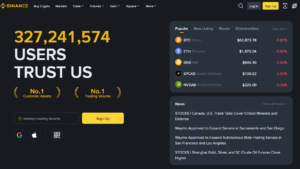
Binance remains the heavyweight for spot markets. It supports more than 480 cryptocurrencies and 1,800+ trading pairs. If a coin exists, Binance probably lists it.
Fees
Regular users pay about 0.1% for both makers and takers, and paying fees in BNB takes 25% off. That puts the effective rate near 0.075%. It’s cheap, and it’s flat, so you never need to memorize a maker-taker maze.
Strengths
Binance publishes a Proof of Reserves page. It says it holds all user assets 1:1 and uses Merkle trees and zk-SNARKs so users can verify their balances. It also keeps an emergency fund called SAFU for events like hacks.
Drawbacks
Regulation is the big asterisk. In 2023, the US Department of Justice announced that Binance pleaded guilty to Bank Secrecy Act and sanctions-related charges and agreed to pay $4.3 billion in penalties. Binance has since worked under compliance remediation. Still, you should know the history before you deposit.
US readers face another hurdle. Binance’s global platform is unavailable to US residents, and Binance.US runs as a separate, more limited platform. Binance.US charges 0% maker and 0.02% taker on most spot pairs.
Best for: traders who want maximum choice and low base fees, and who live where the global platform operates.
Coinbase Review
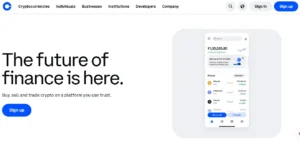
Coinbase is the “my first exchange” classic. The app feels like a banking app, not a cockpit.
Fees
Use Coinbase Advanced, not the simple buy button. Advanced uses an order book with transparent maker-taker pricing and no spread, while simple trades still carry spreads.
Spot entry tiers are 0.50% maker and 0.90% taker in the US, and 0.25% maker and 0.50% taker in the EU and UK. Coinbase lists 0.09% maker and 0.10% taker for Brazil, India, and other international markets. Advanced tiers now start at $10,000 in qualifying volume.
Yes, the US entry rate costs more than most rivals. You pay for the polish and the compliance.
Strengths
Coinbase trades on the NASDAQ under the ticker COIN and holds a New York BitLicense. Its annual reports to the SEC describe custody practices in detail. They say cold-wallet withdrawals need approval from a geographically distributed team.
Drawbacks
Crypto at Coinbase isn’t bank-insured. Coinbase says it is not an FDIC-insured bank, and its crime insurance covers only a portion of digital assets. Customer USD balances may qualify for pass-through FDIC coverage up to $250,000 per depositor.
Best for: beginners and anyone who values regulation and a clean interface over rock-bottom fees.
Read more: Coinbase Review for Beginners 2026: Read before trading
Kraken Review

Kraken is the veteran that treats security like a hobby. Its fee page rewards patience and balance size.
Fees
Kraken Pro starts at 0.40% maker and 0.80% taker, and your tier follows the better of your 30-day spot volume or your assets on the platform. The next tier begins at $2,500 in volume and charges 0.30% maker and 0.60% taker.
Older guides may still show 0.25% and 0.40%. Kraken replaced its old product-specific bands with cross-platform tiers, and the entry level rose. Always trust the live schedule.
Avoid the instant-buy route if you care about cost. Kraken charges a 1% fee on instant and recurring trades, plus a spread. Pro is the cheaper door.
Strengths
Kraken periodically works with an external auditor on Proof of Reserves, and users can check their own balances. Its security program holds ISO 27001 and SOC 2 Type 2 certifications, and users can whitelist withdrawal addresses and lock their accounts against new ones.
Drawbacks
The entry taker fee is the highest in this lineup. If you trade small and often, it adds up fast.
Best for: security-first traders who place limit orders and keep balances on the platform.
OKX Review
OKX targets traders who read fee tables for fun. Its base maker fee is the lowest here.
Fees
Regular users pay 0.08% as makers, compared with 0.10% on Binance and Bybit, but all three charge 0.10% for takers. OKX’s own fee FAQ uses those same Level 1 rates as its BTC/USDT example. So place limit orders. Market orders erase the advantage.
Holding OKB can lift you the regular fee ladder without matching trading volume.
Strengths
OKX Europe holds a full MiCA license from Malta’s financial regulator. OKX publishes a monthly Proof of Reserves report. Its separate US service lists the same 0.08% maker and 0.10% taker spot rates.
Drawbacks
Regional entities change what you can use. Check which OKX entity serves your country before you compare fees. Fees mean little if you can’t open the account.
Best for: limit-order traders who want the cheapest base maker rate.
Bitget Review

Bitget keeps spot pricing simple and bolts on copy trading. It suits people who want to watch others before they act.
Fees
Bitget charges 0.1% for both makers and takers at the standard tier. Paying fees with BGB gives a 20% discount. That brings the rate to about 0.08%. P2P trades and Convert transactions carry zero fees.
A caution on the BGB trick: you must hold a token whose price moves. A falling BGB price can wipe out the savings.
Strengths
Our own review found that Bitget’s copy trading shows ranked traders with win rate, ROI, and drawdown stats. That transparency helps beginners learn.
Drawbacks
Support quality gets mixed feedback, and complex KYC or withdrawal issues can be resolved slowly. Bitget also blocks US residents completely.
Best for: traders outside the US who like flat fees and want copy trading nearby.
Read more: Bitget Review 2026: Honest Pros, Cons & Everything You Need to Know
How We Ranked the Best Crypto Exchange for Spot Trading
We built this list around five checks. We did not invent scores to look scientific.
- Spot trading fees: We used official fee pages first. Where an exchange hides numbers behind a login, we used clearly sourced third-party guides.
- Security and transparency: We looked at Proof of Reserves, certifications, insurance disclosures, and account-protection tools.
- Regulation and access: We checked licenses, court records, and which countries each platform serves.
- Liquidity and coin range: More pairs and deeper books mean tighter prices.
- Ease of use: A cheap exchange you can’t navigate costs you money in mistakes.
Fees came first because you control them on every trade. Security came right behind because nothing else matters if funds vanish.
We also relied on our own library of platform reviews. Learn who writes them on the About Us page.
We don’t claim any exchange is perfect. Each one trades off cost, protection, and access.
Fees Comparison for Spot Trading
Percentages feel abstract, so let’s price a $1,000 market order at base-tier taker rates. This is plain math from the published rates above. It ignores spread, slippage, and network fees.
| Exchange | Taker rate | Fee on $1,000 | With platform-token discount |
|---|---|---|---|
| Binance | 0.10% | $1.00 | $0.75 (BNB) |
| OKX | 0.10% | $1.00 | Varies by tier |
| Bitget | 0.10% | $1.00 | $0.80 (BGB) |
| Kraken Pro | 0.80% | $8.00 | None at entry |
| Coinbase Advanced (US) | 0.90% | $9.00 | None at entry |
Now picture a full round trip, buying then selling. At Coinbase’s US taker entry rate, that costs about $18 on a $1,000 position. Binance costs about $2. That gap pays for a lot of pizza.
Three habits cut your bill on any platform:
- Use limit orders. Resting orders usually earn the lower maker rate.
- Climb the tiers. Volume, balances, or platform tokens all lower fees on most exchanges.
- Skip instant-buy buttons. They bake in spreads and extra charges.
Fees aren’t the only cost. Withdrawal charges vary by coin and network. Read how a mid-tier exchange structures them in our guide.
Read more: KuCoin Fees Review (2026) – Hidden Costs & Fees
Security & Regulation
Cheap fees don’t help if you can’t withdraw. Here is how the five compare on protection.
Proof of Reserves. Binance, Kraken, and OKX all publish some form of it, as covered above. Treat it as a useful signal, not a guarantee. A proof shows assets at one point in time and doesn’t address liabilities outside the snapshot. Kraken itself notes that no formally accepted rules define a Proof of Reserves audit.
Insurance. Don’t assume a government safety net. Coinbase says plainly that crypto isn’t FDIC-insured. Binance relies on its SAFU fund. None of these replace bank-style deposit protection.
Regulation. Coinbase is a public company with a BitLicense. OKX Europe holds a MiCA license. Binance carries a major US enforcement history. Kraken holds regulatory licenses in several regions. Verify the entity that serves your country, because licenses attach to local entities.
Your own settings. Most account takeovers beat people, not vaults. Both Binance and OKX support authenticator-app 2FA and withdrawal whitelisting. Turn on both. Add a hardware key if the platform offers one.
Never keep long-term holdings on any exchange. A hardware wallet suits money you don’t plan to trade this month. For a deeper look at how we judge platform safety, see our safety explainer.
Read more: Is Uphold Safe in 2026? Read This Before You Start Trading
Frequently Asked Questions
What is spot trading in crypto?
Spot trading means buying or selling a coin at the current market price and owning it right away. You don’t borrow money, and you don’t trade contracts. Your maximum loss is what you put in.
Which exchange has the lowest spot trading fees?
It depends on your order type and region. OKX has the lowest base maker rate at 0.08%. Binance and Bitget sit at 0.10% before discounts. Kraken and Coinbase cost more at entry, though high-volume tiers drop sharply.
What is the difference between maker and taker fees?
Makers add liquidity with limit orders that rest on the order book. Takers remove liquidity with orders that fill immediately. At Coinbase, an order that fills only in part pays the taker fee on the instant part and the maker fee on the remainder. Most exchanges charge makers less.
Can US residents use Binance or Bitget?
Not the global versions. Binance runs a separate US platform with its own fee schedule. Bitget blocks US residents entirely. US traders usually compare Coinbase, Kraken, Binance.US, and OKX’s US service.
Is it safe to keep crypto on an exchange?
Treat exchanges as trading venues, not vaults. Use 2FA, whitelist withdrawal addresses, and move long-term holdings to a hardware wallet. Remember that Coinbase states its crypto isn’t FDIC-insured.
Do I need to verify my identity?
Usually yes. Most major exchanges require KYC for full features, higher limits, and fiat services. Our Bitget review noted that region-specific checks can take time.
Are fees the only thing that matters?
No. Spreads, withdrawal costs, support quality, and access rules all change what you actually pay. Fees are just the easiest number to compare.
Final Verdict: Best Exchange for Spot Trading
Pick by profile, not by hype:
- Fee hunter placing limit orders: OKX gives the lowest base maker rate. Binance matches it on flat simplicity.
- Maximum coin choice: Binance wins on pairs and coin count, if your country allows it and you accept its regulatory history.
- New trader who values regulation: Coinbase Advanced costs more but feels safer to many users. Skip the simple buy button.
- Security-minded saver: Kraken’s audits, certifications, and account locks stand out. Budget for the higher entry fee.
- Copy-trading curious (non-US): Bitget keeps spot pricing flat and adds a social layer.
Want even more options? Our MEXC review covers a low-fee platform with a very wide coin list, plus its regulatory limits.
Read more: MEXC Review for Beginners 2026: Fees, Safety & Features
Whichever platform you choose, start small. Test a deposit, a trade, and a withdrawal before moving real money. Crypto trading carries risk, and prices can fall fast. This article is educational and isn’t financial advice.

